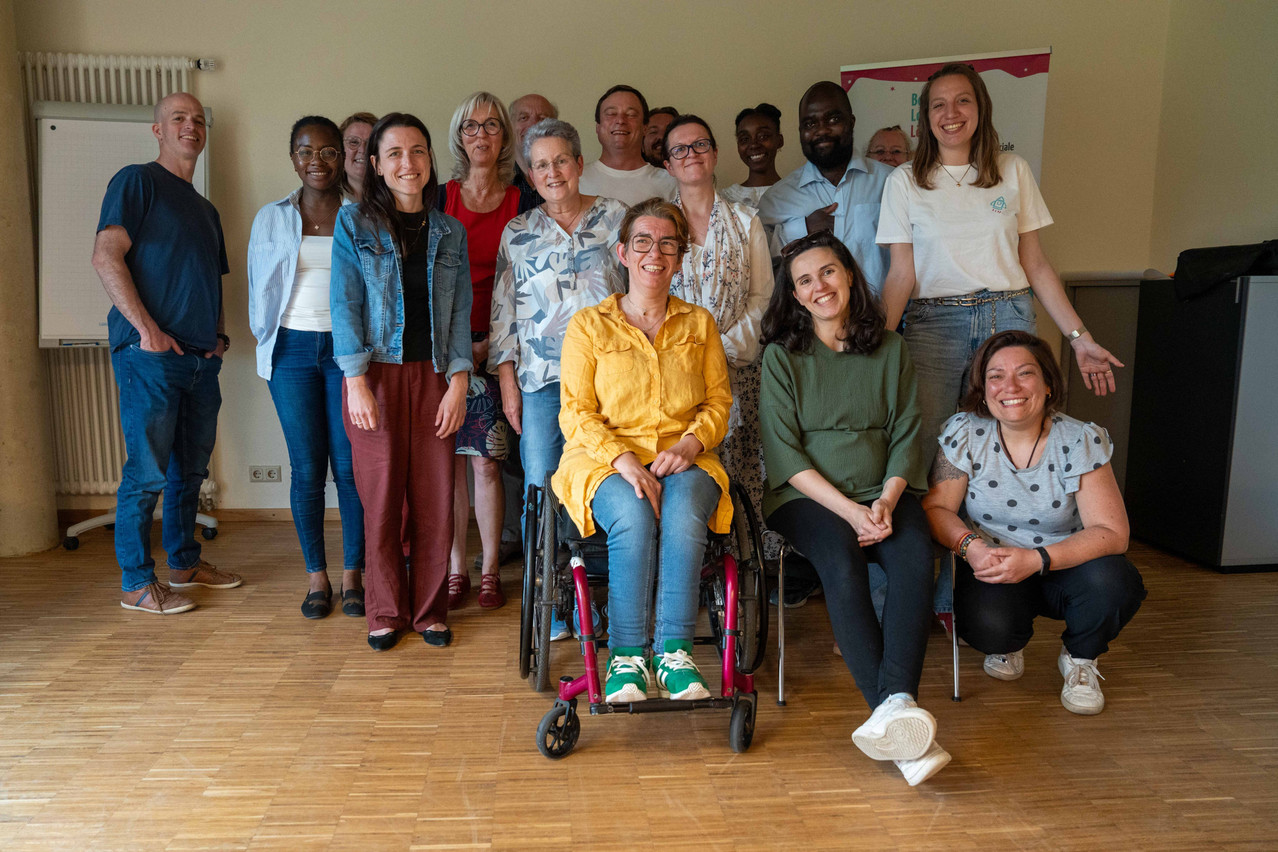
American anthropologist Margaret Mead once said, “Never doubt that a small group of thoughtful, committed citizens can change the world. In fact, that's the way it’s always been done.” And in eastern Luxembourg, the idea is germinating. With the support of Cell (Citizens for Ecological Learning and Living), some 30 people taking part in the “Boost Lokal” initiative have drawn up a series of projects, at various stages of development. They aim to promote a sustainable transition through the circular economy and social innovation. Here are five projects that could give others ideas...
The Ôpen citizens’ house
Launched in early 2023 by a group of citizens, The Ôpen citizens’ centre in Junglinster is intended to be a place for people to meet, share ideas and express themselves, based on a collective dynamic that encourages people to adopt more sustainable lifestyles. The people at the helm have set up an association of the same name, and their ambition is to make it an even livelier and more inclusive place, with a particular focus on securing the loyalty of volunteers. They have opted for socio-cratic governance based on working groups with clearly defined objectives. To date, the association has mobilised 80 members of the public and organises workshops for parents, beer brewing, planting in its heated greenhouse, food-sharing events and many other convivial moments designed to advance the ecological transition. It now even offers team-building days for companies and a workshop on preventing burnout to raise awareness amongst employees and provide tools to promote a healthy, balanced life.
Ecofluent for better waste management
Active in promoting zero waste, Ecofluent aims to make sustainable solutions more accessible to everyone in the face of the challenges posed by pollution, climate change and over-consumption. Set up as a societal impact company (SIS), Ecofluent was initiated and is now managed by architect and urban planner Martine Bosch, who says she felt “powerless” while working in the construction sector, which “has a major impact on the environment.” The SIS offers a number of services, including helping organisations to develop a waste reduction strategy. It also raises awareness among the general public through workshops and training programmes. In partnership with Kilogram and other local players, Ecofluent hopes to continue federating a collective of citizens and businesses to build a local circular economy network and make sustainability the norm in everyday life.
Canopi and its upcycled furniture
Specialising in the refurbishment of antique furniture, Canopi also came into being thanks to the mobilisation of the general public, and is looking to broaden its impact with a new collective initiative combining environmental education, heritage transmission and circular innovation. Through an awareness-raising campaign, creative workshops and the development of a carbon footprint calculator, Canopi aims to “celebrate the quality and memory of objects, whilst stimulating citizen participation.” Canopi’s aim is to highlight recycled furniture, to avoid deforestation, loss of biodiversity and saturation of landfill sites. In 2023, wood accounted for 17.89% of bulky waste thrown away in the country, even though it represents an excellent carbon reservoir. And when wooden furniture is thrown away and incinerated, the carbon storage is lost and the stored CO2 is released. Canopi wants to mobilise as many members of the public as possible in this process, particularly craftsmen capable of giving all this furniture a second life.
Le jardin des possibles in Echternach
The brainchild of a co-creation evening organised by Cell, this project imagines a network of shared spaces in Echternach. The idea is to create a space for meeting, inclusion and cooperation, co-constructed with local associations and open to all. The Jardin des Possibles is therefore intended to be a catalyst for citizens’ initiatives, around social links, nature, solidarity and “doing things together.”
Federating local producers
Faced with the challenges of access and visibility for regional products, this project emerged as a collective response during the Boost Lokal initiative organised by Cell. The mobilised citizens proposed setting up a common platform enabling producers to pool their efforts in terms of distribution, logistics, marketing and product development. A “co-branding” strategy could also strengthen the presence of local products in supermarkets whilst creating links between local players.
This article was originally published in French.