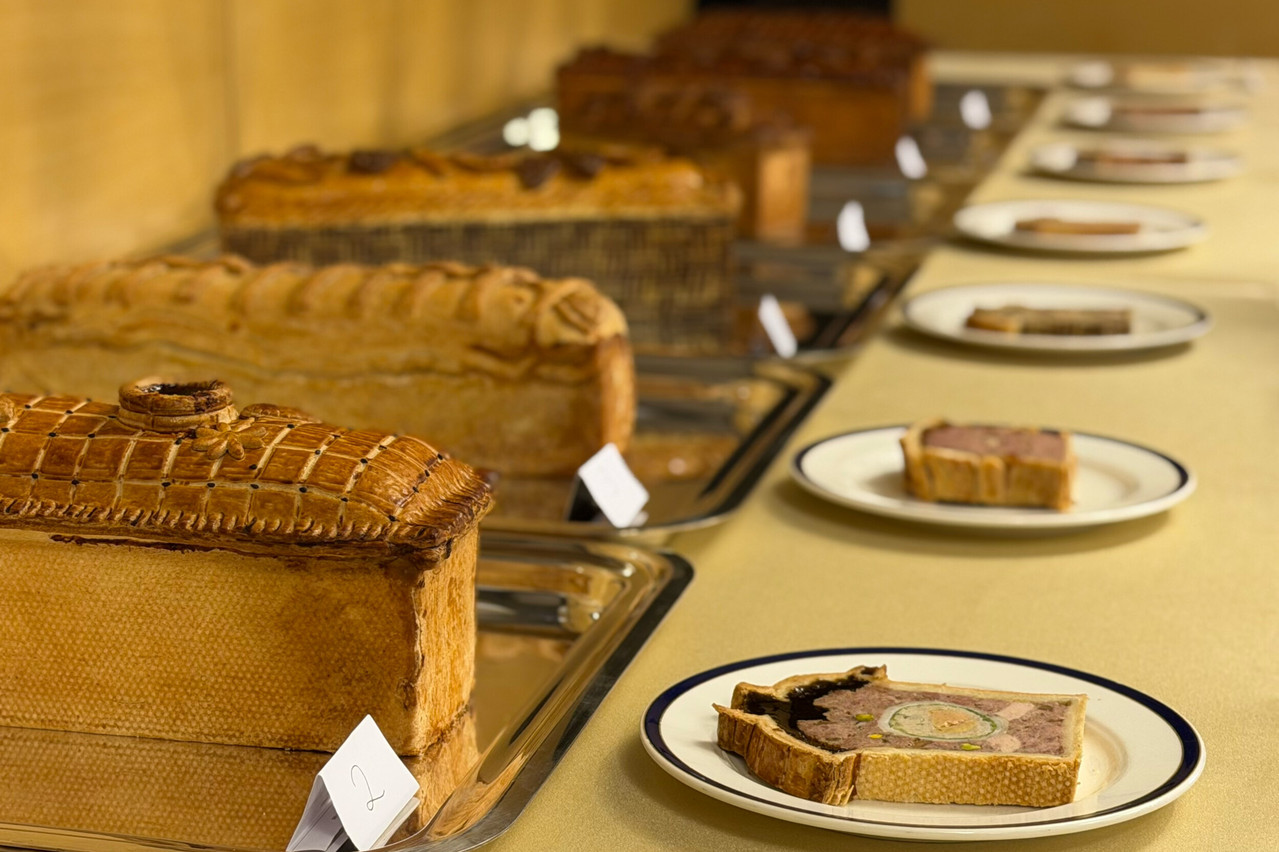
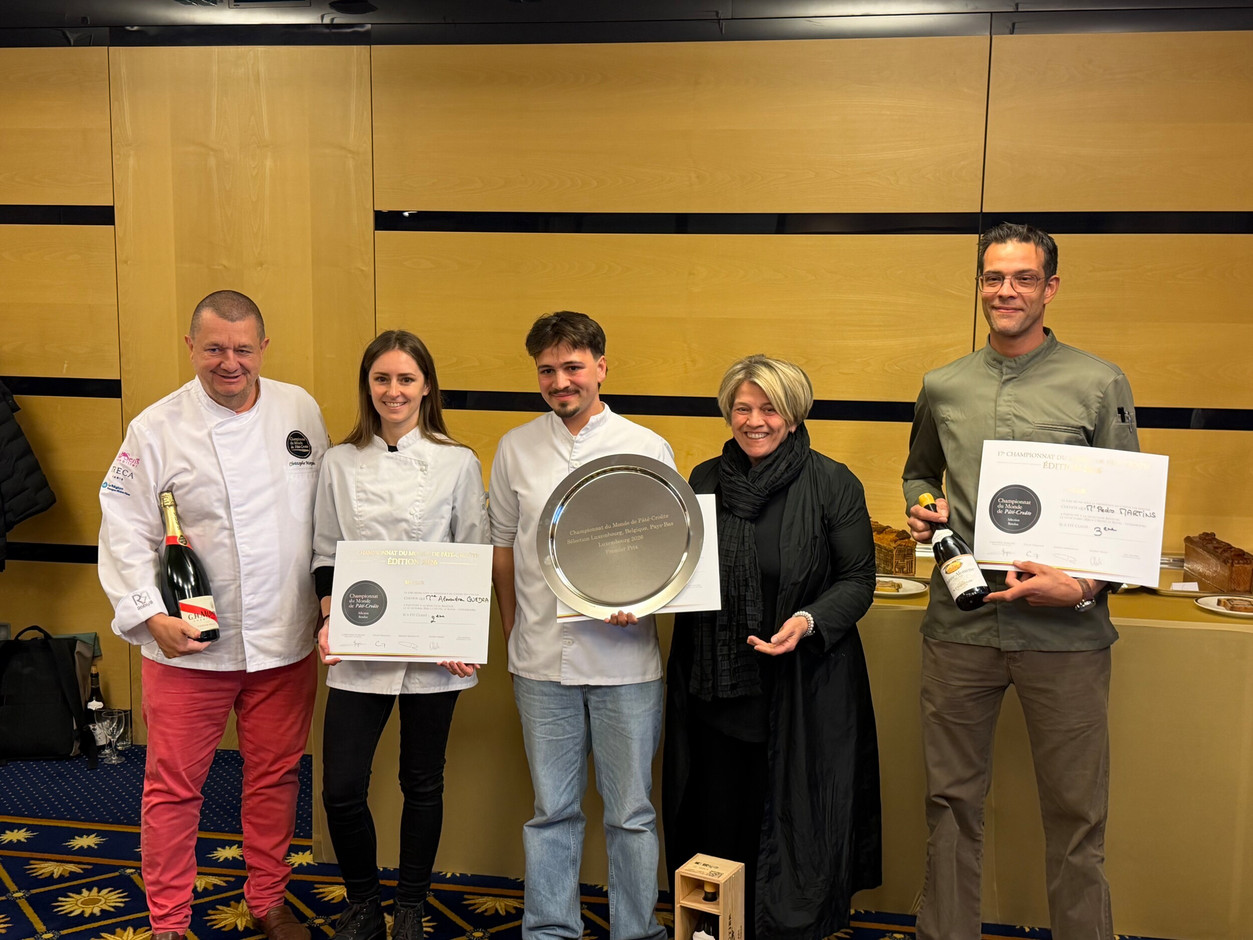
For this first attempt, it is a Brussels native who will be representing the Benelux countries in Lyon. Before opening his restaurant, MOme, Raffi Vranckx cut his teeth working for Karen Torosyan, the 2015 world pâté-croûte champion. His guiding principle can be summed up in one sentence: ‘To make a fine product, you can’t use substandard ingredients.’ For him, pâté-croûte isn’t a loss leader; he only makes it when time and concentration allow: “I don’t want it to be a burden; I want it to be a pleasure to make.” In second place is Alexandra Guédra and in third place Pedro Martins (Le Petit Bistro).
A challenge worthy of the task. Filling, marinade, assembly, inserts, jelly: the pâté-croûte is a highly technical dish. For Christophe Marguin, head chef at Le Président restaurant in Lyon and co-founder of the competition, however, what is at stake goes beyond the podium: “That’s the strength of the competition – it’s about passing on knowledge.” He also offers a piece of advice to young chefs: “Don’t be afraid to ask the more experienced chefs for guidance.”
Foie gras, hare and whisky
Facing the Brussels native were seven candidates with a variety of backgrounds. Pierre Godard had home advantage, as he works in the kitchen at the Royal. 
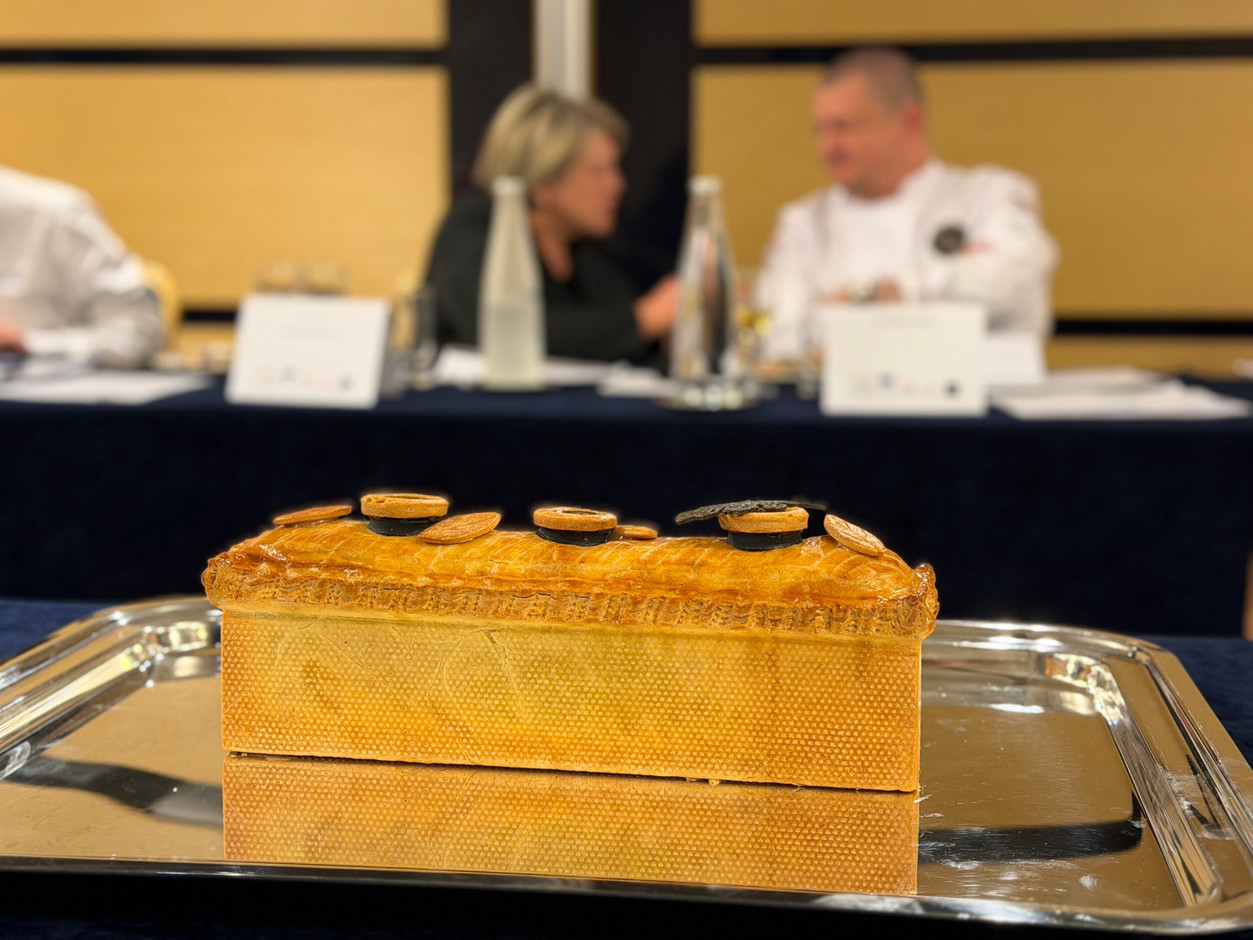
Elsewhere, too, foie gras was a frequent feature. Raphaël Charnay (Casserole dishes) paired it with yellow poultry marinated in whisky. Artisan cheesemaker Alexandra Guédra opted for a selection of poultry, duck, guinea fowl, foie gras and pork from a family-run farm in Luxembourg. Quentin Debailleux (Pèitry) chose duck foie gras, duckling and Colonnata bacon. Anthony Romeo rounded off the platter.
A standard that took the jury by surprise

On the podium, Raffi Vranckx (940 points) finished ahead of Alexandra Guédra (819 points) and Pedro Martins (810 points). Please note: the winner’s recipe will remain a secret until 30 November, as he will be presenting the same pâté-croûte in the final.