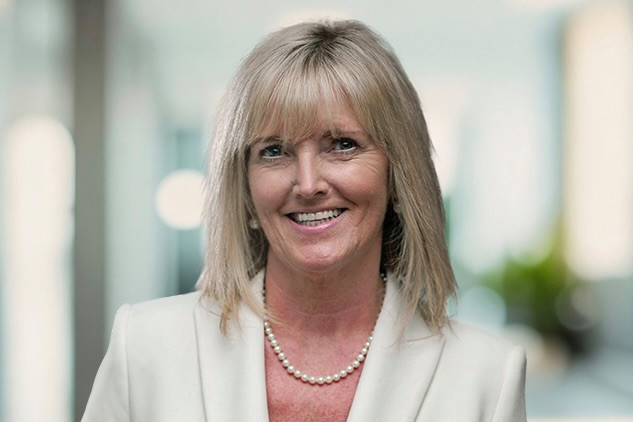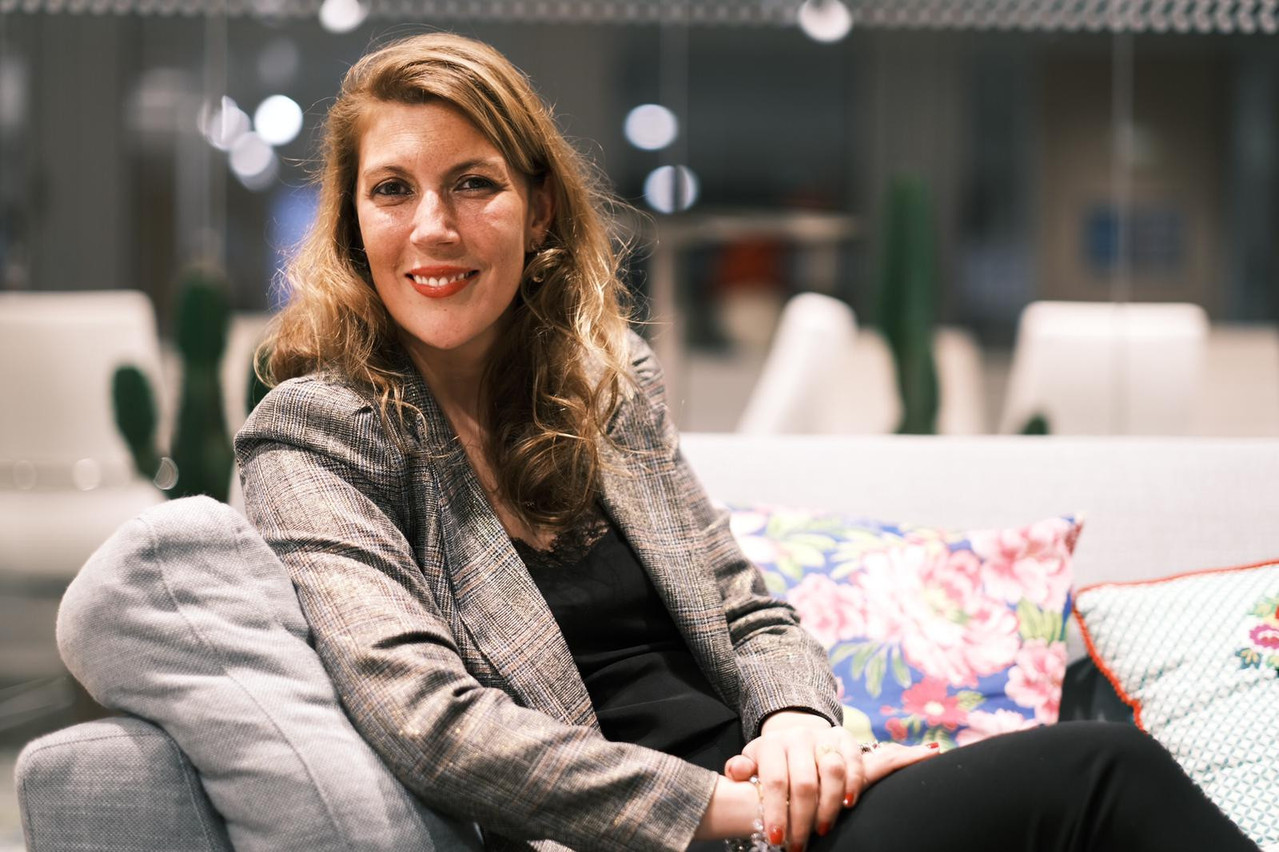
Oriane Schoonbroodt didn’t wait for a “shift” to be needed to make a move. At 45, she left Deloitte Luxembourg and launched Label R with three senior partners. Her view of the moment is clear: “We’re entering a phase of structural volatility, with whole sectors shrinking, systemic risks and supply chains under strain. Consultancy is going to change, that’s a reality. In very strong structures, change moves too slowly; we need to move much more quickly and in a more agile way”. It claims to be positioned ahead of the curve: offering “very fine-grained” expertise, delivered by senior people, as close as possible to customers’ strategic challenges.
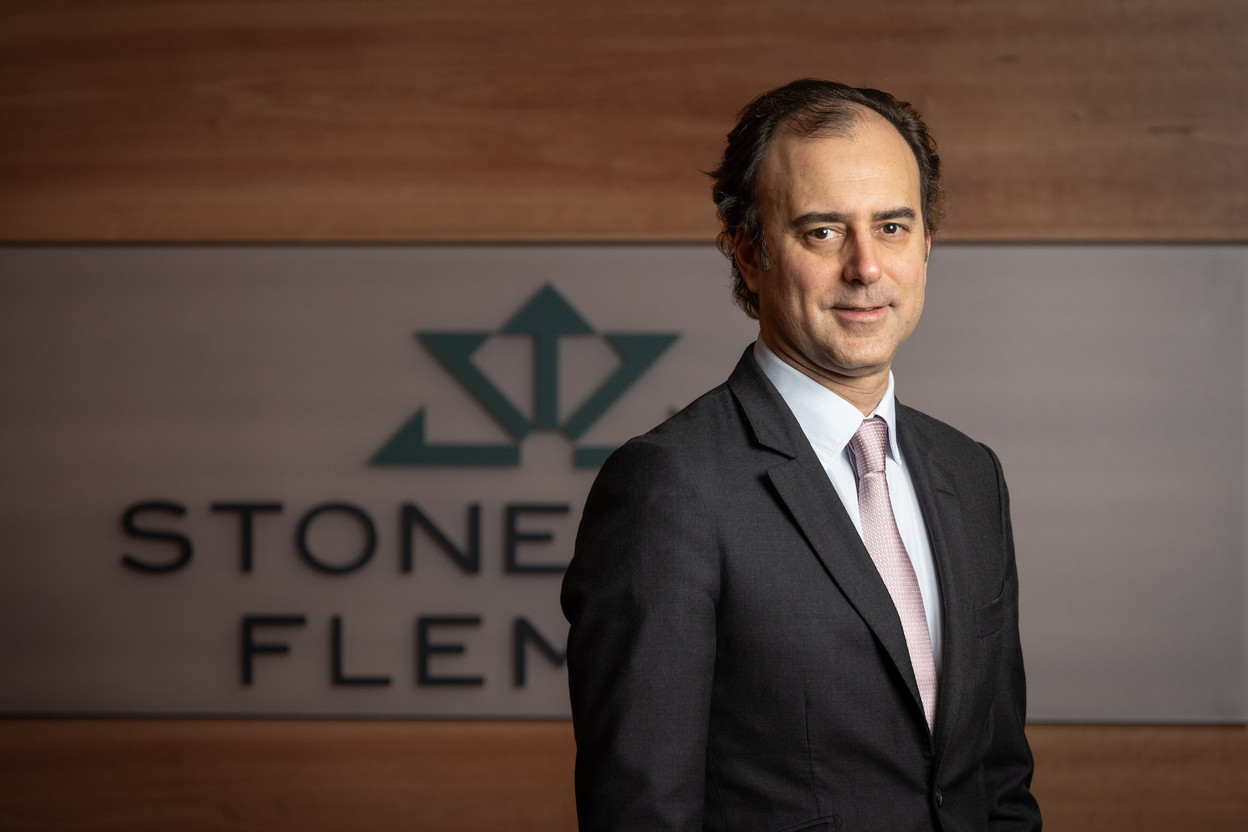
The firm is structured around three lines: firstly “sustainability & resilience”, not as a communications exercise, but as a long-term governance and performance framework; secondly portfolio analysis and risk management for investors, incorporating qualitative and materiality KPIs; thirdly support for family offices (governance, charters, succession, strategy and deal selection) with a strong behavioural economics component to secure intergenerational buy-in. To achieve this, Label R relies on a quartet of partners: Oriane Schoonbroodt, Lance McPherson (behavioural transformation), 

Orianne Schoonbroodt challenges a few preconceived ideas about sustainability. She points out that, for an investor, “sustainability is about material non-financial risks that have a direct impact on value: it is totally financial”. She cites the example of the aerospace industry: when the culture prioritises quality, “even the worker who screws in a window knows that he is working on an aircraft”, retention is better and the production chain more robust; conversely, a short-termist logic degrades know-how and safety. Her conviction: create resilient companies, capable of arbitrating over the long term, and measure what really counts, including qualitative indicators that are often invisible in standard reporting.
She is also observing a regulatory backlash in Europe. With regard to the CSRD, she deplores the fact that simplification has turned into an unravelling: “We have killed off the intention instead of lightening the execution. Materiality was at the heart of it: understanding your risks and integrating them into your business model to gain in competitiveness.” The same applies to the various ‘omnibus’ packages: the objective should have been to make the tool practicable, not to reduce its scope. Conversely, she sees major US financial players “doubling their sustainability teams” and shifting the analysis effort to Europe and Asia: “They are investing to read the data differently and choose their assets better.”
Label R’s positioning is intended to complement the Big Four: no audit, no tax, no industrial reporting of its own. “We will be the entry hub, the trusted partner: we listen to the need, we co-construct the solution, then we mobilise our network--including the big ones--for execution when process plants are needed.” The aim is to reduce the ‘vertical catalogue’ bias and get back to strategy: explaining how the world is changing, sharing the market intelligence seen in other customers, interpreting weak signals and helping to make decisions. “Customers no longer want to be sold a product to fill a fee plan; they want senior people who can integrate digital, AI and transformation”, she insists, noting that many “have improvised themselves as AI experts” without the ability to actually implement them at customer sites.
The firm claims to be “cross-border” from the outset, with clients in Luxembourg, Paris, London and the United States. On the organisational side, the quartet is setting out an evolving model: in the short term, a very senior delivery team; in the medium term, a shift by the partners to board, coaching and mentoring roles, to entrust real managerial responsibilities to a new generation equipped by AI. “We want to train entrepreneurs, not pile juniors on top of processes.”
Mrs Schoonbroodt also takes on sensitive subjects. On ESG, she advocates a “risk-return” reading without hypocrisy: defence, for example, is not excluded on principle; everything depends on business models, the proportion of lethal or non-lethal technologies, and the governance put in place to minimise risks. She sees the emergence of a ‘fourth pillar’--security--without which E, S and G remain theoretical: “If we do not ensure the security of people, spaces and infrastructures, there can be no effective ‘G’”. The same requirement for granularity applies to energy, pharmaceuticals and hydrocarbons: the analysis must compare material risks, technological trajectories and actual impact, not tick boxes.
On compliance, Label R is clear: no regulated status at this stage--“we are too small to carry this framework”--but rigorous onboarding, compliance with the RGPD and confidentiality processes, backed by accounting and legal partners, and vigilance boards. “In Luxembourg, word-of-mouth is a killer: the natural interest is to do things right.”
Finally, the method will be resolutely evidence-based: continuous market intelligence with customers, inter-sector benchmarks, and behavioural economics to make the transformation acceptable, particularly in families where generational handovers are at stake. “We show what we can do for them--agents, CRM, automation, the website--and it’s convincing. Customers want to see the real application, not slides.”
With Label R, Oriane Schoonbroodt wants to open up a space that is often missing between strategic consultancy and the big execution factories: a trusted partner, very senior, able to read the wind before it turns--and to get the teams on board to sail faster and further.