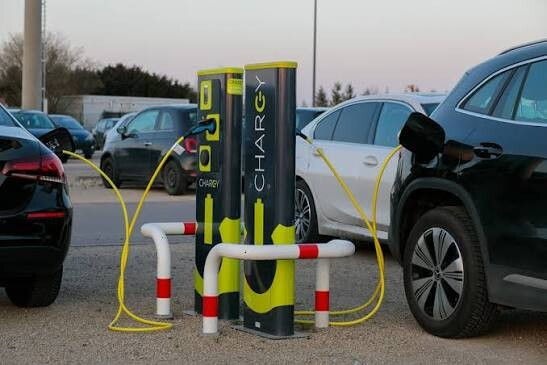
There is still room for improvement in the transparency of pricing at electric vehicle charging stations in Luxembourg. The Consumer Protection Directorate (DPC) has announced the results of an inspection campaign carried out on more than 100 charging stations across the country. The verdict: around 12 per cent of the stations inspected do not fully comply with consumer information requirements.
This campaign comes a few days after Paperjam published an analysis highlighting the growing complexity of the electric vehicle charging market. Based on data from ChargeCheck, the comparison tool developed by Klima-Agence, this analysis showed that motorists could end up paying very different amounts depending on the card, app or subscription they used, even when charging at the same station.
The inspection carried out by the DPC this time did not focus on the prices themselves, but on whether pricing information is available before charging begins. According to the authority, “the vast majority of charging stations inspected provide consumers with pricing information, enabling them to know the cost of charging before it begins”. In most cases, prices are displayed directly on the charging station or are accessible through a system deemed simple enough to enable consumers to check the cost of charging before plugging in their vehicle.
A two-tier approach to access to information
However, the inspectors identified several instances where pricing information remains less accessible. For example, some charging stations require users to scan a QR code to view the prices. Whilst this solution may comply with regulations when implemented correctly, it requires a smartphone and an internet connection, which is not the most immediate way for all users to access information.
Above all, the inspections revealed that around 12 per cent of the charging stations inspected were non-compliant. The problems mainly concern the absence of price information or information deemed incomplete or insufficiently clear to enable consumers to clearly ascertain the cost of charging before starting a charging session. Based on the approximately 100 charging stations inspected, this means that around a dozen of them did not fully comply with the current requirements.
These findings echo the difficulties highlighted by many users. In particular, our analysis showed that in Luxembourg, a 60 kWh charge could cost around 19 euros when using a suitable card, compared with nearly 30 euros when paying directly – a difference of around 61 per cent. Beyond these price differences, consumers must also be able to clearly identify the rate that will actually be applied to them.
The DPC emphasises that its aim is not to impose immediate penalties on operators but to ensure compliance. It is working with the Directorate-General for Energy at the Ministry of the Economy, as well as with Klima-Agence, to support the operators of the charging points in question. The commitments made will be monitored, and further inspections may be carried out if necessary.
“This campaign marks the first step in assessing practices within the sector. We will continue to carry out inspections in order to monitor how practices evolve, encourage efforts to improve them and, ultimately, ensure maximum transparency for all consumers,” said Martine Hansen, Minister for Consumer Protection.
Whilst the results show that a large majority of operators already comply with the information requirements, they also highlight the challenges facing a market that is evolving rapidly. As private networks expand and pricing models multiply — direct payment, RFID cards, mobile apps, subscriptions or roaming — the issue of price transparency is becoming just as important as the roll-out of charging stations themselves.