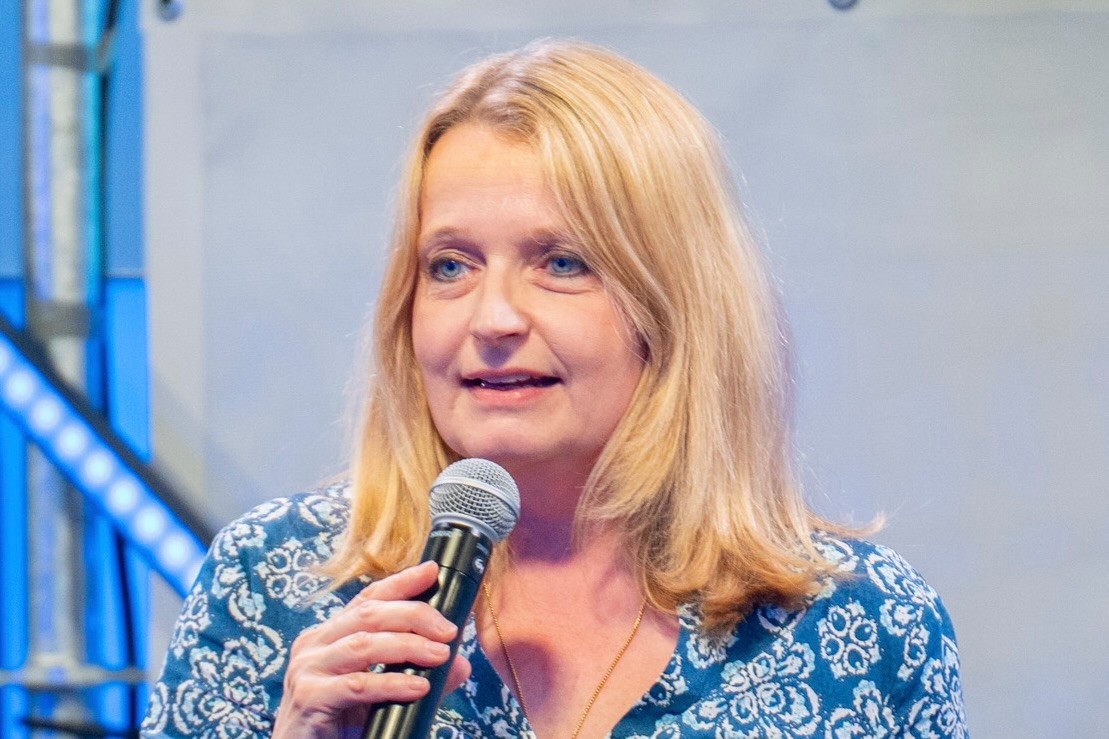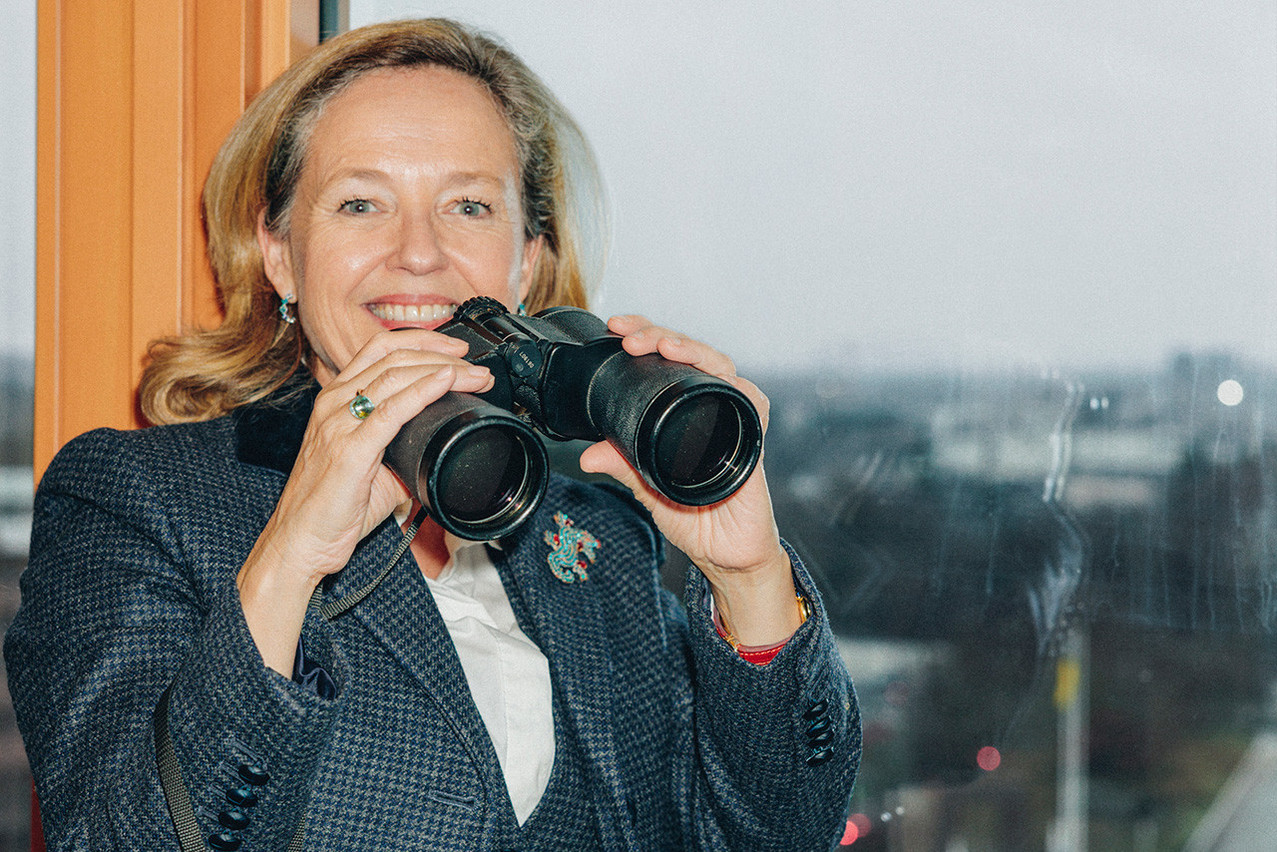
Those at the heart of these transformations see 2026 as the year of acceleration. The president of the EIB, which invests in the future; a tech executive who wants to demystify and democratise AI; a business leader confronted with the reality on the ground; an environmental figure who reminds us of the physical limits of the model; and a mobility operator who has to rethink everything. All point to major challenges: financing the transition, industrialising AI, the emergence of new ways of moving, building and producing… Each day of the week, meet a personality and hear their vision of what will shape 2026.
In recent years, the European Investment Bank (EIB) has had to undertake a strategic repositioning to address the new challenges facing the European Union. What are the main pillars of your roadmap?

Its first priority is to support the green transition of the European economy—in other words, to consolidate our role as the EU’s climate bank. The second priority is to boost Europe’s leadership in new technologies through a new programme, TechEU, to support innovators and ensure they can scale here. The third priority is security and defence, an area in which we were not very active until now.
Today, 3.5% of our total financing—or €3.5bn—supports major infrastructure, military mobility, industrial capabilities, research and innovation in the field of security and defence. There are, of course, other priorities, such as agriculture, cohesion, social infrastructure, our activity outside the EU and capital markets union.
Since 1945, we have benefitted from the peace dividend, which has enabled us to develop a market economy with solid social infrastructure and unprecedented prosperity.

Defence is a new activity for the EIB. What challenges do you face?
“Since 1945, we have benefitted from the peace dividend, which has enabled us to develop a market economy with solid social infrastructure and unprecedented prosperity. The new geopolitical reality is pushing us to become more autonomous. This requires building a truly pan-European industrial capacity to which each country can contribute. This is the case for Luxembourg with its space technologies. We have just launched Space TechEU, a dedicated programme for the European space industry that supports SMEs and mid-caps throughout the entire value chain. The aim is to mobilise €1.4bn in investments through credit lines, guarantees and technical advice. I am convinced that Luxembourg will play an important role here.
The major controversy when the EIB moved into defence was determining which activities could be financed and which should remain on an exclusion list. What does this list contain today?
“This list has been significantly reduced and now includes only weapons and ammunition. This means that in the military field, we are financing major infrastructure, facilities, mobility, research and innovation, as well as supporting and financing SMEs. In addition—and this is particularly important for Luxembourg—the EIB Group, and especially the European Investment Fund (EIF), plays an absolutely crucial role in supporting Europe’s venture capital ecosystem, and we are increasingly investing in funds specialised in the field of security and defence.
You mentioned €3.5bn in financing for 2025. What are your short- and medium-term financial targets?
“We have a significant project pipeline. Europe is clearly changing, as shown by the increasing number of major projects submitted to us in three specific areas: strengthening borders in the east; mobility; and anti-drone systems. For next year, we have proposed to our shareholders a €4.5bn envelope, the equivalent of 5% of our investments in the EU. I believe we will continue on this trajectory in the years ahead.
Beyond political debates, the reality is that businesses are investing in the climate transition.
Does this commitment to defence and security come at the expense of other priorities?
“The annual volume of financing has increased in recent years, reaching the historic level of €100bn. We have proposed to our board of directors to stabilise our activity at this level for 2026.
That said, flexibility is part of our culture. Most of the projects submitted to us combine several of our priorities. For example, we decided to finance the modernisation of the port of Gothenburg in Sweden. The works will allow the port to accommodate Nato vessels, but also strengthen environmental sustainability and technological innovation. The same applies to other investments that also contribute to Europe’s technological innovation.
The EIB presents itself as the EU’s climate bank. What are your priorities, your concrete investments for 2026 in this area?
“In recent years, and increasingly as we observe what is happening around us, while some are backtracking on climate commitments, Europe is moving forward. All 27 member states—our shareholders—have been unanimous on this. Beyond political debates, the reality is that businesses are investing in the climate transition. Our latest Investment Survey shows that 90% of European companies are investing in the green transition. It is not only a matter of competitiveness; it is also a question of security. We must reduce our dependence on fossil fuels. We have just approved our Climate Bank Roadmap phase 2, which runs up to 2030. And I can tell you that we will strengthen our investments in climate change prevention and adaptation. We will focus on projects that contribute most to Europe’s competitiveness, security and technological leadership. And we will continue to dedicate more than 50% of our investments to green activities.
I deeply regret that certain words have become taboo in some international financial institutions.
With this in mind, what is your assessment of the Cop30 outcomes?
“We can see that the world is changing on this issue, and I deeply regret that certain words have become taboo in some international financial institutions—words such as climate, rising sea levels, women, gender, development. They are now forbidden terms. We are all the more proud to continue using them and to remain an institution that promotes these European values.
Technological leadership is one of your priorities. In which technologies can Europe lead?
“We have universities, research centres and large companies that are truly world leaders. We are leaders in cleantech, healthtech, space and renewable energy. We also have a very dynamic startup ecosystem, comparable to that of the United States. Where we struggle is when these startups want to scale. We must ensure they have access to financing. That is the core purpose of the Capital Markets Union (CMU). Integrating this market will allow us to invest in the companies that will be tomorrow’s technological leaders. And here, Luxembourg has a major role to play. It is a key financial centre for Europe, specialised in investment funds, and home to a stock exchange specialising in green bonds. Europe’s strength will also be Luxembourg’s strength once the single capital market is completed.
The CMU is stalling. What can the EIB do to speed things up?
“We are very active on this file. We are working on pan-European financial instruments capable of channelling savings into productive projects here in Europe—whether through securitisation, venture capital, co-investments with corporate venture funds or via the EIF. In 2021, the European Investment Fund (EIF) launched a pioneering initiative: the European Tech Champions Initiative, which supports investment in funds that themselves invest in startups. Three such funds were created in Luxembourg. And I hope the country will participate in the European Tech Champions Initiative 2.0, which will be launched in 2026. Because I really do think that this area of venture capital is one in which Luxembourg has already clearly benefitted and stands to even more with larger funds established here in this next phase of the initiative.
Beyond your political responsibilities, you are also a woman and a mother. In the current context of geopolitical instability, how do you view Europe’s future?
“We must strengthen Europe’s voice to ensure that the emerging new world order respects our interests and values—if we want the future to allow us to celebrate another 80 years of peace, stability, prosperity and social cohesion, as we have enjoyed until now. This is what motivates me every day, in my office in.”
The 100bn mark
In 2024, the EIB Group signed €88.8bn in new financing, including €14.4bn through the EIF, which specialises in venture capital for micro-enterprises and SMEs. Of the €76.6bn lent directly by the EIB, €68.2bn went to EU countries; €8.4bn was for financing outside the EU. The official figures will be known in early 2026, but in 2025 the EIB reached the symbolic level of €100bn in investments. Nadia Calviño’s goal is to remain at this level for 2026.
This article was written for the January 2026 issue of Paperjam magazine, published on 10 December. The content is produced exclusively for the magazine. It is published on the site to contribute to the full Paperjam archive. Click this link to subscribe to the magazine.
Is your company a member of Paperjam Club? You can request a subscription in your name. Let us know via club@paperjam.lu.