Luxembourg has taken a decisive step towards reforming its personal taxation system. On Wednesday 28 October, parliament passed Bill 8676, introducing a single tax class from 1 January 2028. Led by the minister for finance, 
The change is structural: civil status will, in the long term, no longer determine the applicable tax bracket. Single people, married couples and registered partners will all be subject to the same tax rate. The government thus aims to adapt the tax system to reflect the diversity of family structures and to limit the tax implications of divorce or widowhood.
“The vote in parliament marks a decisive step in the implementation of the single tax bracket and paves the way for a more modern, fairer tax system that is better suited to the realities of citizens’ everyday lives,” emphasised Gilles Roth.
On the cost and the merits of reform
During the debates, the opposition attacked the government’s proposal on several fronts, including its fairness and relevance, given its cost. Gilles Roth estimated this cost at between €850m and €950m per year. This fall in revenue and the distribution of tax relief have fuelled the opposition’s criticism.
The surprise came from déi Lénk, which voted in favour of the reform, seeing it as a step forward for society and a tax relief for those on low incomes. At the same time, it was careful to distance itself from the government’s tax policy, which calls for higher taxes on high earners and capital.
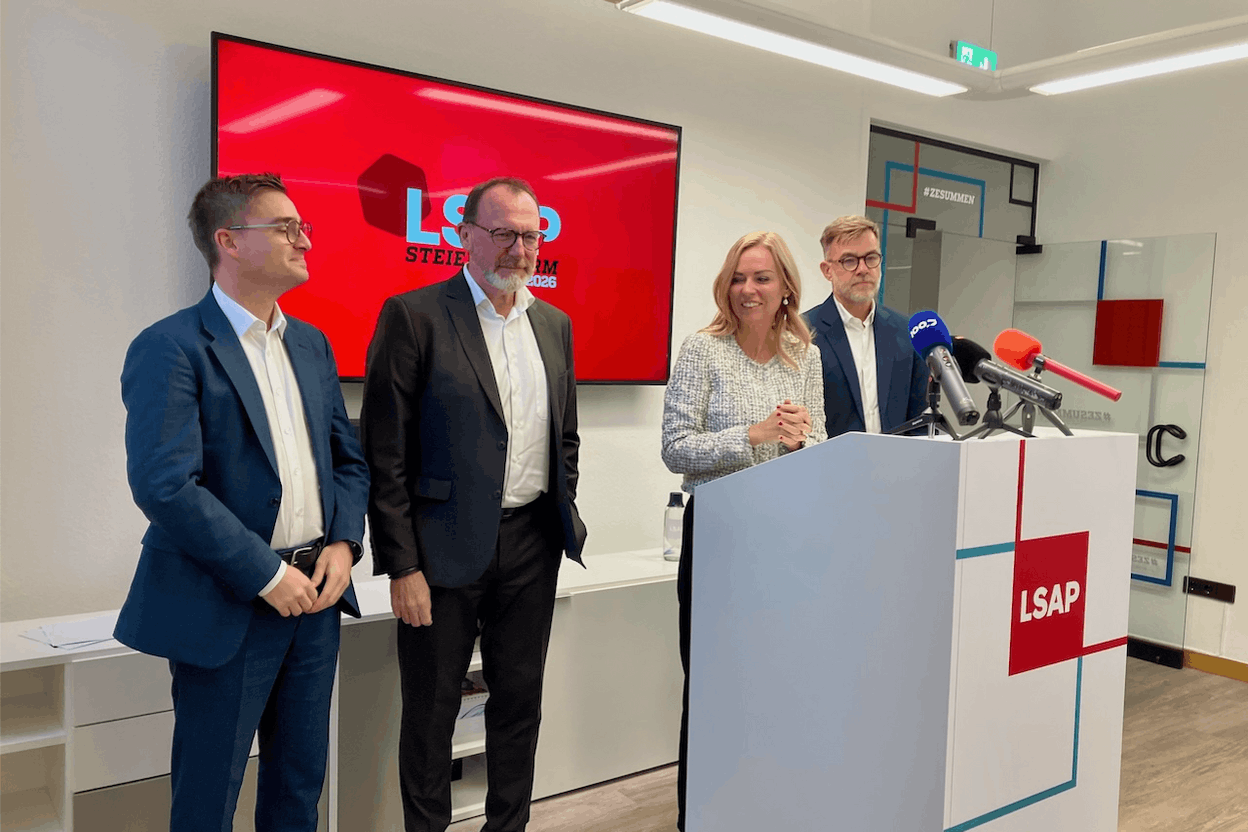
The LSAP had announced that it would abstain, whilst supporting the principle of individualisation, on the grounds that the benefits should have been more specifically targeted at those on low and middle incomes. For 
Déi Gréng voted against the proposal, considering the reform to be too expensive and not socially responsible enough. Whilst the principle of individualisation is not called into question, 
The ADR voted against the motion in defence of family choice. 

Up to €2,600 in benefits for a single person
A single tax bracket does not mean a single tax rate. Tax will remain progressive, with marginal rates ranging from 0 to 42%, before the contribution to the employment fund. However, the tax-free allowance will rise to €26,650 of adjusted taxable income, compared with the current €13,230 in class 1.
Single people currently taxed in this bracket are among the main beneficiaries. According to government simulations comparing the tax scales for 2025 and 2028, a taxpayer with an adjusted taxable income of €50,000 will see their annual tax bill fall from €7,854 to €5,254, representing a saving of €2,600. At €30,000, the saving will amount to €1,744. At €75,000, it will be €2,517. These figures include the solidarity contribution. They relate to adjusted taxable income, after applicable deductions, and should therefore not be equated with gross salary levels.
Couples with relatively equal incomes will also benefit from significant tax relief. For a household with a taxable income of €75,000, split 60% for one partner and 40% for the other, the tax bill will fall from €7,687 to €3,898, representing an annual saving of €3,789. With a combined income of €125,000 and the same split, the announced saving amounts to €5,037.
Disparities in tax relief
Individual taxation will be less advantageous for certain single-income couples or those with very uneven incomes, who currently benefit from ‘splitting’. Taxpayers who were taxed jointly before 2028 will therefore be able to retain the tax rate of the former Class 2 until the end of 2052. The switch to class U will be possible, but irrevocable. Classes 1 and 1a will automatically be transferred to this class. The promise of a reform with no losers thus rests on this lengthy transition period. During this period, the period for which the favourable tax rate is maintained following a death or divorce will be extended from three to five years.
For single parents, the relief will mainly come from the single-parent tax credit, the maximum amount of which will rise from €3,504 to €4,008. With an adjusted taxable income of €50,000, the annual saving will amount to €567 with this credit, compared with €63 for a taxpayer in tax bracket 1a without the CIM in the government’s simulation.
An early-childhood allowance of €5,400 per child under the age of three will also reduce taxable income, without constituting an equivalent payment. It will complement the increase in child benefit planned for 2027 and the improvement to the childcare service voucher scheme. Several deduction thresholds will be raised: from €672 to €900 for the relevant interest on debt and insurance premiums; to €1,500 for home-savings schemes for 18–40-year-olds and to €900 in other cases. The flat-rate allowance for domestic staff, care and childcare will rise to €6,000, up from the current €5,400. Finally, the scale will be adjusted following four indexation steps, with a rise in the thresholds of approximately 10.38% as at 1 January following the fourth instalment. The first cycle will begin in 2028. This mechanism will periodically adjust for ‘automatic tax increases’, which result in higher tax bills when incomes rise in line with inflation without any adjustment to tax thresholds.
A tax calculator for the start of the year
Individuals will now have just over a year to compare their current situation with the new scheme. The Direct Tax Authority is working on a tax calculator, which was due to be made available in January 2027. For couples who are able to retain the old tax rate, this comparison will be crucial before making any irrevocable decision.