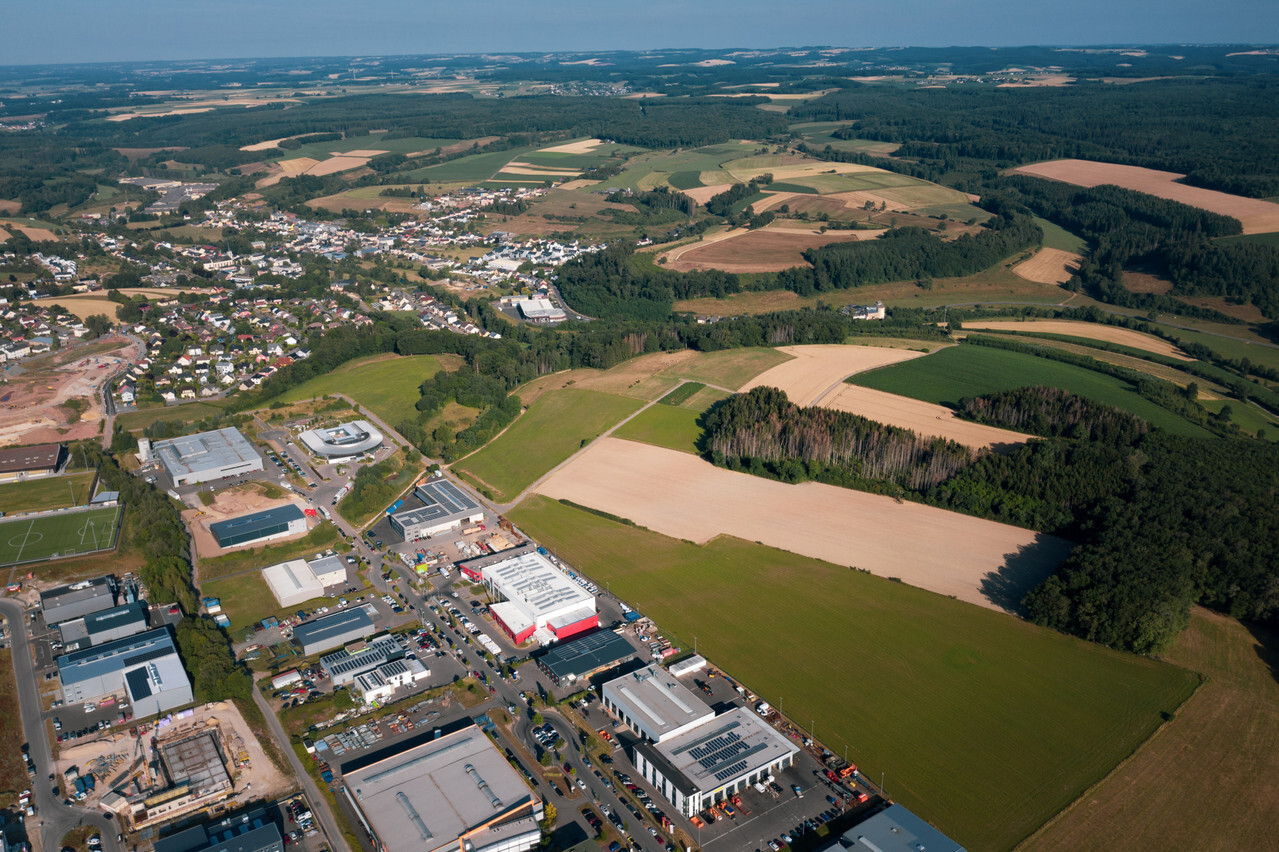
The case surrounding Google’s planned data centre in Bissen has reached a new level of tension. The Ecological Movement (Meco) is bringing out the legal heavy artillery and has instructed a solicitor to take the matter directly to the Minister for the Environment, 
At the heart of the dispute lies a question of transparency. The NGO claims that key data—energy consumption, emissions and carbon footprint—has been withheld from the public. In a letter addressed to the ministry, Meco’s lawyer, Thibault Chevrier, argues that “blanket confidentiality seems difficult to justify when it concerns information needed to assess the project’s energy consumption, its emissions […] and its environmental impact”. He also emphasises a clear principle: “Disclosure of information must be the general rule.”
The Meco had already been dismissed in 2022
This challenge is directed specifically at the confidentiality clause invoked by Google during the public consultation. According to Meco, this information is in the public interest and cannot be regarded as trade secrets. The association is calling for the procedure to be cancelled, arguing that the public has not been properly informed.
The project is also under fire for its energy efficiency. According to the NGO, the use of diesel generators, the lack of heat recovery and minimal solar power generation combine to create a model that is difficult to reconcile with the country’s climate ambitions. “It is completely absurd to simply release this precious energy into the environment,” the statement condemns.
Beyond the Google case, the matter is taking on a political dimension. It raises questions about Luxembourg’s ability to regulate energy-intensive projects whilst meeting its climate commitments. Meco refers to a “decisive turning point”, presenting the ministry with a real-world test. And this is not the first time the NGO has taken legal action over the issue; back in March 2022, the court had dismissed her case once and for all when it challenged the rezoning of the 33-hectare site acquired by Google in 2017.