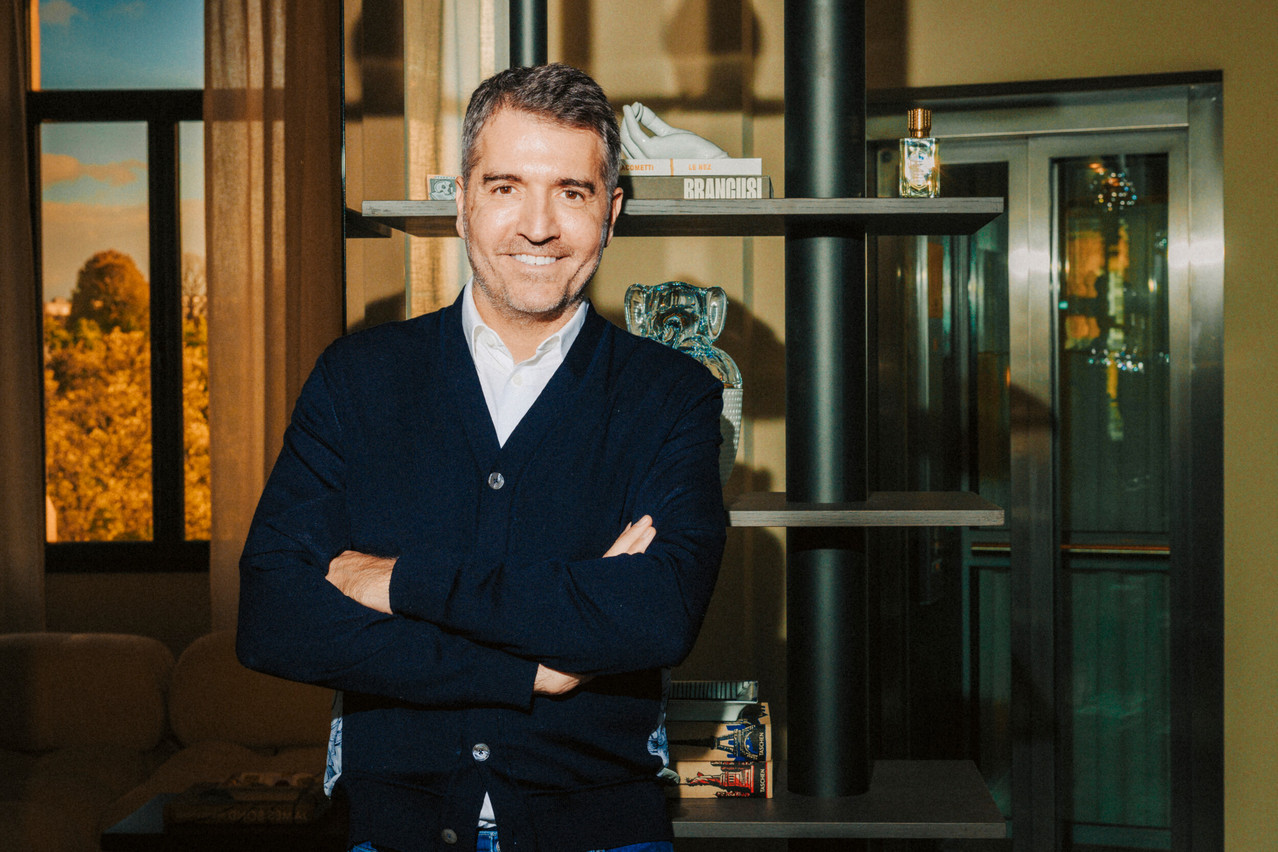
Marc Chaya has the smile of a young leading man. His slightly greying temples suggest that this is not his first attempt. The entrepreneur has stepped down from his role at the helm of the brand he co-founded with Francis Kurkdjian. Has he completely closed the door on it? “I’ve stepped down from my role, but I’ve set out a guiding vision, and I remain a consultant to Véronique Courtois and am still very closely involved, as a co-founder of Maison Francis Kurkdjian. This venture is like bringing a child into the world: it’s for life [he smiles].”
After 17 years as an entrepreneur, 23 years working alongside Francis Kurkdjian, and now in his fifties, he finds himself faced with a choice: to carry on doing the same thing over and over again, or to honour who he fundamentally is: an adventurer. “I’m convinced that life is made up of several chapters. I’ve already closed two of them and am now embarking on the third, partly here in Luxembourg.”
Beirut, war and beauty
Moving from a career at EY to setting up a perfume house is what one might reasonably call a radical change of direction. Should we look to his childhood for the origins of this inquisitive nature and this awareness of impermanence, which, in some people, ultimately gives them wings?
Not all children in Beirut have had the same upbringing, he admits. But those of his generation share the scars of war. “I can’t tell you that I have the mental health of someone who grew up in the Cantal and took their cows out to graze every morning,” he remarks.
Paradoxically enough, Beirut introduced me to beauty even whilst it lay in ruins.

“Imagine suffering from multiple traumas, 360 days a year for 17 years.” A pervasive fear mingles with horrific visions and this awareness of death, which a child does not know how to deal with, other than to project it into an uncontrollable fear of losing his parents. Marc Chaya will find these precious moments of catharsis. In his parents’ library. In video cassettes where he watches Rudolf Nureyev dance. In his bond with an Armenian neighbour, herself the bearer of a tragic fate, her mother having walked all the way to Lebanon after the Armenian Genocide of 1915.
A neighbour who introduced her to dance and classical music. An inspiring mother and father who opened her eyes to literature and music. “Paradoxically, Beirut introduced me to beauty even as it was being destroyed.”
“To die poor and only become famous long afterwards – is that what you want?”
In this family, education is not an option. “We have nothing but our brains,” is how the Chaya family puts it. The dream of the generations that came before? To give their children access to the best possible education, and to create added value through knowledge.
As a child, Marc Chaya drew. He wanted to be an architect. His father said no. A dancer? Not a chance. Artistic professions offered little in the way of security to protect his family. Vincent Van Gogh served as a cautionary tale: “To die poor and only become famous long afterwards – is that what you want?” The choice therefore remained open. Well, open between becoming a doctor, a lawyer, an engineer or a financier. Marc Chaya chose finance. Because, after all, “finance can fund anything”.
He studied economics, attended business school, gained a postgraduate diploma in finance, and then joined EY. He stayed there for 13 years. And he loved those 13 years. The company helped him overcome his feelings of not belonging. At the same time, he bought and renovated properties to satisfy his passion for architecture and harmony. So much so that he ended up earning a better living from these activities than from his job. Being a good employer, EY kept him on nonetheless.
But something is missing. Creativity – always creativity – hasn’t vanished beneath the piles of paperwork.
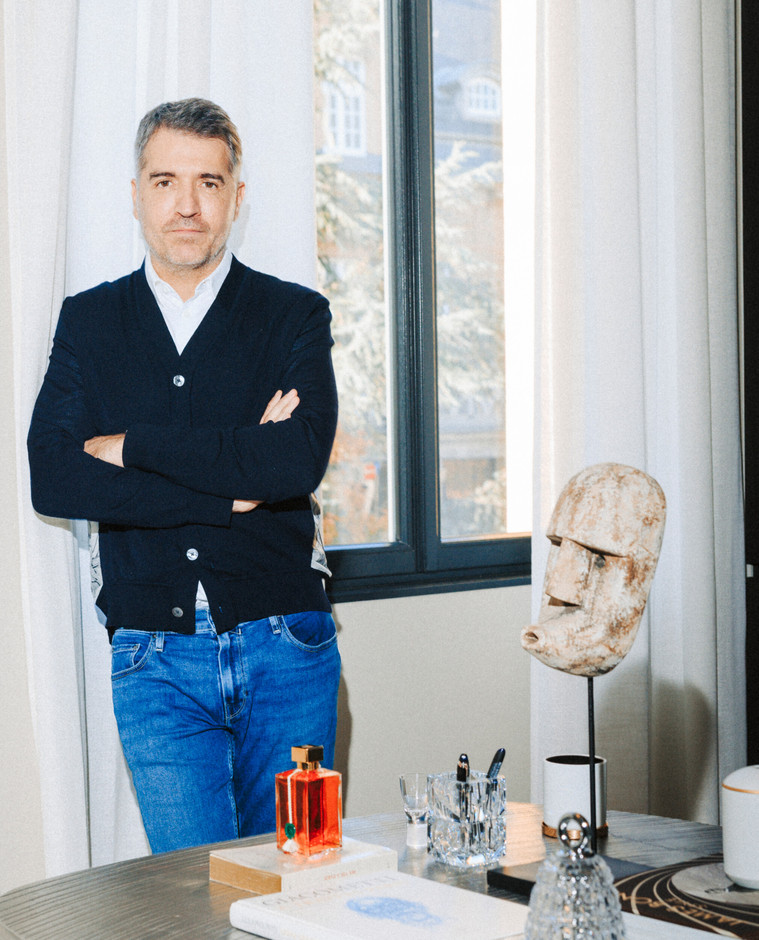
To bring someone out of the shadows, and to step into them a little yourself
His collaboration with Francis Kurkdjian will enable him to combine strategy with creativity. Bringing a brand to life, crafting its identity, its campaigns and its boutiques: all of this lies within him. All that remains is to give it shape.
The project was initially to be called “Marchand d’odeurs”, a company owned in equal shares. Then Marc Chaya changed his perspective. If he were to leave his career behind, it would be to enable Francis – and, through him, the perfumers – to return to the limelight. To exist in the same way as a fashion designer, a painter or an architect. The house would, therefore, bear his name.
How do you find your place when you’re building a house together, yet only one name appears on the bottle? “I wouldn’t say it’s easy – that would be a lie.” The irony is rather delightful. Marc Chaya has worked to bring the perfumer out of the shadows. The result is that he has, in a sense, placed himself there too. “It’s a price I’ve paid – I wouldn’t say gladly, but with great conviction and dedication.”
Nothing beautiful arises from banality. We must nurture creativity without losing sight of the realities of business.

Francis is responsible for fragrance creation. We’re all too quick to assume that he’s in charge of management and finance. In short, he’s not the sort of person who inspires dreams. Except that “strategy is a form of creativity”. And there’s a great deal of him in this company’s identity.
Their partnership is built on friendship, respect and shared values. And on disagreements, too. “Meetings weren’t always plain sailing. But nothing beautiful comes from banality. We must nurture creativity without losing sight of the realities of the business.”
In his view, LVMH’s investment will be “a positive boost”, preserving their independence whilst providing the means to grow. He had committed to remaining as chief executive for at least nine years. He has kept that commitment.
According to the figures he cites, the company employs more than 600 people and operates in over 52 countries. It will continue to grow. He, however, wants to take a different path. “I learnt at a very young age that time is a very scarce commodity and that life can come to an end at any moment.”
“Would we celebrate a Beyoncé knock-off?”
His new campaign builds on his previous one: having helped to raise the profile of the perfumer, he now aims to secure recognition of his rights over his creations. “I can protect the shape of the bottle, its name and its cap.” But what about what’s inside? This is precisely where Marc Chaya wants to see legal recognition evolve. He finds it unbearable to be able to defend everything surrounding the perfume without protecting its contents in the same way.
He sees in this the legacy of an ancient hierarchy: sight and hearing were associated with the fine arts, whilst smell and taste were regarded as inferior senses. Other forms of creativity have found their place in schools and museums. Perfume, it seems, has been left out in the cold.
We learn to talk about painting and music. When faced with a perfume, we often limit ourselves to saying, “it smells nice” or “it doesn’t”. And to a list of raw materials. As if a painting could be reduced to yellow, red and blue. Even that term we find so charming, “a nose”, annoys him. “Is Picasso an eye?” A perfumer conceptualises a scent and writes a formula just like a musical score. His work cannot be reduced to a single, exceptional organ.
People think I’m mad. And they’re quick to assume that my move is primarily for tax reasons.

The phenomenon of “copycats” – those imitations celebrated on social media because they cost far less – is the focus of his anger. Behind every success, he points out, there are sometimes 30 years of hard work, investment and setbacks. Copying what works without acknowledging what came before obviously allows you to sell at a lower price. “You haven’t invested anything; you’ve just copied. Would we celebrate a Beyoncé knock-off? Would we accept a plagiarised work by a writer we love with the same enthusiasm?”
Luxembourg, a gem in its own right
And this new chapter is being written in Luxembourg. Is it because of its brilliant microclimate? The joke comes up quite quickly, helped along by the bright sunshine that everyone agrees on. Marc Chaya loves hidden gems. He’s known the country since 2007 and says he’s loved it ever since his very first visits.
“People think I’m mad. And they’re quick to assume that my move was primarily for tax reasons.” He disputes this: if that had been his only motive, he insists, he would have chosen a Caribbean island.
His inspiration lies elsewhere. To get away from the hustle and bustle of Paris and rediscover a less chaotic international capital. He loves this city, which is both ancient and contemporary, its roots, its history and the Kirchberg. He finds something comforting there.
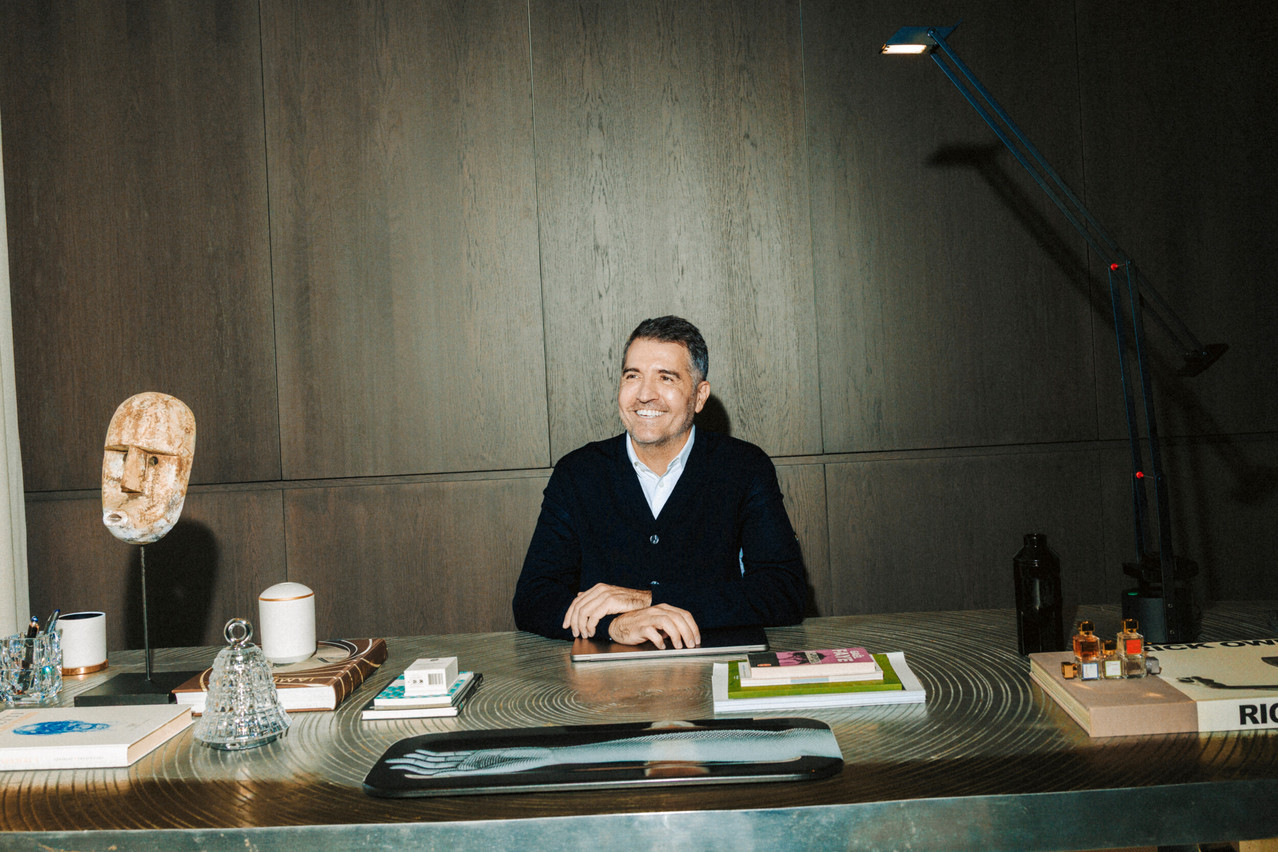
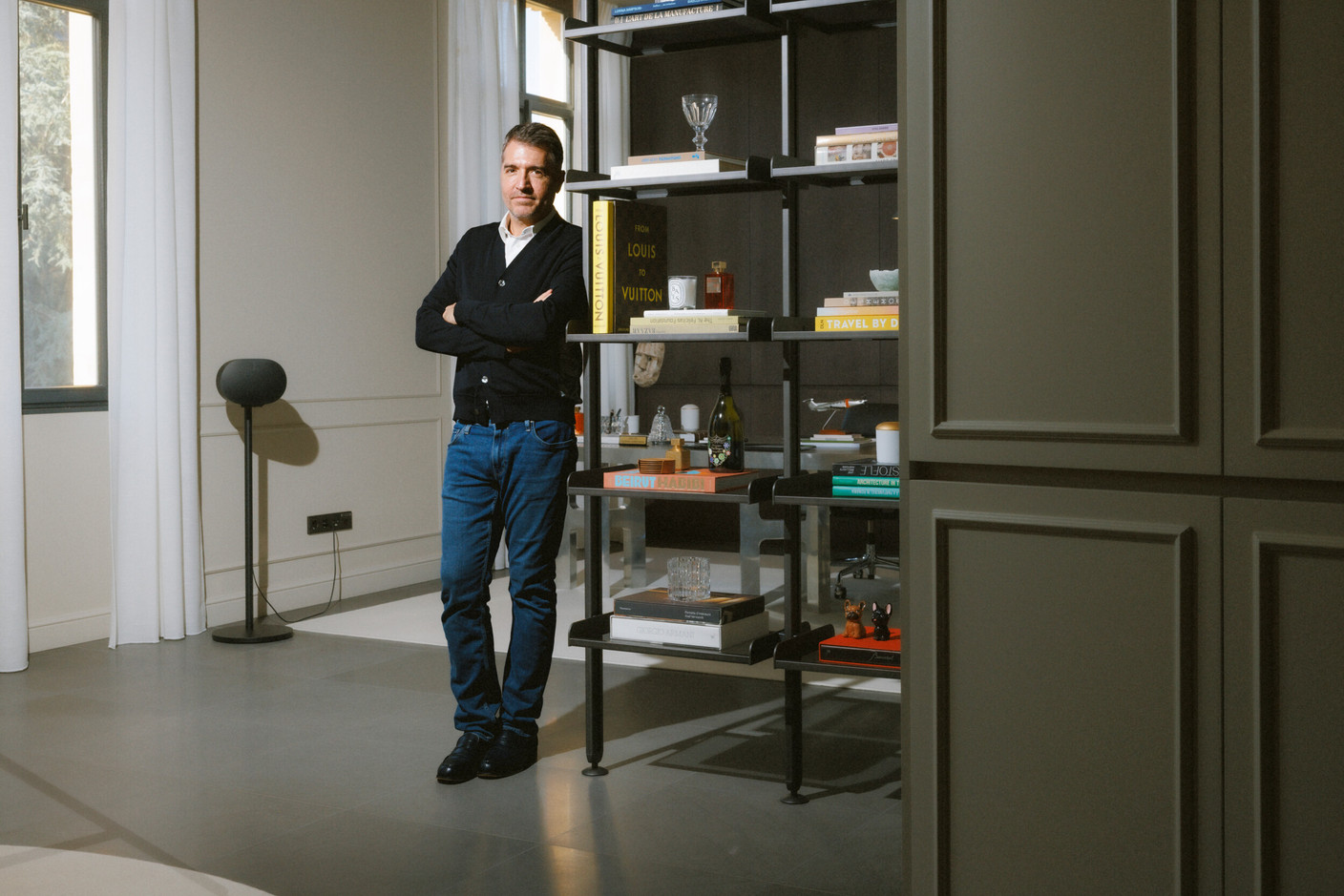
Philanthropy is following suit, as Marc Chaya intends to transfer his French endowment fund to Luxembourg and transform it into a foundation dedicated to education. (Photo: Julian Pierrot/Paperjam)
Even the Luxembourg sky finds favour in his eyes. But the man did not come just to discuss the weather. Luxembourg will be the base for his investment activities: supporting companies and entrepreneurs in whom he sees potential, through financial and human resources and by sharing his experience. His condition: understanding the founders, appreciating their work and recognising that ability to create meaning.
Philanthropy is following suit, as he intends to transfer his French endowment fund to Luxembourg and transform it into a foundation dedicated to education. As a partner of the ESA Business School in Lebanon, he already funds educational programmes and student grants. Education, yet again. The family’s dream is thus finding new beneficiaries.
I would love for Luxembourg to be the place from which this final great victory for rights in Europe emerges.

To those who might wish to follow in his footsteps, he advises them to forget about instant gratification. “The world isn’t Instagram.” He seems to have stepped down from a role, having little appetite for hard work.
Let the movement start here
His most unique project could secure the Grand Duchy a place in the history of fragrance creation. Marc Chaya is putting together an alliance bringing together leading figures from the worlds of perfume, writing, lobbying and law. He hopes to have the members on board by the end of the year.
The aim: to explain the perfumer’s artistic approach, challenge clichés and move towards the recognition of copyright. “It’s not just chemistry.” He does not claim to be waging alone a battle that others have fought before him. What he is good at is organising, mobilising and bringing people together. And providing financial resources. Money is often the key to success.
Why start from Luxembourg? For Marc Chaya, there is no doubt about it: this country, which welcomes people from all over the world, is also a European country, home to the Court of Justice of the European Union. “I would love for Luxembourg to be the place from which this final great victory for rights in Europe will emerge.”
It’s an ambitious plan. And so is the man behind it. He’d like to see a movement start here. So why not, since it’s a promising idea.