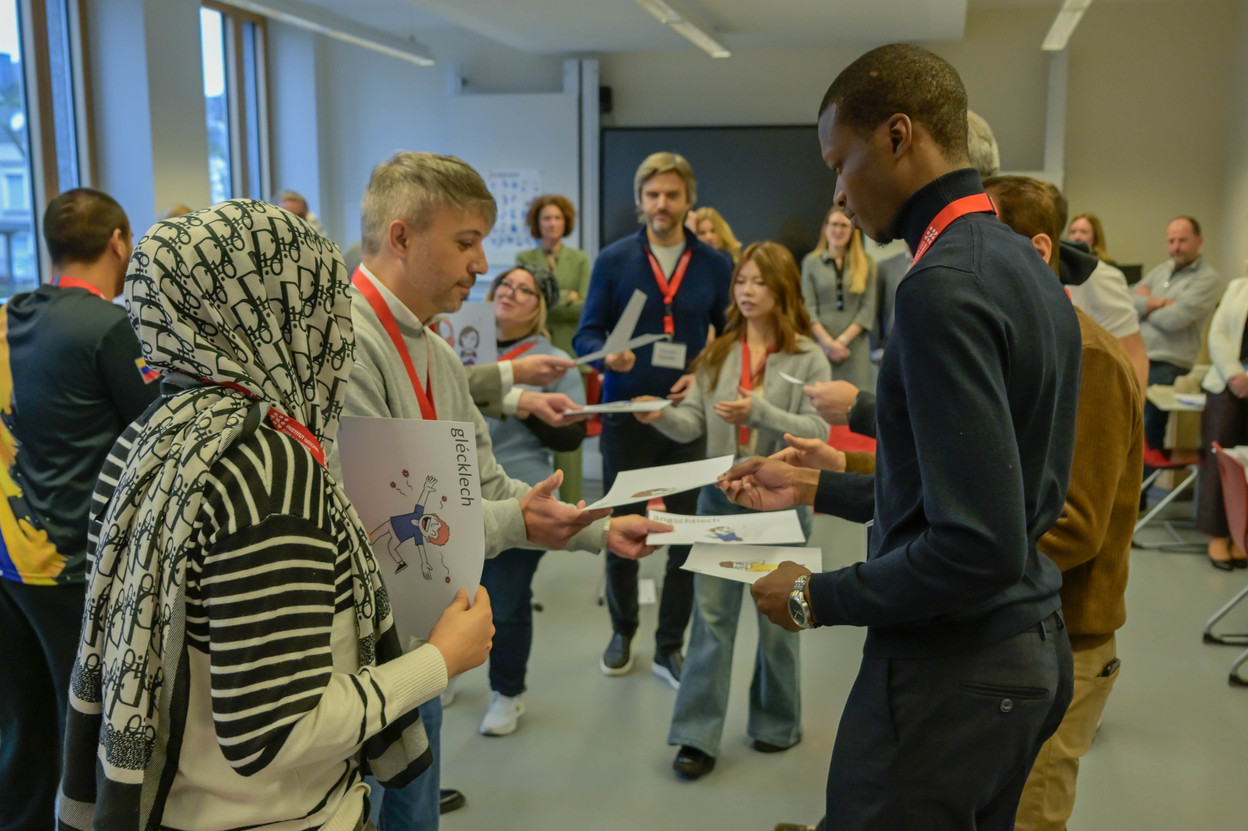
While the INLL recently presented a new method for learning Luxembourgish and French, over the last five years, Lëtzebuergësch has become the leading language in courses subsidised by the Ministry of Education in local authorities. More than one in two courses is devoted to it (55.06%), with 1,648 sessions organised and 26,387 enrolments in the twenty or so participating communes.
French occupies a distinctly secondary position, accounting for around a quarter of courses (25.46%), while English (8.29%), Spanish (3.88%) and German (3.37%) remain much more marginal. The other languages, including Italian, Portuguese and sign language, each exceed only a few dozen courses over the whole period, according to the parliamentary reply from Minister 

French students in the majority on Luxembourgish courses
Take-up of these courses remains high overall. Average participation rates exceed 70% for all the languages observed. Spanish and sign language even show levels above 83%, while French, German, Italian and Portuguese are around 75% or more. Lëtzebuergësch, despite much higher volumes, also maintains a participation rate of over 72%.
Participant profiles vary greatly depending on the language taken. Lëtzebuergësch courses mainly attract French (29.36%) and Portuguese (16.95%) nationals. The majority of participants in French courses are Portuguese (24.25%), followed by Syrians (16.97%) and Ukrainians (11.68%). Luxembourg nationals are in the majority in all the other language courses: English (13.97%), Spanish (71.56%), German (18.93%), Italian (51.74%) and Portuguese (77.52%).
On the organisational side, courses are almost exclusively scheduled during the week. Sessions are mainly concentrated between 8am and 8pm, with peaks at the beginning and end of the day: 24.48% of sessions take place between 8am and 10am, 15.17% between 4pm and 6pm and 34.28% between 6pm and 8pm.