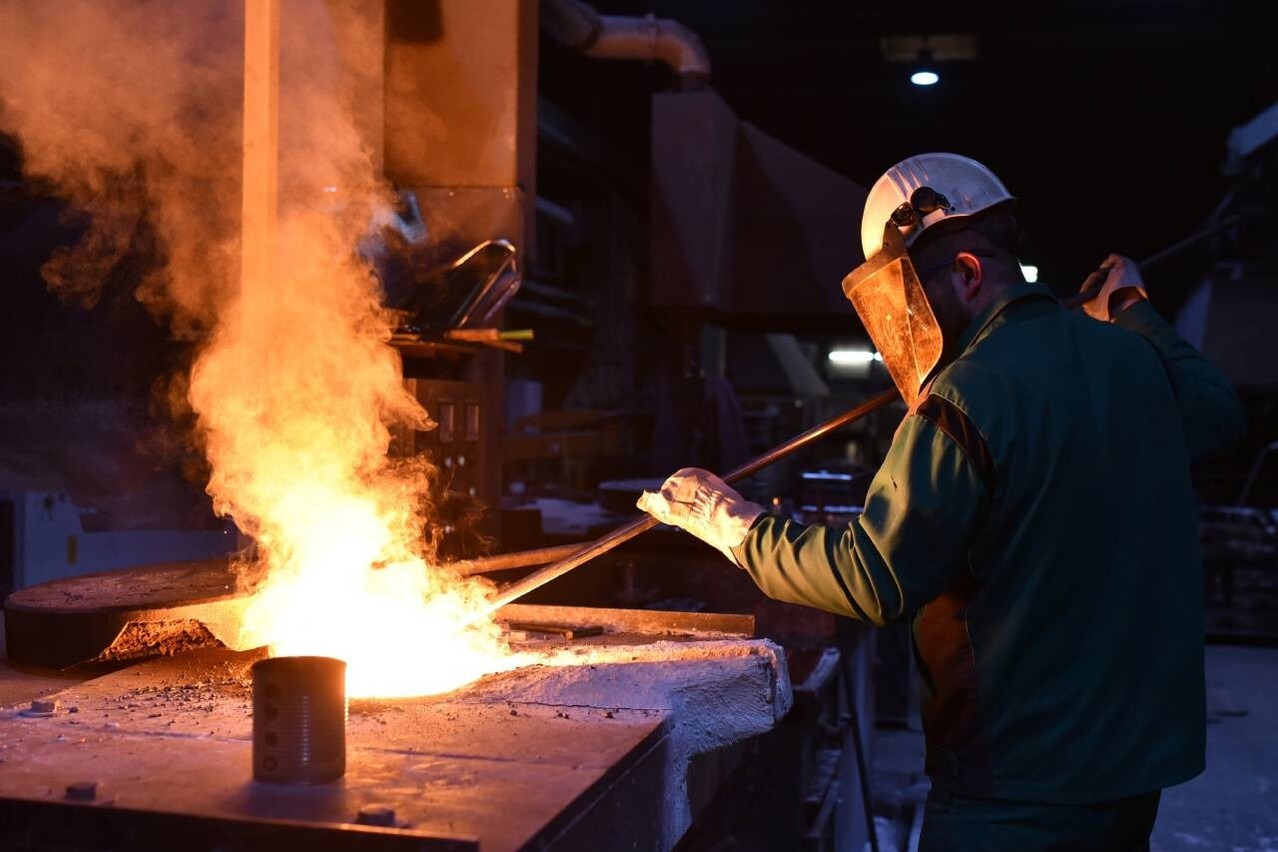
Luxembourg’s manufacturing sector has got off to a slow start in 2026. In the first half of the year, output fell by around 5% year-on-year, whilst it rose by 0.4% in the eurozone, according to Statec’s September “Conjoncture Flash” report.
Industrial production refers to the volume of goods manufactured by companies in sectors such as steel, metalworking, machinery, glass and transport equipment. This indicator measures the quantities produced, regardless of price trends.
“Industrial output in Luxembourg fell sharply in the first half of 2026,” reports Statec. This trend is widening the gap that Luxembourg has been showing for several years compared with the European trend. The comparison with the eurozone excludes Ireland, where the activities of multinationals have a significant impact on the figures.
The metalworking sector is bearing the brunt of the downturn
The manufacture of metal products has seen the sharpest decline, with a 24% fall in Luxembourg, compared with 0.4% in the eurozone. The steel industry has contracted by 13% in Luxembourg, whilst it has grown by around 1% across Europe.
Production of capital goods, meanwhile, fell by 12%. However, this sector is subject to significant year-on-year fluctuations and still recorded growth of around 5% in 2025.
Most sectors are growing
The overall decline does not affect the entire Luxembourg industry. Of the 18 sectors covered by Statec’s data, 11 are producing more than they did a year ago. The manufacture of glass, refractory products and ceramics is growing, as are the transport equipment and extractive industries. However, these increases do not offset the sharp declines in the metalworking, steel and capital goods sectors.
Manufacturers’ confidence has been rising since its low point in January 2026, thanks to more favourable views on order books and production prospects. “The improvement is not yet reflected in the production figures,” Statec points out, however.
Confidence is also rising in the eurozone, where it reached its highest level in two and a half years in August. However, tensions in the energy markets and supply chains could “put a damper on the recovery”.
Manufacturing employment falls by 3.3%
The slump in production has been accompanied by a fall in the workforce. Between the start of 2023 and the second quarter of 2026, industrial employment fell by 1.5% in Luxembourg, compared with 0.4% in the eurozone. The decline reached 3.3% in Luxembourg’s manufacturing sector, representing “a loss of almost 1,100 jobs”, according to Statec. In the eurozone, the manufacturing workforce fell by 1.3% over the same period.
The institute believes that this decline “must nevertheless be put into perspective”. In Germany, industrial employment has fallen by more than 4% since the start of 2023. In Luxembourg, following falls of 0.9% in 2024 and 0.3% in 2025, the workforce grew by 0.2% in the first half of 2026.