For 30 years, den Atelier has embodied a rare form of independence in Luxembourg culture. Founded in 1995 by a group of enthusiasts, the venue has established itself as a major player in Luxembourg’s live music scene, while remaining privately owned and self-financed. Going against the grain of a largely subsidised sector, it has built its model on rigour, risk and freedom.
His co-founder, 
When you think back to the early days of den Atelier, what comes to mind first? The energy, the chaos, the naivety or already a form of vision?
Laurent Loschetter. - “The vision was there from the start. I don’t think a project can exist without a vision. You have to know where you want to go, even if the path takes shape as you go along. The early days were clearly amateurish. We’ve been lucky, we’ve put in a lot of hard work, but there have also been times when, looking back, we’ve said to ourselves: never again. Standards have changed, and so have the ways we work. Today, we’re very strict about safety, access and behaviour. Back then, it was more like a village party. It was rock’n'roll, but that’s also what forged our identity.
At what point did you realise that this was more than just a music venue, a real cultural enterprise with its own constraints?
“The trigger is when you reach your personal limits. When you realise that you can no longer do everything with your friends in their spare time. At some point, you have to hire professionals, people who do just that. About fifteen years ago, we recruited a director, a financial manager... From then on, everything became more structured. That was the end of the group of mates and the start of a real company.
Luxembourg has a very state-run system and that’s fine for certain missions: museums, conservation, subsidised creation. But we also need players who can make decisions quickly, without a political filter.
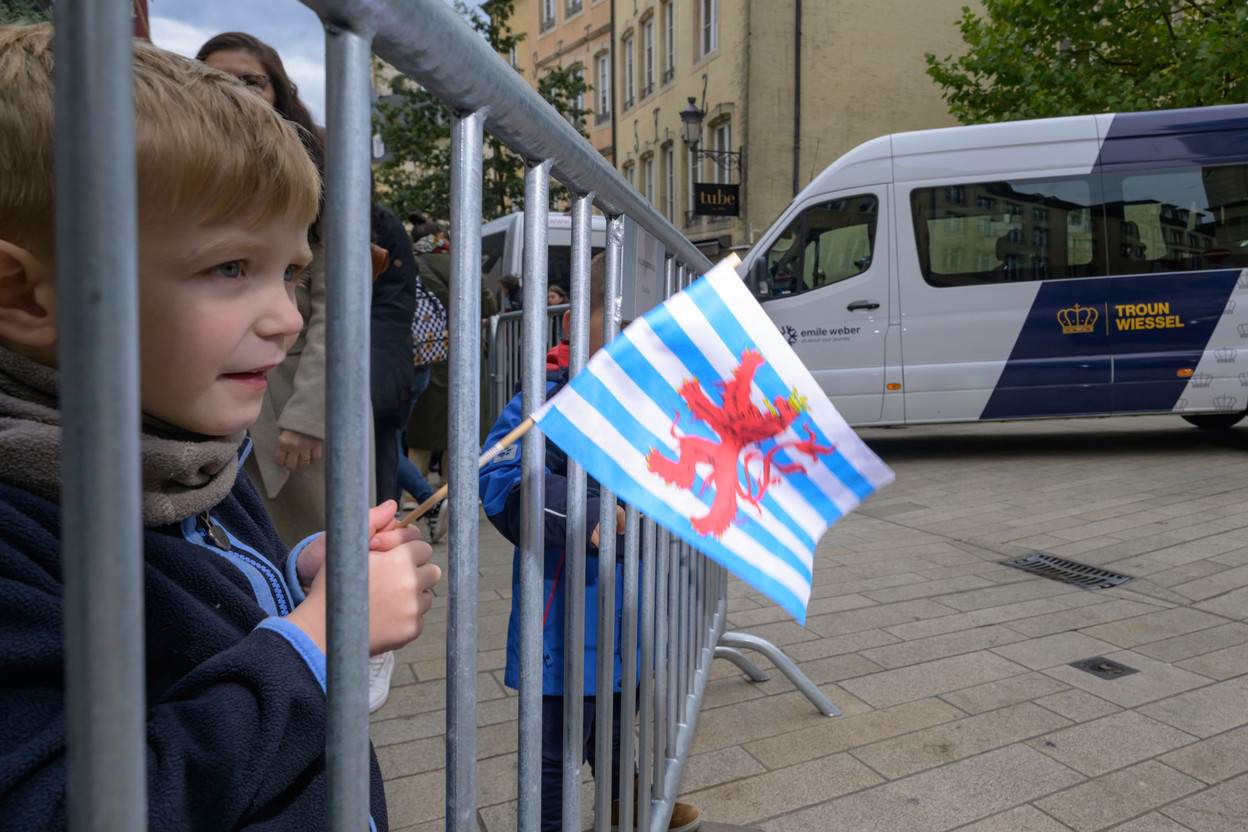
The Trounwiessel was a nationwide project, funded by the state; around €7 million in total, including €4 million for the part you produced. Some people were surprised that it was den Atelier, a private company, and not Rockhal, a public company, that was responsible for the event. How did you feel about that?
“Quite simply, it’s an incredible honour. It’s the result of the immense trust that important people have placed in us. I’m deeply proud of that. We’ve worked hard and I think we’ve got it right. Our idea from the outset was to showcase the best that Luxembourg has to offer. On the day, it was the locals who were on stage, not extras. Around 3,000 volunteers and 650 people worked on the project. It was gigantic. The emotion was such that we cried for four days afterwards. Yes, there was some controversy, but it slipped my mind. We simply did our job with passion and high standards.
You’ve often tried to build or obtain a bigger hall, in Sterpenich, Hollerich... without it materialising. Looking back, was it a frustration or an opportunity?
“Both. Every time we considered a new venue, we felt resistance; not from the authorities, but from the public. People told us: don’t touch den Atelier. And in the end, maybe they were right. It’s become our house in the meadow. We like it here. Our offices, our canteen, our life is here. And looking back, our unfinished projects were perhaps a sign. If we’d had a big venue before Covid, we would have suffered. Being small and agile is what saved us. We have a permanent team of eleven, but a hundred or so regular contributors. That’s our strength. We remain free to do only what we want to do.
I’ve always said that den Atelier is an old lady. Not very glamorous during the day, but who transforms herself as soon as she gets ready for the evening. There’s something magical about this venue.
Your venue is in the heart of the station district, an area that has changed a lot. How has this affected your day-to-day work?
“The area has become complicated, we’re not going to lie. There are evenings when we simply have to enlarge the area we manage to 200 metres around the venue. It’s not a security perimeter, but a necessary vigilance. There’s more tension, more behaviour to watch out for. We don’t feel threatened, but we can’t turn a blind eye either. And yet I don’t want to leave here. This is our neighbourhood, our history. This place is also what makes up the identity of den Atelier.
Thirty years in culture is rare. Have you had the impression of having to reinvent yourself regularly or rather of holding on to a constant thread? And how does this longevity fit in with your independent model?
“I think there has always been a common thread: doing what we love, with sincerity, and doing it well. We’ve never been preachers, just demanding enthusiasts. Of course, we’ve had to adapt. The rules, the audiences, the artists, everything has changed. But our way of doing things hasn’t changed. Den Atelier has a soul and that’s its strength: a real closeness with the audience, a human side that can't be decreed. We've always wanted to remain honest, on a human scale. That's what has kept us going. And yes, I think our model is still viable, even necessary. Private enterprise has its place in culture. Luxembourg has a highly state-run system, and that's fine for certain tasks: museums, conservation, subsidised creation. But we also need players who can make decisions quickly, without a political filter. It's this mix of public and private, rigour and passion, that makes a cultural scene breathe. And I think our longevity is proof of that.
What do you see as the main risk to den Atelier's model?
“Globalisation. Two global giants (Live Nation and AEG) are buying up everything: artists, tours, venues, radio stations... They control the chain from A to Z. The day they decide to open an office in Luxembourg, they risk absorbing the entire market. So yes, maybe one day they'll call me up with a big cheque to buy den Atelier. (Laughs.) It's not what I want, but it's a possibility. That's the only real risk I see today.
When you're alone here, in the empty room before a concert, what do you feel? Pride, nostalgia or just peace?
“That's a great question. I've always said that den Atelier is an old lady. Not very glamorous by day, but transforming as soon as she gets ready for the evening. There's something magical about this room. She soaks up the energy of the audience. One night it's metal, the next it's pop, soft and bright. And when it's empty, I realise how small it is... but when it fills up, it seems immense. That's den Atelier: a place that's alive, changing, unpredictable and always sincere.”