
Global fund managers are losing enthusiasm for the artificial intelligence boom, but they are still far from abandoning risk. Bank of America’s November survey shows investors cutting their technology overweight at the fastest pace since June 2006 (see chart 1), even as cash holdings fall and recession expectations remain exceptionally low.
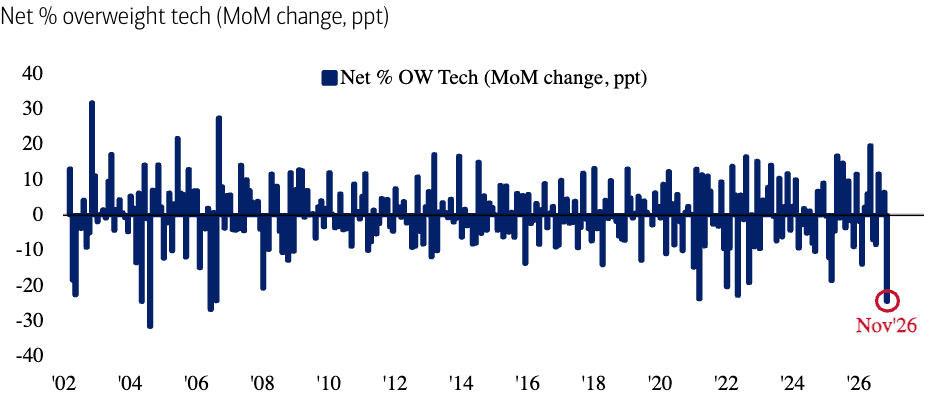
Chart 1: FMS investors slash tech allocation by most since Jun'06 Source: BofA Global Fund Manager Survey
The result is a market mood that is increasingly selective, yet still optimistic. Investors are questioning the companies and spending plans behind the AI trade while continuing to expect a relatively benign economic outlook.
The survey, conducted between November 6 and 12, drew 193 participants managing $526 billion. Of those, 169 managers overseeing $461 billion answered the global survey questions.
A soft landing replaces the boom
For the first time since June, a soft landing is investors’ preferred economic scenario. Half of respondents expect that outcome over the next 12 months, compared with 42% anticipating a “no landing” environment of continued economic strength. Just 3% expect a hard landing.
However, confidence in the pace of growth is weakening. A net 14% expect the global economy to deteriorate over the coming year, the most negative reading since April. Meanwhile, a net 32% expect lower global inflation, marking the weakest inflation expectations since October 2024.
Together, those responses suggest investors increasingly envisage slower growth and easing price pressures, without a recession.
That moderation has barely dented their willingness to stay invested. Average cash holdings fell to 3.6% from 3.9%, their lowest level since August (see chart 2). BofA’s broad survey sentiment measure slipped only marginally, to 6.3 from 6.4.
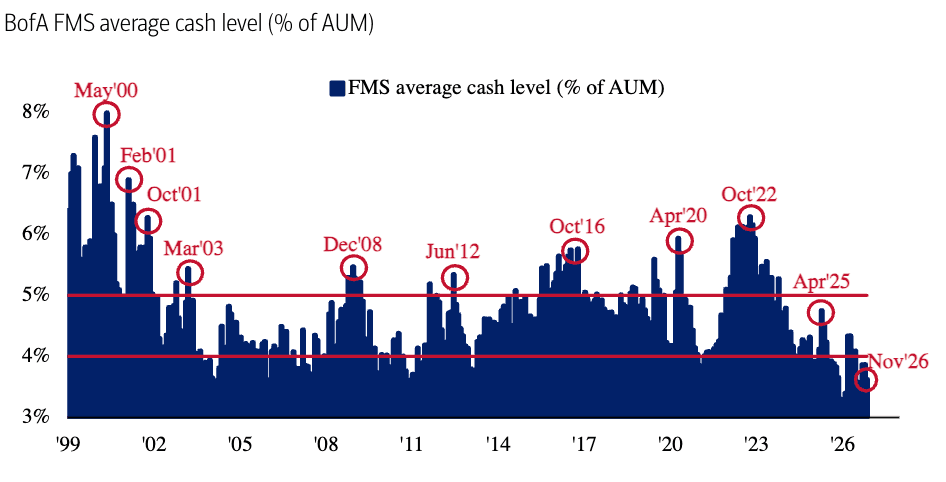
Chart 2: FMS cash level falls to 3.6% from 3.9% Source: BofA Global Fund Manager Survey
For the bank’s strategists, that combination provides little evidence of the fear they would want to see before becoming more constructive on risk assets.
AI spending faces a confidence test
The strongest shift concerns corporate investment. A record net 38% of respondents believe companies are overinvesting (chart 3), while only 16% want businesses to increase capital expenditure, the lowest proportion since May 2020.
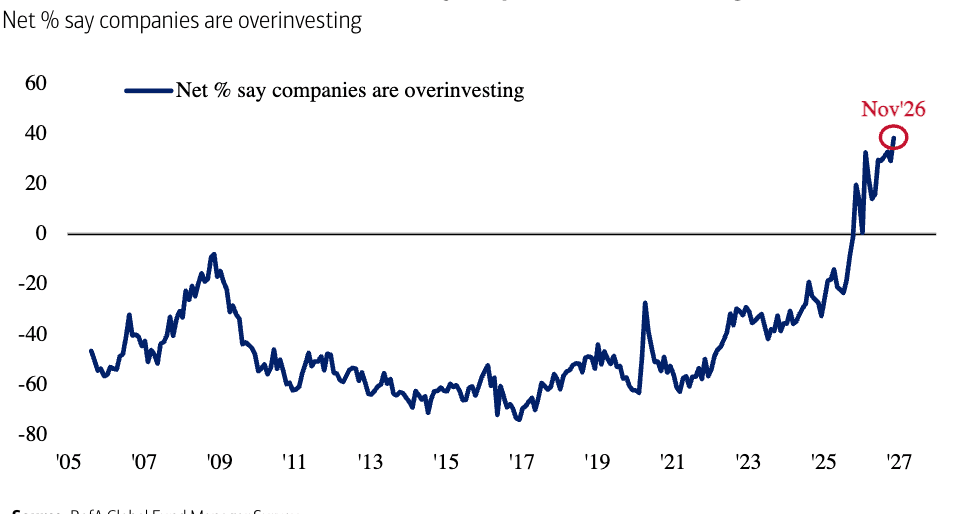
Chart 3: Record net 38% of FMS investors say companies are overinvesting Source: BofA Global Fund Manager Survey
More than half (52%) expect an AI hyperscaler to announce a capital expenditure cut within six months, up from 30% in October.
Concern is also extending into credit markets. An AI bubble ranks as the largest tail risk, selected by 34% of respondents, followed by an AI hyperscaler credit event at 31%. In a separate question about the most likely source of a systemic credit event, 38% identify hyperscaler bonds and 30% point to private credit (see chart 4).
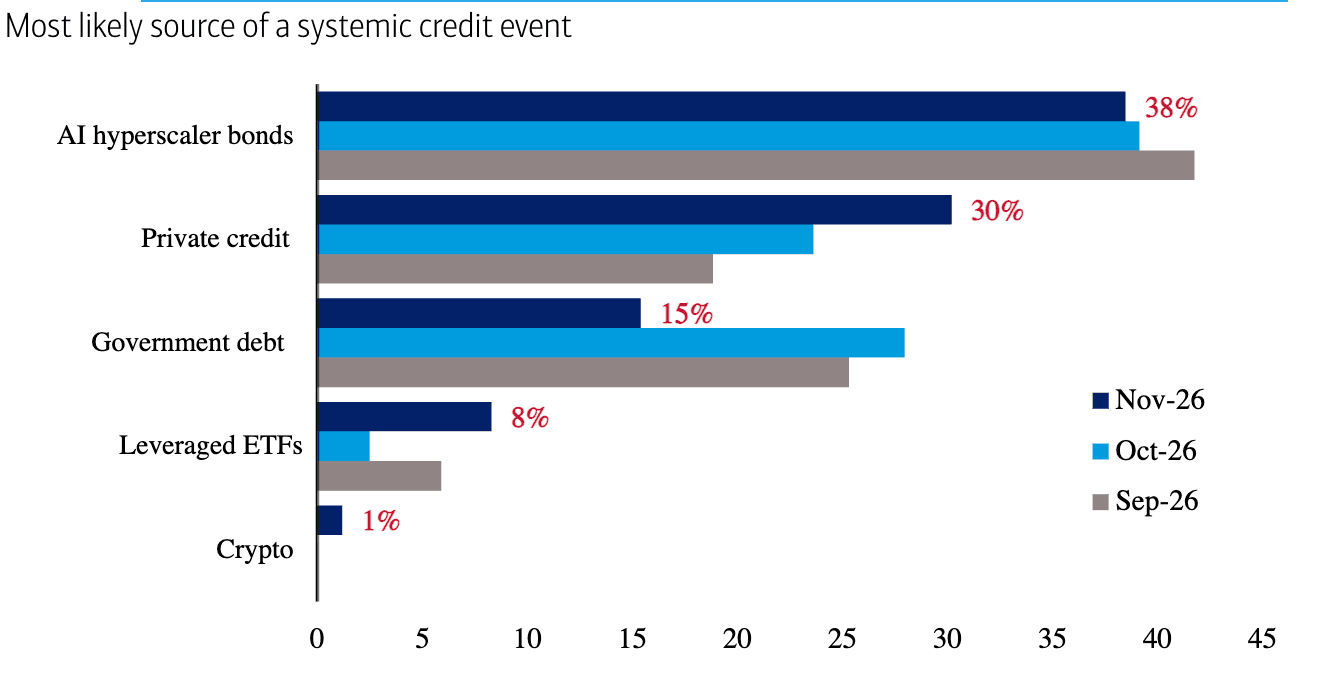
Chart 4: 38% of FMS investors say AI hyperscaler bonds = most likely source of credit event Source: BofA Global Fund Manager Survey
These are perceptions of vulnerability, rather than forecasts that a credit event will occur. Nevertheless, they show investors looking beyond AI’s growth potential to scrutinise its financing and investment demands.
Long global semiconductors remains the most crowded trade, cited by 39%, although that share has fallen substantially from July’s 82% peak.
Portfolios rotate towards healthcare, consumers and bonds
The retreat from technology is accompanied by a broader rotation. Managers increased allocations to healthcare, consumer discretionary, consumer staples and bonds.
The combined allocation to the two consumer sectors recorded its largest monthly increase since June 2006. Both remain underweight, however, suggesting a reduction in bearish positioning rather than an outright embrace.
Bond allocations rose by 13 percentage points, leaving a net 23% underweight—the smallest underweight since November 2025. Investors nevertheless say a 10-year Treasury yield of approximately 5.8%, on a weighted-average basis, would be needed to prompt a shift from equities into bonds.
Gold also stands out: a record net 23% consider it undervalued (see chart 5)
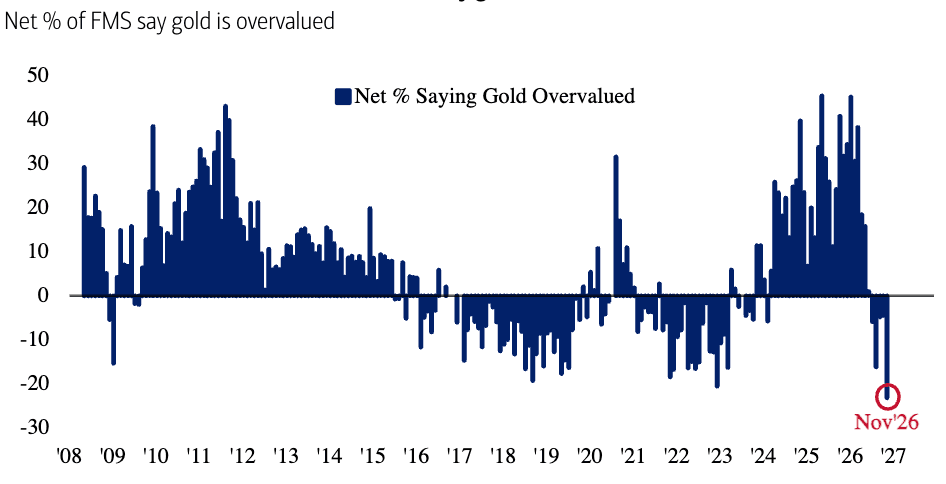
Chart 5: Record net 23% of FMS investors say gold is undervalued Source: BofA Global Fund Manager Survey
Equities remain the favourite for 2027
Looking ahead, 36% expect international equities to be the best-performing asset class in 2027, followed by US equities at 24% and gold at 17%.
The Nasdaq and MSCI Emerging Markets tie as the preferred equity indices, each attracting 21% of responses while the Euro Stoxx Europe is at 19% (see chart 6). The Nasdaq’s position suggests that longer-term confidence in technology has survived November’s reduction in exposure.
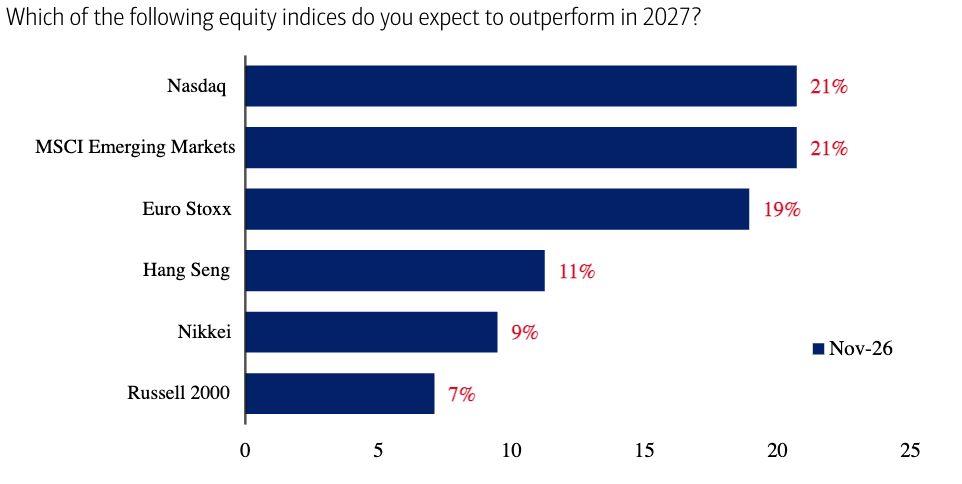
Chart 6: Best-performing equity index = Nasdaq & MSCI Emerging Markets Source: BofA Global Fund Manager Survey
Respondents’ weighted-average year-end 2027 targets include 7,926 for the S&P 500, a 4.9% US 10-year Treasury yield and gold at $4,341 an ounce. These are survey participants’ expectations, rather than BofA house forecasts.
November’s message is therefore one of fading enthusiasm for the boom, rather than widespread pessimism. Investors are challenging AI spending and seeking opportunities elsewhere, but low cash balances leave portfolios exposed if the expected soft landing fails to materialise.