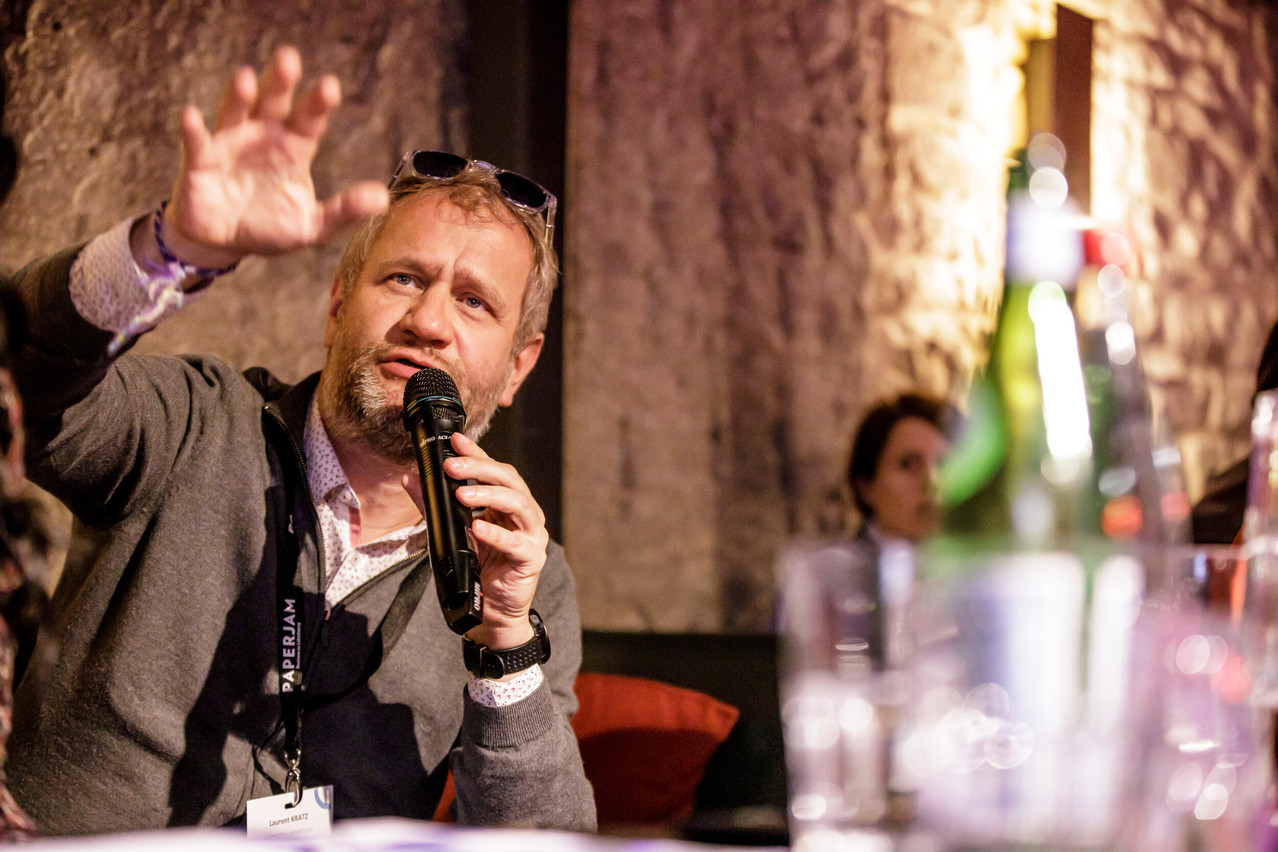
The battle seems lopsided. On the one hand, Nvidia, which has become one of the global icons of artificial intelligence, supplying the chips that power much of the tech world. On the other, Jamendo, a music platform founded in Luxembourg in the 2000s, built around independent artists, open licences and a simple promise: to enable creators to share their work, but also to earn an income when it is used for commercial purposes. Yet it is this Luxembourg-based ‘Little Thumb’, founded by 
On 22 June, Jamendo, now a subsidiary of the Winamp Group, filed a claim in a US federal court against Nvidia Corporation. The company alleges that the US group has unauthorisedly used content relating to its catalogue in the development and operation of artificial intelligence technologies. The complaint specifically alleges copyright infringement, breach of contract, unjust enrichment and other claims under US law.
First initiative in Belgium
This is not the first time this case has come to court. On 11 June 2026, the Ghent Commercial Court confirmed its jurisdiction in proceedings brought by Jamendo against Nvidia Technologies Belgium. This action concerns a commercial claim of approximately €16 million, relating to Jamendo’s invoicing for the alleged unauthorised use of more than 55,000 musical works and associated data. At this stage, the Belgian ruling does not rule on the merits of the case. It dismisses the procedural objections raised by Nvidia Technologies Belgium and allows the proceedings to continue. The exchange of written submissions is expected to take place between late 2026 and early 2027, ahead of oral proceedings currently scheduled for 24 June 2027.
This distinction matters. Jamendo has not yet won its case against Nvidia. However, the company has cleared a procedural hurdle that allows it to keep up the pressure in Belgium, whilst shifting the focus of the dispute to the United States, where a crucial part of the global battle over artificial intelligence training data is being fought.
According to Reuters, the US complaint centres on the alleged use of audio files and metadata sourced from Jamendo to train Fugatto, an audio generator developed by Nvidia, as well as Audio Flamingo, a model capable of describing sounds. The case is part of a growing number of disputes between rights holders and technology companies over an issue that has become central: can content accessible online be used as raw material for AI models without the explicit authorisation of, or remuneration to, the rights holders?
In the wake of Creative Commons
For Jamendo, the answer is clearly no. The company believes that licensing mechanisms cannot be circumvented simply because the works are used to train artificial intelligence systems. Its argument boils down to a simple point: artists have agreed to share, distribute or commercialise their creations under specific conditions; they have not necessarily given carte blanche for their music and associated data to be used to develop commercial AI tools.
The background to this case gives it particular significance in Luxembourg. Jamendo is not a major record label. The platform was founded in 2004 in the wake of Creative Commons licences and a more open digital culture. At the time, the music industry was only just recovering from the shock of illegal downloading. Spotify had not yet revolutionised the way people listened to music. Apple Music did not exist. Jamendo, which had even managed to persuade Mangrove Capital Partners to invest in the project, offered an alternative approach: enabling independent artists to legally publish their tracks, reach an international audience and, gradually, generate revenue through the commercial use of their works.
In 2010, Alexandre Saboundjian, who had become one of the leading figures in this new phase, was already summing up the challenge in Paperjam: “Jamendo’s DNA is sound.” He explained at the time that he wanted to organise what had been created and take on “the mission entrusted to us by the artists”. This mission consisted precisely of marketing their works, showcasing them and opening up new opportunities for them. Sixteen years on, the argument has resurfaced in a much more assertive form. Jamendo is no longer merely championing an alternative model for music distribution. The company claims to be defending the economic value of its catalogue against one of the most powerful companies of the AI era.
A fight against the plundering of AI for the owner
US law adds a potentially significant financial dimension. Under the US Copyright Act, fixed damages may, in certain circumstances, amount to $30,000 per work concerned, and up to $150,000 in the event of wilful infringement. These figures do not mean that Jamendo will actually receive them. They do, however, indicate the scale of the legal risk involved in litigation covering tens of thousands of works.
Winamp Group presents the case as a struggle that goes beyond its own commercial interests. “These actions reflect our commitment to protecting Jamendo’s rights, as well as those of the artists who entrust us with the commercialisation of their works,” says Alexandre Saboundjian, CEO of Winamp Group. “As artificial intelligence transforms the music industry, we believe it is essential that creators and rights holders are properly recognised, remunerated and protected.”
This issue comes at a pivotal moment. For years, artificial intelligence applied to music has mainly fuelled stories of innovation: assisted composition, personalised playlists, generative sounds and algorithm-produced albums. As early as 2019, Warner Music’s signing of a contract with Endel, a start-up producing AI-generated ambient music, illustrated this shift. The question at the time centred on the future role of artists in an industry capable of automatically producing, recommending and adapting music.
The Belgian proceedings will determine whether the commercial claim brought by Jamendo can succeed. The US proceedings will determine whether the claims of ‘copyright infringement’, ‘breach of contract’ and ‘unjust enrichment’ can be upheld against Nvidia Corporation. However, even at this stage, the case raises a question that goes far beyond the two companies: when artificial intelligence draws on human creativity, who should be paid, by whom, and according to what rules? It is this question that the Luxembourg ‘Tom Thumb’ now seeks to have settled in its battle against the American ‘ogre’ of artificial intelligence.