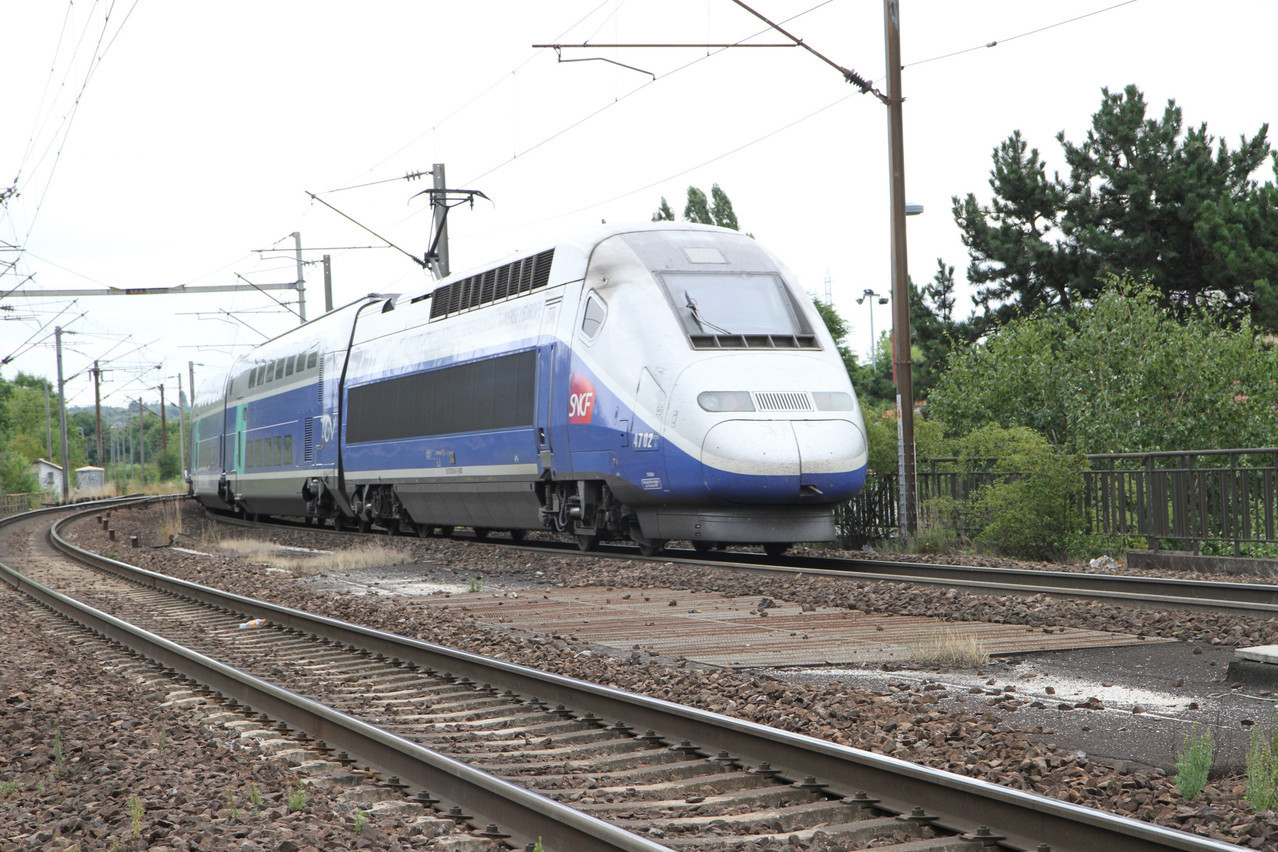
Demand for international rail travel from Luxembourg remains solid. According to figures provided by Mobility Minister 
The closure of CFL Évasion, announced at the end of January and scheduled for this coming 31 March, therefore comes at a time when patronage of international trains remains stable overall. Above all, these figures provide a benchmark before the demise of the rail group’s travel subsidiary. Created at the end of the 1990s, CFL Évasion offered tourist trips well beyond the rail network. But less than 3% of trips sold were by train, a sign of the gradual move away from CFL’s core business. Booking habits have also changed. Travellers are increasingly using digital platforms, including for rail travel. Against this backdrop, the government believes that the disappearance of the subsidiary is not a setback for international rail travel.
Train destinations remain highly concentrated around neighbouring Europe. Belgium tops the list of countries most popular with passengers departing from Luxembourg, ahead of Germany, France, the Netherlands and Switzerland. On the new rail connections front, ambitions are moving forward, but slowly. Yuriko Backes explained that “a study is underway to examine a link between Brussels and Basel via Luxembourg and Strasbourg. The project is being steered by Switzerland in cooperation with France, while Luxembourg and Belgium are monitoring progress. The study is still in its early stages.”
German axis as a priority
Night trains, often presented as the renaissance of European rail, remain largely hypothetical for the Grand Duchy. “The country is dependent on foreign operators and is faced with high costs for rolling stock and a lack of available train paths. Under these conditions, a night-time link to the south of France, Spain or Italy would be difficult to make profitable today. (We) nevertheless remain attentive to opportunities for cooperation with other rail companies”, the Minister replied to the MP 
In the shorter term, the German route is the focus of most of the prospects. The reconstruction and modernisation of the Eifel line, which was seriously damaged by flooding in 2021, should eventually provide a direct link between Luxembourg and Cologne via Trier. The work, which includes electrification of the line and the introduction of digital signalling over some 160 kilometres, should be completed by the end of 2028. Once the line is operational, a direct train is planned every two hours during the day.
Other options exist, such as a direct connection to Mannheim via Saarbrücken. However, this project would not materialise before the mid-2030s and remains subject to a number of technical, legal and financial agreements with Germany.


