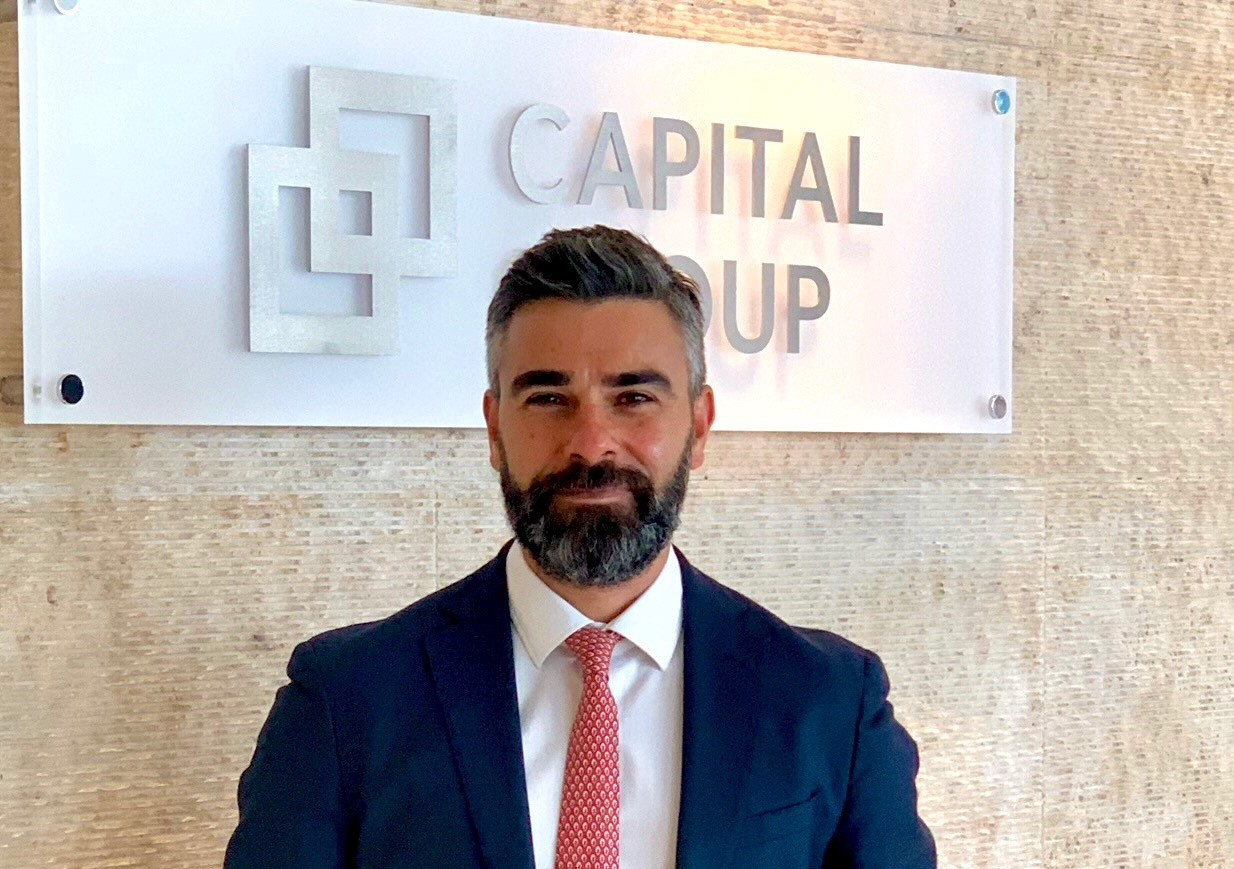
For Flavio Carpenzano, fixed income investment director at Capital Group, it was important to take a look back at 2023 to better understand what could happen in 2024.
The first point: volatility didn’t feel like it did during the 2008 financial crisis. “If you look at the volatility in the fixed income market, it was even higher than 2008. It was not driven by credit events, like the banking sector in 2008; it was driven by extreme rates volatility, given high inflation and monetary policy uncertainty.”
Looking forward, “in the short-term, this volatility is here to stay,” said Carpenzano. This is mainly because central banks are becoming more data-dependent when compared to the past, he noted. On one hand, central banks say they’re at the end of the hiking cycle and that they expect cuts, but then they backpedal and try to “balance” their messaging.
“So these might create short-term noise. But when you look at the long-term, what we see--particularly in inflation dynamics--is a downward path to inflation, which is probably the strongest catalyst for fixed income.”
Don’t time the market
Carpenzano’s second point was: don’t time the market. “2023 was a big lesson. If you look at fixed income results--particularly the parts of the bond market, which is more dependent on rates, so government or investment-grade corporate--between 85 to 100% of the total return last year were driven by just two months: November and December.”
“If you missed these two months, you missed completely the strong results of 2023. So it’s important to stay invested in the market.”
Cash is becoming less and less attractive and riskier and riskier

The third point focused on cash, which Carpenzano called a good “tactical decision” in 2022 and into the first half of 2023. But given inflation and central bank dynamics, “cash is becoming less and less attractive and riskier and riskier,” he said. Central banks--like the European Central Bank or the US Federal Reserve--are at the end of their hiking cycles. So the question for 2024 is: how much will they cut?
“This is a change in monetary policy stance, which ultimately has a very strong impact on markets like fixed income, and equity as well.”
Put companies first
Capital Group takes a long-term view, they said, and “that’s even more important if you think about macro and outlook,” said Christophe Braun, equity investment director at Capital Group when sharing his views for 2024. “There’s a lot of macro-economists who are trying to predict a macro outlook, and most of them tend to be wrong,” he said. “Nobody has a crystal ball.”
“It’s less about having one scenario that you focus on,” he added. As seen during the covid-19 pandemic, “you have to have a lot of different scenarios” because there are so many unknowns that can come into play and affect your views. So from an equity perspective, “we always try--when picking equities--to be bottom up. We put the companies first.” Fundamental, bottom-research is key.
“The way we use macros is to think about: what are the themes?” And one of these major themes is artificial intelligence.
Opportunities in AI applications, not just AI itself
“You can’t ignore AI,” said Braun. “But the challenge for us--for everyone--investing into that theme is to really separate the hype from reality. I think it’s still very, very early days. It’s a very complex pool of potential profits.”
“Within AI, you have semiconductors and equipment, you have cloud computing, you have AI software. And maybe one of the less obvious beneficiaries are AI applications. And what we are the most excited about is maybe not necessarily AI itself, but what comes with it and how that technology, that innovation can translate and generate synergies between the new economy, the tech economy and the old economies, more conventional sectors.”
It’s not just AI, but how other sectors can benefit from it

Examples that Braun cited include how JP Morgan is using AI to detect theft, how McDonald’s is using it to get customers through drive-throughs faster (both are companies in which their funds hold positions), or how AI can be used--in combination with diagnoses by human doctors--to find breast cancer.
“It’s not just AI, but how other sectors can benefit from it. And what are the companies that are onboarding technology sooner--thinking about early birds--so that they can have a competitive edge in the future,” he said.
Fixed income opportunities still there
Diversification is key when building a portfolio, Carpenzano emphasised. “We diversify across the different credit sectors,” he said, when discussing what a 2024 portfolio looks like. “So, US high-yield, investment grade corporate, emerging market and securitised credit, where we still find opportunity.”
“We continue to be tilt towards high credit quality, because the risk of recession is still there,” he added. “And within investment grade corporate, we favour banks, healthcare, pharma--these are the kinds of sectors that we like. We like securitised markets because it’s more a diversifier.”
This is, of course, strongly “tied” to the US economy, Carpenzano added, pointing to commercial mortgage-backed securities or auto loans, which are tied to commercial real estate and how many cars are sold in the US. “This is, again, where the analysis and the bottom-up” approach comes in.
I want to highlight the importance of diversification

But in terms of diversification, “you still want to stay invested in high yield.” It can still generate high income--Carpenzano mentioned yields of 7 ½ to 8%, “which is quite attractive”--and investors can still enter “into a phase of the cycle where recession doesn’t materialise.” It’s key to “keep the diversification.”
2023 was supposed to be “the most telegraphed recession in history,” noted Carpenzano, with indicators in October 2022 pointing to a 100% probability that the US would enter a recession in 2023. But it never materialised as expected. What happened instead is a set of “rolling recessions” by industry--air travel, housing and IT were all affected at separate times, for instance. “So it didn’t feel like a full, synchronised recession. But interest rates had different impacts at different times.”
“If you look back at 2023, the best performing fixed-income asset class was US high-yield, because recession didn’t happen and the economy was quite resilient. And I say this, because I want to highlight the importance of diversification… particularly in fixed income, where you want to build a portfolio that remains very well-diversified, and the way you generate income is done in a way that it’s balanced across different asset classes.”
What would an equity portfolio look like?
Diversification was also mentioned as a key element of equity portfolios. “What history shows us is that when there’s a theme--or a group of stocks--dominating a year and returns like we saw last year,” said Braun, referring to the Magnificent 7 stocks (Apple, Microsoft, Alphabet, Amazon, Nvidia, Tesla, Meta), “usually what comes after is a very broad market, where a lot of sectors can do well.”
“The way we think about it is: quality stocks,” he said, asked about equity portfolios for 2024. There are companies “that are very good at generating growth. And then there’s companies that can reflect quality: solid balance sheets, recurring cash flows, earnings and that also pay a dividend.”
We’re focusing on dividend growth rather than dividend yield

In terms of dividend stocks, “that sort of ‘boring is beautiful’ [concept], is don’t focus too much as an investor on the high-dividend yielders, because those high dividends may look attractive today, but may not be sustainable, especially when the company’s going through an uncertain market environment.”
Instead, “we’re focusing on dividend growth rather than dividend yield.” A good example, for instance, are semiconductor companies like Broadcom, TSMC or ASML. “You sometimes call them ‘coffee can stocks’ because in the old days, you didn’t trust the bank. So you hid your money in a coffee can.” These companies that are in an industry that gives growth, but they also use recurring earnings and transform them into dividends, allowing them to grow dividends in a “natural, authentic way.”
This article was published for the Delano Finance newsletter, the weekly source for financial news in Luxembourg. Subscribe using this link.