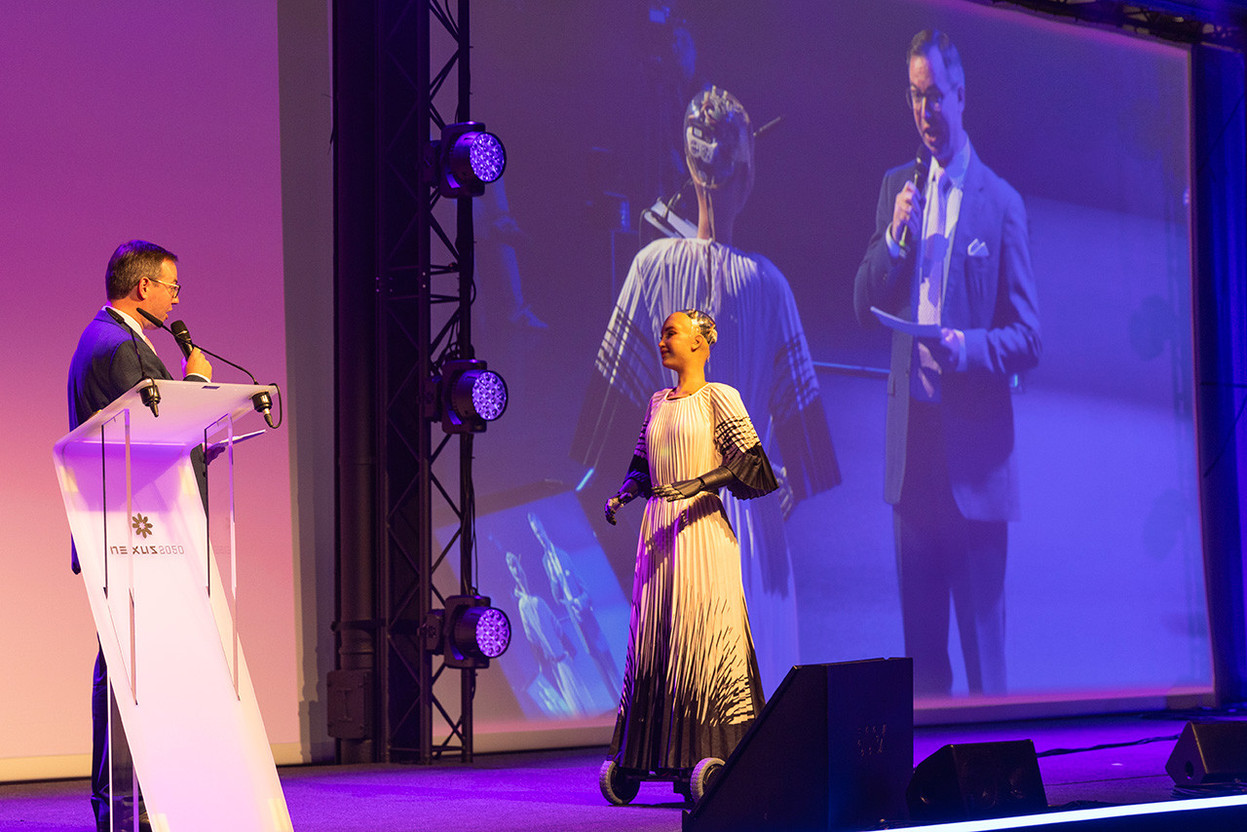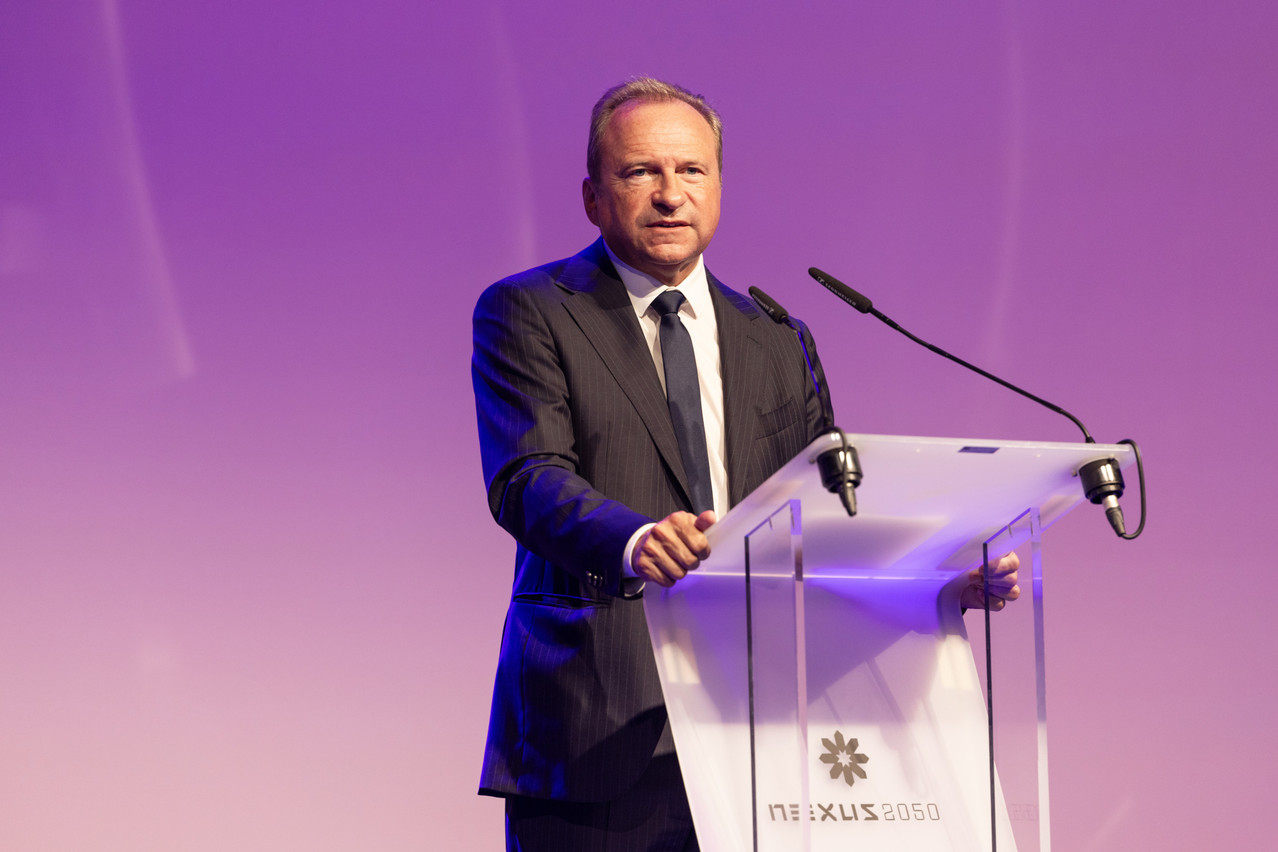
“In our new tech world, human relationships are more important than ever,” said finance minister 
One key theme at the conference, which will continue until 27 June, is financial technology. “The green and digital transition will continue to preoccupy the financial industry, policymakers and regulators alike over the coming months and years,” said Roth. Digitalisation, he noted, provides both opportunities--with new tools to make processes faster and more efficient, more accessible products and more personalised service for customers--and challenges, such as with cybersecurity, data protection and regulatory compliance.
AI a “transformative technology”
The topic du jour--artificial intelligence--was a topic that Roth touched upon during his speech. Artificial intelligence is “undoubtedly a transformative technology,” he said, and “companies that adopt AI responsibly will have a competitive advantage is tomorrow’s data-driven economy.”
Although the use of AI in the financial sector is at a “relatively early stage,” Luxembourg’s Financial Sector Supervisory Commission (CSSF) has been a “pioneer in providing guidance to the industry. Although ChatGPT--which is how many people were introduced to generative AI--was only launched in November 2022, the CSSF has been “publishing white papers to help regulated entities understand and assess the risk associated with AI use cases in the financial sector” in 2018.
Read also
“This proactive stance by the regulator is part of a wider ecosystem in Luxembourg to support innovation in the financial sector,” argued Roth. It’s an ecosystem that involves research at the university, government support and proactive legislation. The grand duchy already has laws on blockchain, but the finance minister added that he plans to “shortly submit additional blockchain legislation to cement our role as a centre for digital assets and tokenisation.”
There’s also the country’s fintech hub, the Luxembourg House of Financial Technology (Lhoft), which “acts as a first port of call for global fintech firms and connects innovation with our financial industry” with programmes like Catapult that foster technologies for the financial centre. Luxembourg has some 280 fintech firms today, said Roth, and “given the size of our financial centre, there’s a strong focus on business-to-business solutions such as regtech and also fundtech. Such technologies, which often leverage AI and machine learning, help the financial sector in its digital transformation.”
EU a “pioneer” in sustainable finance
But digitalisation can also play a “central role” in making the economy more sustainable and achieving net-zero carbon emission targets. “Despite current headwinds for ESG investments, the potential for growth remains substantial,” said Roth. “Indeed, sustainable finance is one of the areas where the EU has been a pioneer and has developed a competitive advantage.”
The finance minister in late April presented a 10-point plan to develop Luxembourg’s sustainable financial ecosystem, and he noted during the conference that he planned to develop training and education, increase support for innovation and mobilise private capital through blended finance mechanisms. As part of this “action plan,” Roth added, the Lhoft recently launched a new acceleration programme focused on green fintech. Successful applicants will participate in a bootcamp in September, and he encouraged interested fintechs and startups to apply.
Dual transition should be seen as opportunity
A lot has been said about the EU’s loss of competitiveness recently, and in this context, the “dual transition”--climate action and digitalisation--should be seen as an opportunity and not just a problem to solve. For Roth, the most important elements to work on are innovation and financing. “It is the role of the public sector to create a conducive environment for innovation and innovative companies to thrive,” he said. “Innovation itself cannot be decreed from the top. It is the result of companies developing new technologies and solutions.”
Europe is lucky to have innovative companies, but they need to be able to grow and scale up to compete at the global level--something, Roth argued, that is only possible with a strong European single market. Finance will be a key driver to make the European economy more innovative, resilient and competitive, and the capital markets union (CMU) will need to play a central role. Education, expertise and supervisory convergence amongst national supervisors will also need to be developed.
I will lower the corporate tax rate in Luxembourg by one percentage point

Luxembourg can play a role in all this. In fact, Roth said, “you could argue that Luxembourg already embodies the CMU,” thanks to its diversified financial sector ecosystem. “Our financial centre is the nexus of international finance.”
And to ensure that the grand duchy remains competitive and attractive for fintech firms and global financial institutions, Roth said that as of next year, he “will lower the corporate tax rate in Luxembourg by one percentage point.” Skills and talent attraction have become more crucial than ever for the growth of the financial centre, he concluded, and so he remains “committed to improving our tax system to attract and also retain talents.”