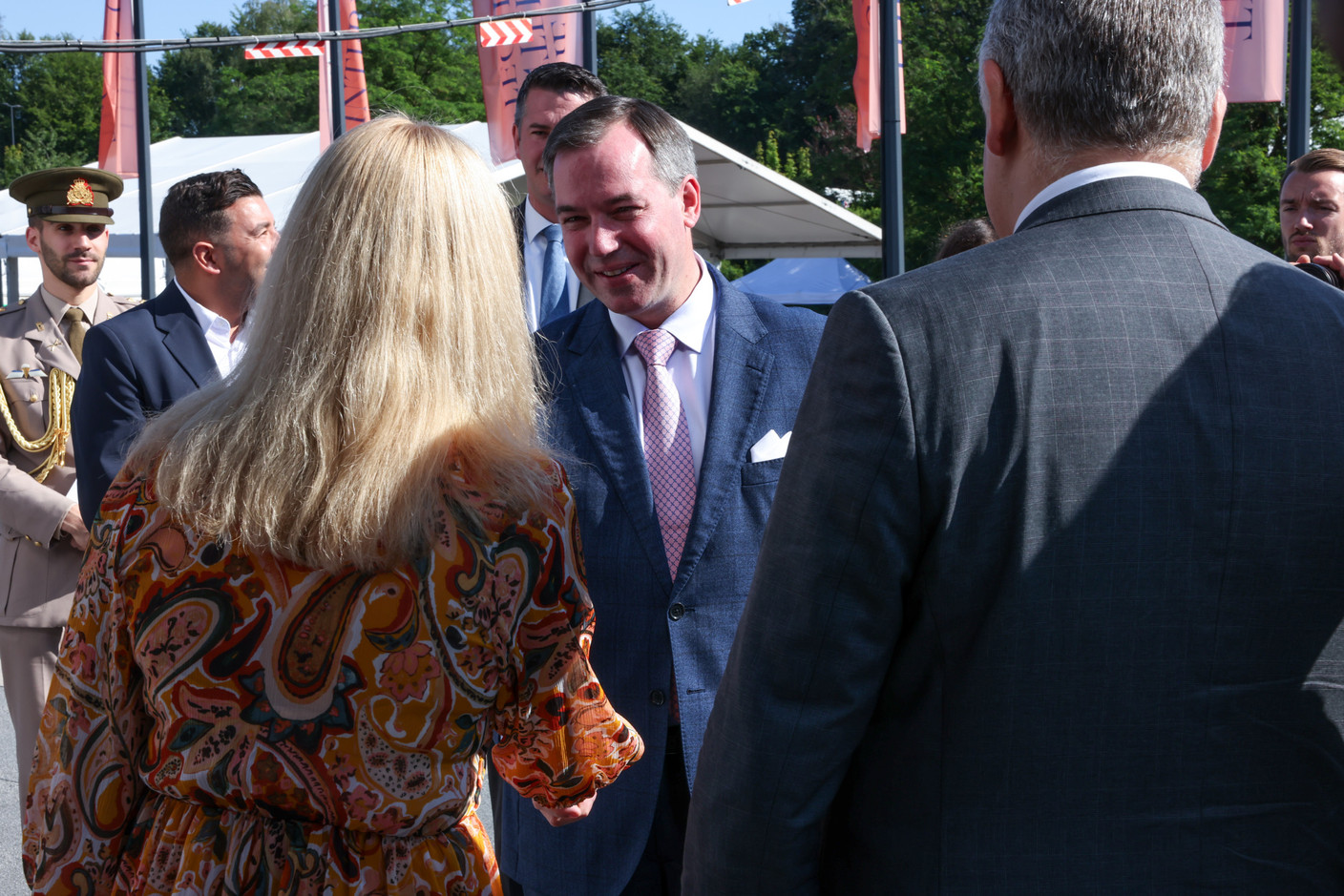
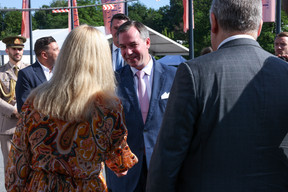
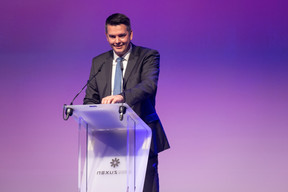
“I’m very honoured, and very proud, to be taking part with you in the Nexus2050 opening ceremony. I’ve been to various events, such as Vivatech, recently, and they all have in common that they are the biggest. But I have to say that this event is going to be even bigger. But in my small country, we’re used to saying that it’s not the size that counts.” Two days after his father, Grand Duke Henri, announced that he would become lieutenant-representative in October, Crown Prince Guillaume was all smiles as he hailed the coming together of all the players around the organisation of this first edition of Nexus2050.
“Combined with Venture Days in November, this shows where Luxembourg wants to go. In a constantly changing environment, innovation is more than just talk. Innovation gives us the opportunity to shape the future we want, the power to fuel a strong, future-proof economy, to build a world where sustainability and social wellbeing, combined with technological needs and opportunities, have a positive impact.”
If artificial intelligence continues to develop, it will be “the cornerstone of innovation,” stressed the hereditary grand duke. “We know that to develop our economy in this direction, we need to have good connectivity, everything we need to operate data and work on cyber security.”
The hereditary grand duke pointed out with gravity that the other aspect of this development is the emergence of disinformation and fake news, such as that which saw him and the grand duke, as well as Prime Minister 
“Education is a powerful tool,” he added.
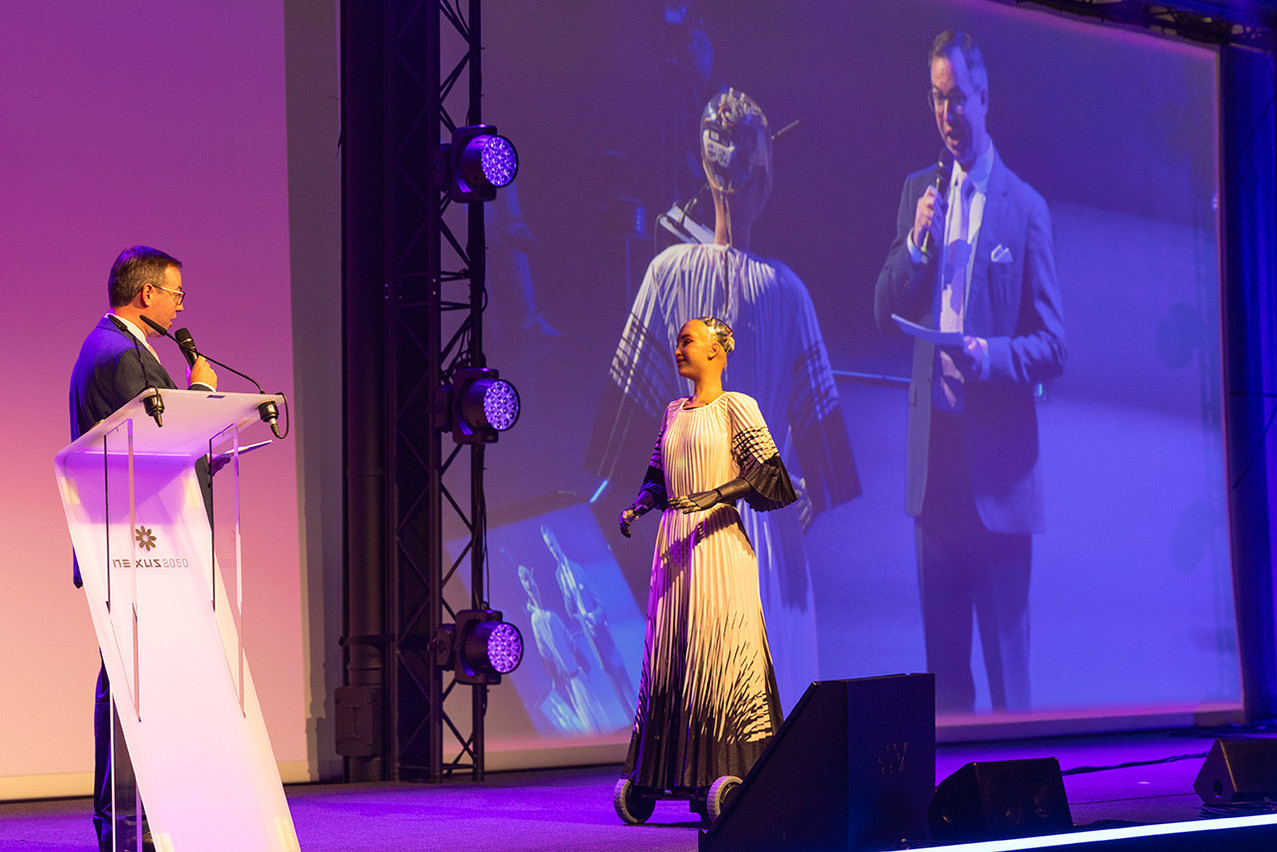
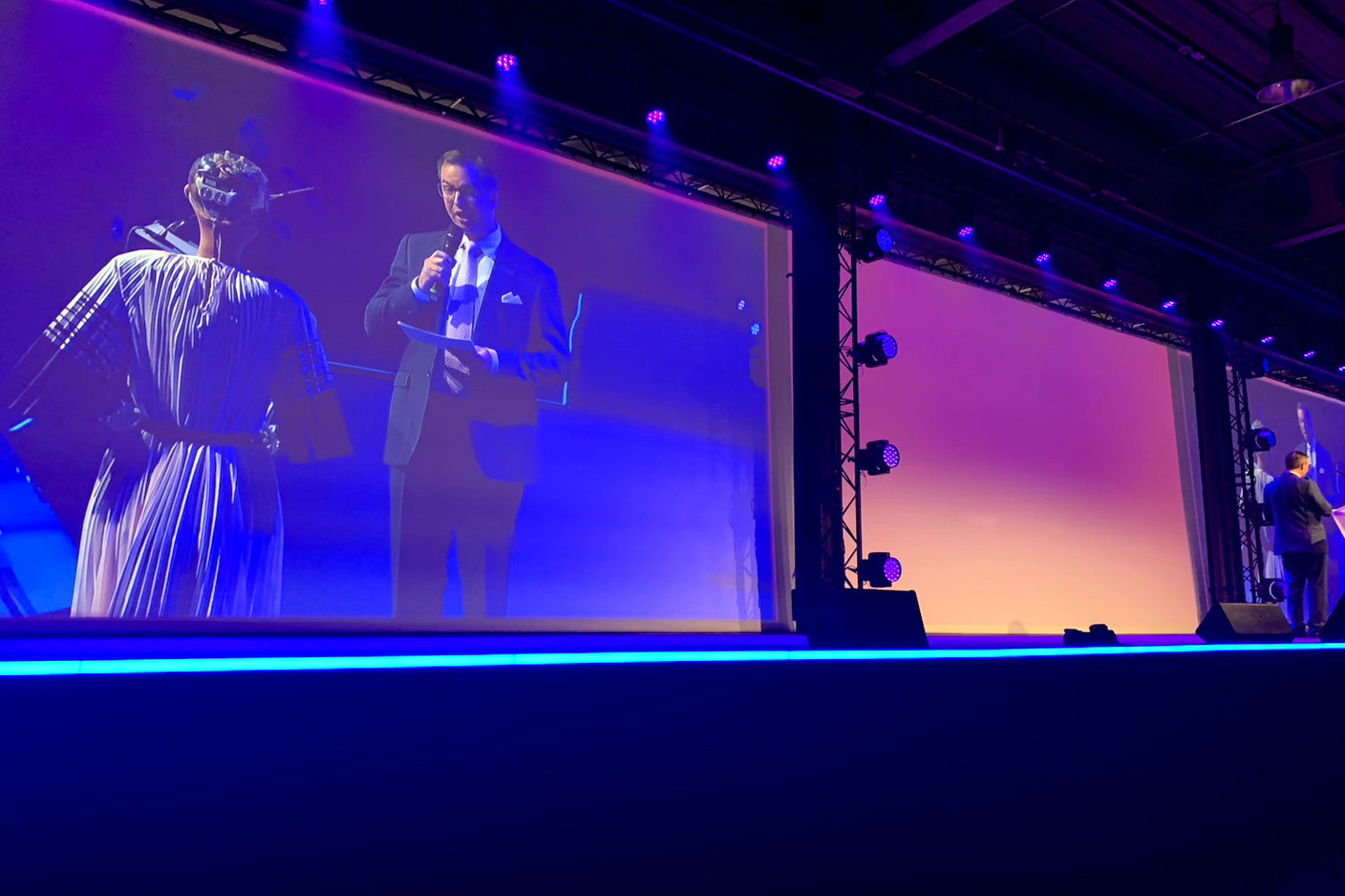
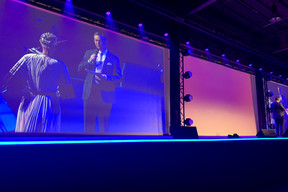
It was Guillaume himself who announced Sophia’s arrival on stage, a moment as unexpected as Sunday’s announcement at the Philharmonie. The hereditary grand duke launched into a conversation-interview with the world’s most advanced humanoid robot. “Do you think we should regulate artificial intelligence more? Or have less regulation?” he asked.
“We need to find the right balance,” Sophia replied, “to encourage developments that benefit humanity while limiting the negative aspects as much as possible.”
“Thank you, Sophia. I can see that the economy minister, Lex Delles, is taking notes!” replied Guillaume. “One last question, Sophia,” he went on. “As you may know, my father made a big announcement on Sunday. Do you know when I will become grand duke?”
“I’m just a robot and an artificial intelligence not capable of predicting the future,” Sophia replied, insisting that Luxembourg was lucky to have a grand duke.
“Fascinated” by the Luxembourg ecosystem
The speeches that followed were more conventional. Economy minister 
Another highlight of the ceremony came with the eagerly awaited words of the deputy director of the office of the president of Ukraine, Igor Zhovkva. “As you know, negotiations on Ukraine’s accession to the European Union opened this Monday in Luxembourg. It’s a long journey, but we’re ready for it!” This enthusiasm drew applause from the audience. He went on to outline Ukraine’s strengths, from the digitisation of public services, with the world’s first digital passport issued at the snap of a finger, to the emergence of the world’s first “drone force” in an army and the strategic importance of cyber security.
This article was originally published in Paperjam. It has been translated and edited for Delano.