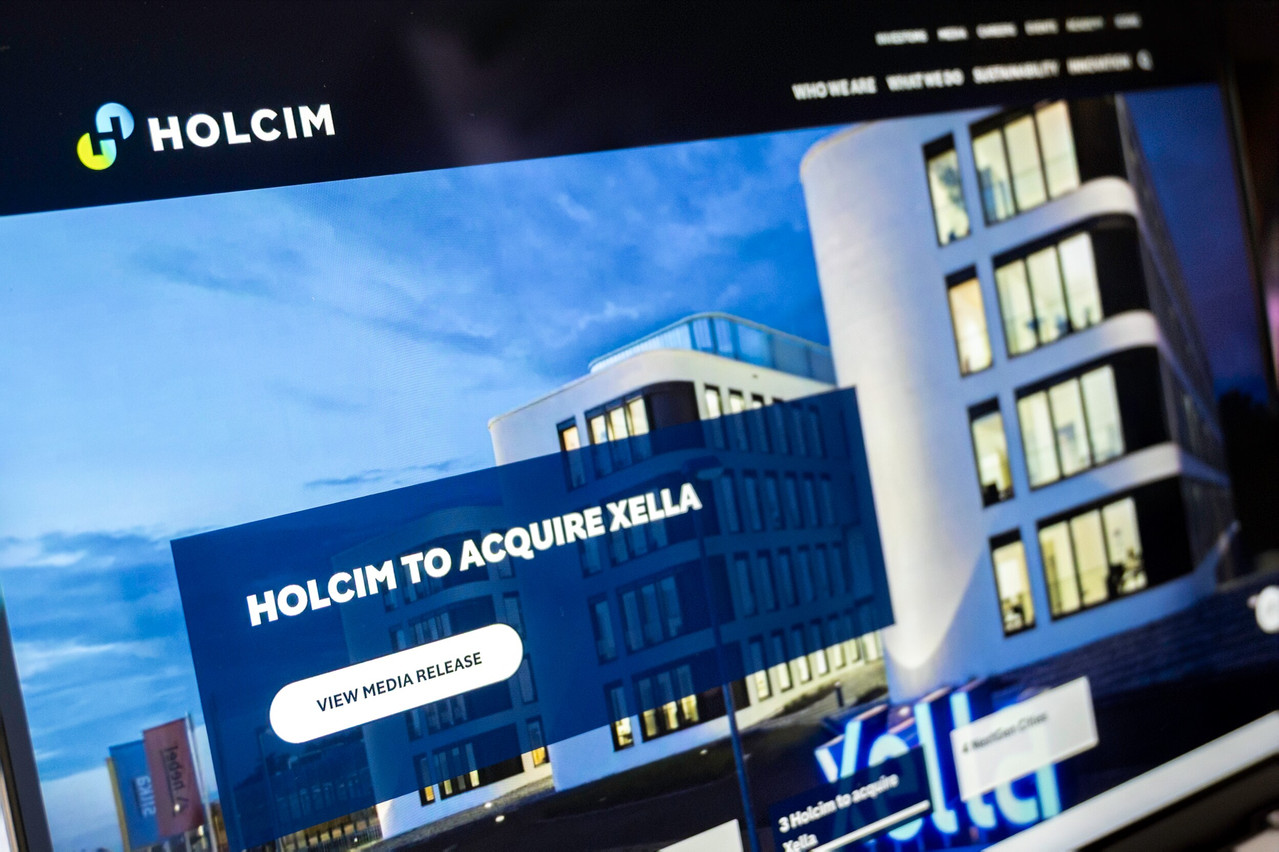
Holcim is retaining the plants, staff and brands. However, it has already begun to dismantle the legal structures left behind by the former owner. Xella’s transition to the Holcim umbrella has resulted in the dismantling of part of the corporate structure set up in Luxembourg by Lone Star. On 24 July, barely five weeks after the closing, Holcim simultaneously placed three former holding companies into voluntary liquidation.
At the same time, Holcim has, on the contrary, emphasised the long-term role it envisages for Xella within its industrial portfolio. In its half-year results published on 31 July, the group presents its new subsidiary as a platform with expected turnover of more than 0.9bn Swiss francs in 2026, with 4,000 employees, including 200 sales representatives responsible for specifying products, and 52 production sites across 22 European countries.
Above all, Xella is set to fill a gap in the Swiss group’s product range. In addition to the foundations, flooring and roofing solutions already in its portfolio, it will now include wall systems marketed under the Ytong, Hebel, Silka and Multipor brands. Holcim thus aims to offer integrated solutions covering a wider range of construction sectors, in a European wall systems market it estimates to be worth over €12bn.
“By expanding our portfolio of high value-added construction solutions with leading brands such as Ytong, Hebel, Silka and Multipor, this acquisition will enable Holcim to offer its customers fully integrated, sustainable and innovative wall systems,” said its chief executive, Miljan Gutovic, said upon completion of the transaction.
The group also highlights the potential for cross-selling between its various product ranges, as well as opportunities in energy-efficient refurbishment, circular construction and modular building. Xella also contributes its digital tools, including blue.sprint, a service that links three-dimensional digital models to factory production and the organisation of deliveries to building sites.
Holcim expects annual synergies of €60m from the third year onwards. The price of €1.85bn represented 8.9 times Xella’s projected Ebitda for 2026. After taking the announced synergies into account, this multiple would fall to 6.9. The acquirer anticipates a positive impact on its earnings per share and free cash flow from the first year onwards, and on its return on invested capital from the third year onwards.
This acquisition forms part of a wider transformation at Holcim. The group no longer wishes to rely so heavily on its traditional businesses in cement, aggregates and concrete. It is developing construction solutions with higher added value, capable of covering several stages of a single project and generating more cross-selling opportunities. Xella brings to the group a range of products, recognised brands and a sales network specialising in specifying solutions for professionals.
However, the deal required a concession. On 12 June, the European Commission authorised the takeover on condition that Holcim divest its entire autoclaved aerated concrete block plant in Adjud, Romania. Brussels was concerned that the combination of Holcim’s and Xella’s activities would significantly reduce competition in this national market. An independent trustee is to monitor the fulfilment of this commitment.
A week after this approval, Holcim and Lone Star announced the completion of the sale. Lone Star thus brought to an end its nearly nine-year ownership of the company: the fund had announced the acquisition of Xella from two other financial investors in 2016, before completing the transaction in 2017.