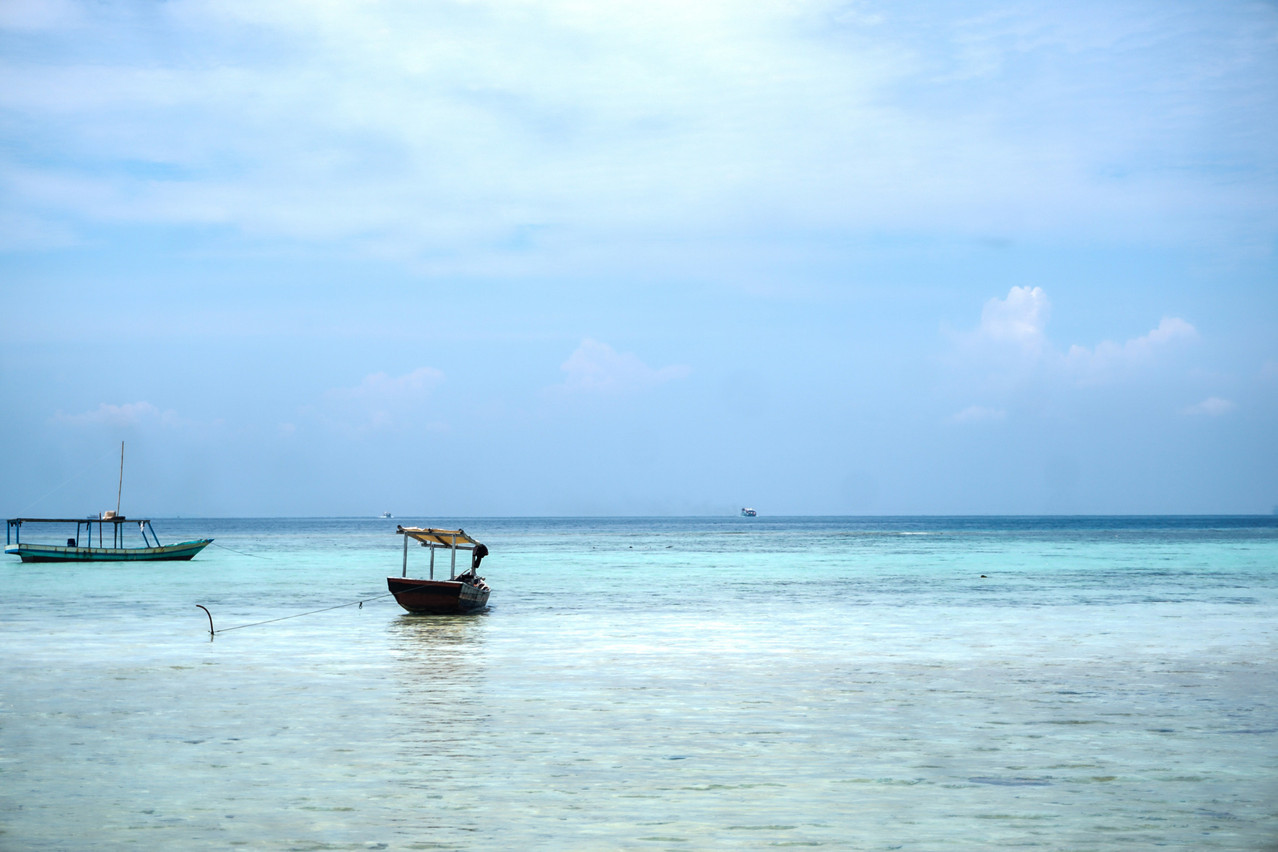
The cantonal court of Zug decided on 22 December to take up a civil claim brought against the cement group Holcim by four residents of the island of Pulau Pari, located to the north-west of Jakarta. The plaintiffs believe that the Swiss group’s CO2 emissions have contributed to climate change, causing sea-level rise and flooding that directly threaten their homes. This is the first time that a Swiss court has agreed to examine the merits of a company’s civil liability for its contribution to climate change.
The claimants argue that Pulau Pari has already lost around 11% of its surface area due to coastal erosion and rising sea levels. More frequent storms have caused property damage and loss of income, forcing residents to finance protective measures themselves. The claim is based on Swiss personality law and civil liability rules, with the plaintiffs claiming that their rights to life, physical integrity and economic development have been infringed.
A global phenomenon for Holcim
Holcim disputes any liability and argues that climate change is a global phenomenon that cannot be dealt with effectively by legal actions targeting individual companies. The group claims that climate protection is a central part of its strategy and emphasises its commitments to reduce emissions and become carbon neutral by 2050. However, the court rejected the procedural objections raised by the company and found that the plaintiffs deserved legal protection as their existence was threatened by the effects of climate change.
Although Holcim has its headquarters and parent company in Switzerland, the group also has financial structures in Luxembourg. Entities such as Holcim Finance (Luxembourg) and Holcim US Finance (Luxembourg) are used there as financing and debt-issuing centres for the group, without constituting the main operational holding company. These structures illustrate the transnational organisation of the group, regularly highlighted in debates on the responsibility of multinationals.
The Pulau Pari case is reminiscent of the German precedent pitting Peruvian farmer Saúl Luciano Lliuya against electricity producer RWE since 2015. In 2017, the Higher Regional Court of Hamm ruled that the complaint was admissible, paving the way for an examination of the merits, a first in Germany for a climate dispute of this type. After several years of proceedings and expert opinions, the court handed down its final decision in May 2025. It rejected the claim for compensation, ruling that the risk of concrete and imminent damage to the plaintiff’s property was not sufficiently high.
Possibility of being held civilly liable
However, this German decision was not considered a total failure by observers. The court recognised, in principle, that a company that emits large quantities of greenhouse gases could be held civilly liable for climate damage, including when this occurs abroad. This legal principle, established without any financial penalty, is often described as a “success without a victory” and constitutes a point of support for new climate litigation in Europe.
By agreeing to examine the complaint against Holcim, the Swiss courts are, in turn, opening up ground that is still largely unexplored. The final decision, expected at the end of what promises to be a lengthy procedure, could have a far-reaching impact beyond the Pulau Pari case and help to redefine the contours of the responsibility of major companies for the consequences of climate change.