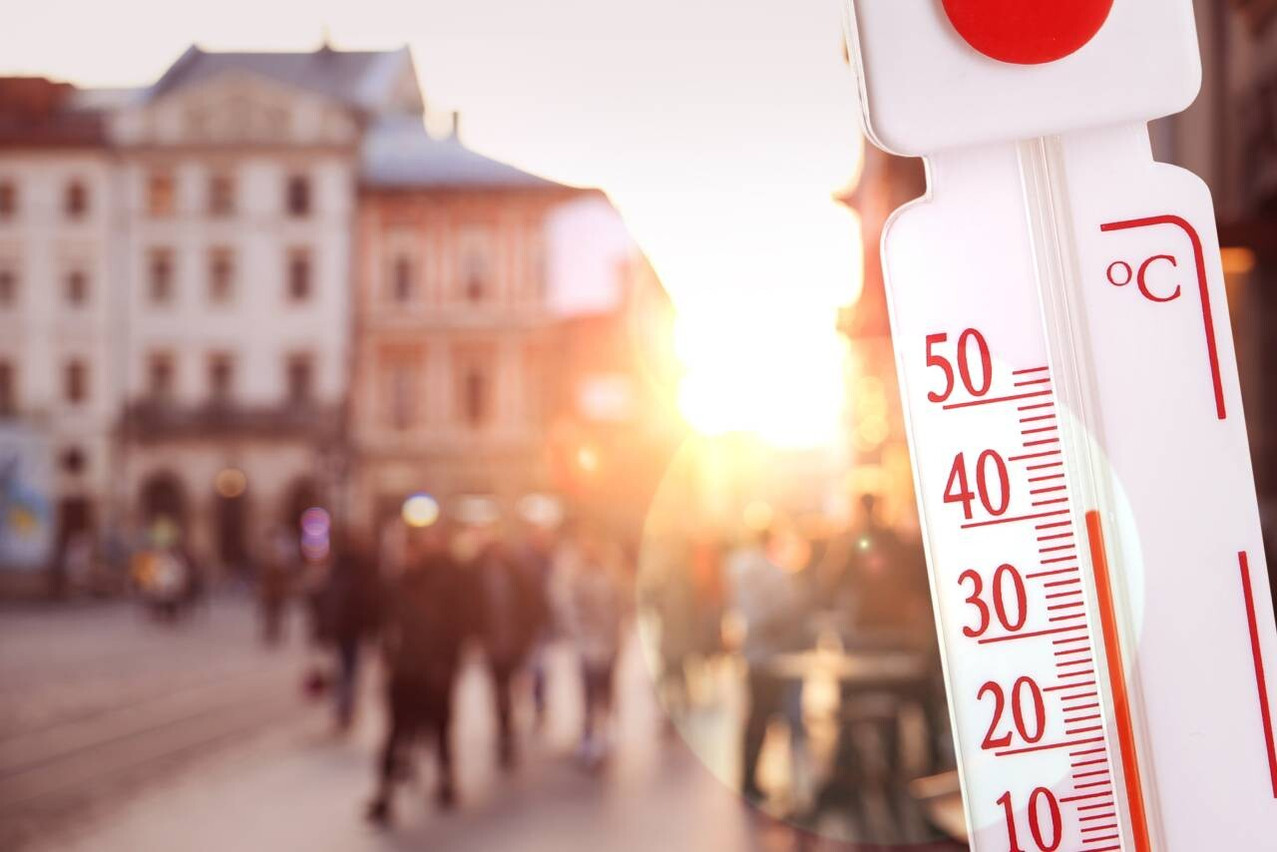
When the sun beats down on a city during a heatwave, sometimes just a few metres are enough to make a world of difference. A completely paved square quickly becomes stifling, whilst a tree-lined street or a nearby park offers a little respite. This contrast is no coincidence.
In “Urban Lines #01”, a publication by the Luxembourg-based engineering consultancy Énergie et Environnement, Thomas Löffler, Julien L’Hoest and Baptiste Guelorget analyse the mechanisms that contribute to urban heat islands and present several approaches to improving thermal comfort. The authors combine their practical experience with current knowledge of the urban climate, applying it to the Luxembourg context.
Why do some streets remain stifling?
In “Urban Lines #01”, the authors point out that thermal comfort does not depend solely on air temperature. Sunlight, building materials, air circulation, vegetation and the heat radiated by surfaces also influence how warm we feel.
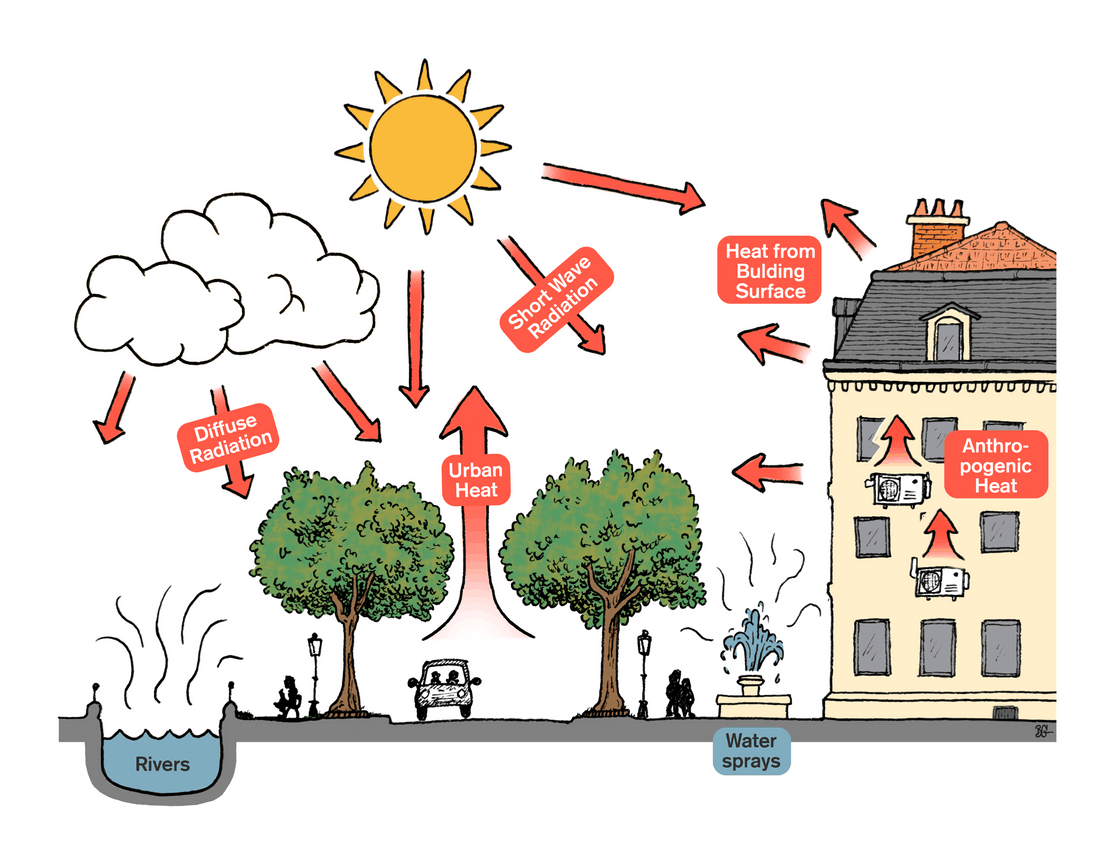
Urban heat islands are caused by a combination of solar radiation, heat stored by buildings and surfaces, and human activities. Trees and bodies of water help to mitigate this phenomenon. (Infographic: “Urban Lines #01”, Energie et Environnement)
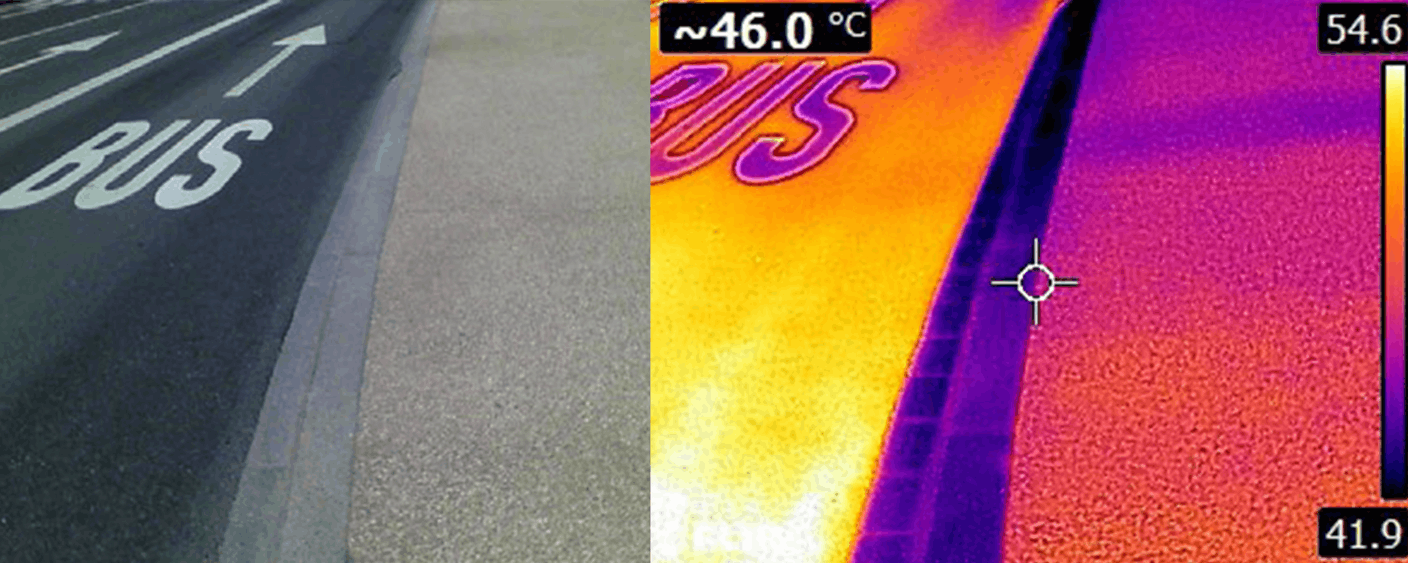
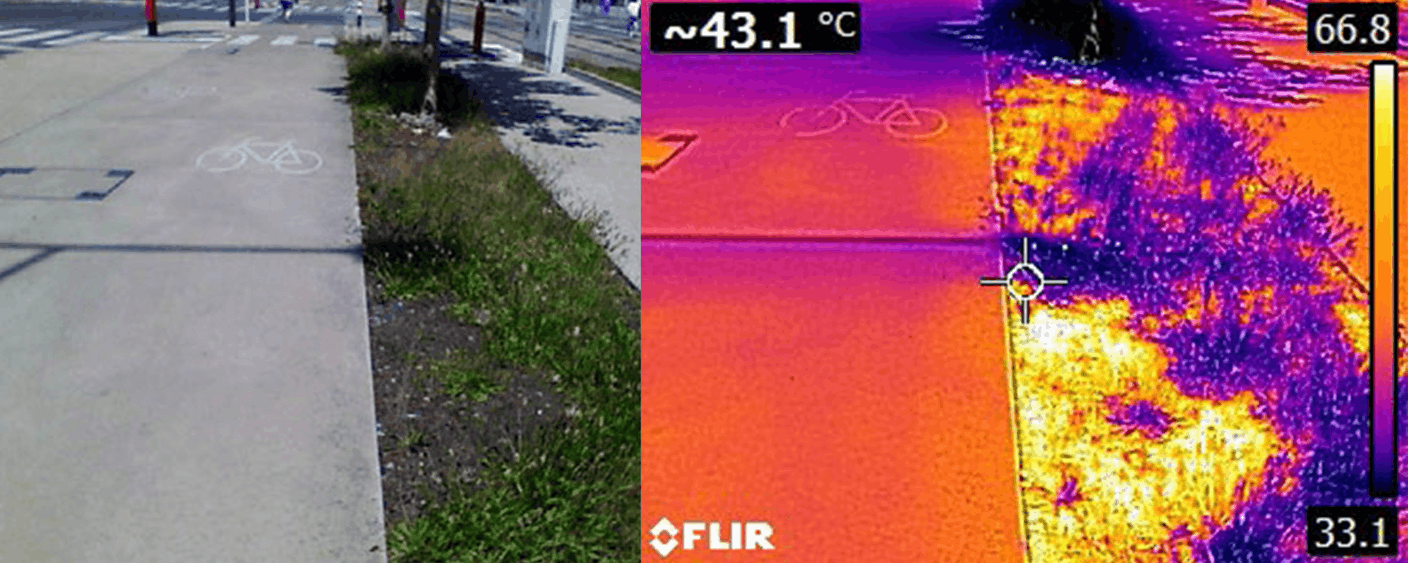
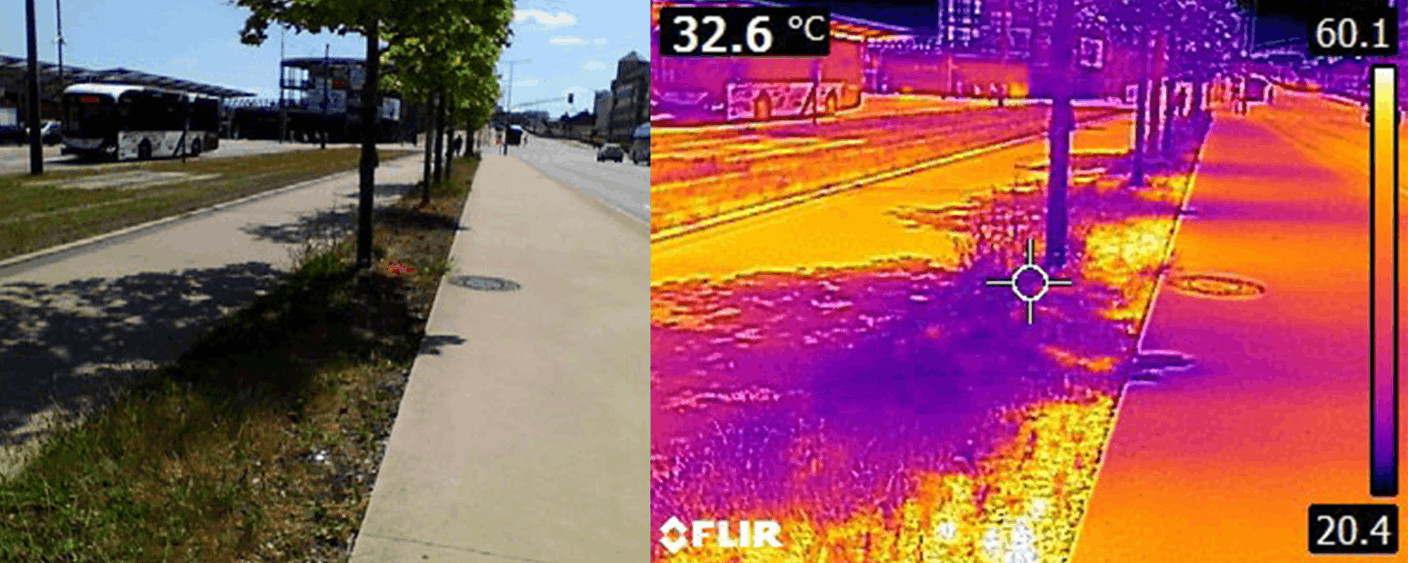
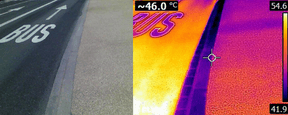
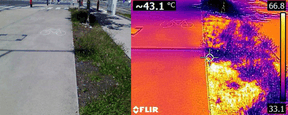
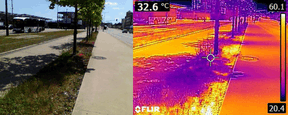
Concrete, tarmac and stone store a large amount of solar energy during the day before gradually releasing it in the evening and at night. As a result, heavily built-up neighbourhoods remain warmer than green spaces, where trees provide shade and naturally cool the air through evapotranspiration.
The authors also point out that heatwaves are becoming more frequent in Luxembourg, which means that thermal comfort is now a key consideration in urban planning.
Beyond the trees
Vegetation is one of the most effective ways of mitigating the effects of extreme heat, but it is only part of the solution. Thomas Löffler believes that the most effective measures are based on three complementary approaches: planting vegetation, reducing soil sealing and reintroducing water.
“Trees are the priority, because the shade and evapotranspiration provided by a mature tree have a much greater cooling effect than a simple lawn,” he explains.
Thomas Löffler goes on to recommend replacing “asphalt and concrete with permeable, lighter-coloured surfaces that retain less heat”. He also encourages “bringing water back”, particularly through fountains, misting systems or small bodies of water that create pockets of coolness.
However, these measures are most effective when implemented together. “These three factors reinforce one another: without water, there can be no sustainable vegetation, and without permeable soil, water cannot benefit plants or help to cool the environment.”
This idea runs throughout “Urban Lines #01”. Thomas Löffler, Julien L’Hoest and Baptiste Guelorget point out that thermal comfort is never based on a single solution, but on a balance between several factors, including vegetation, materials, water, sunlight and air circulation.
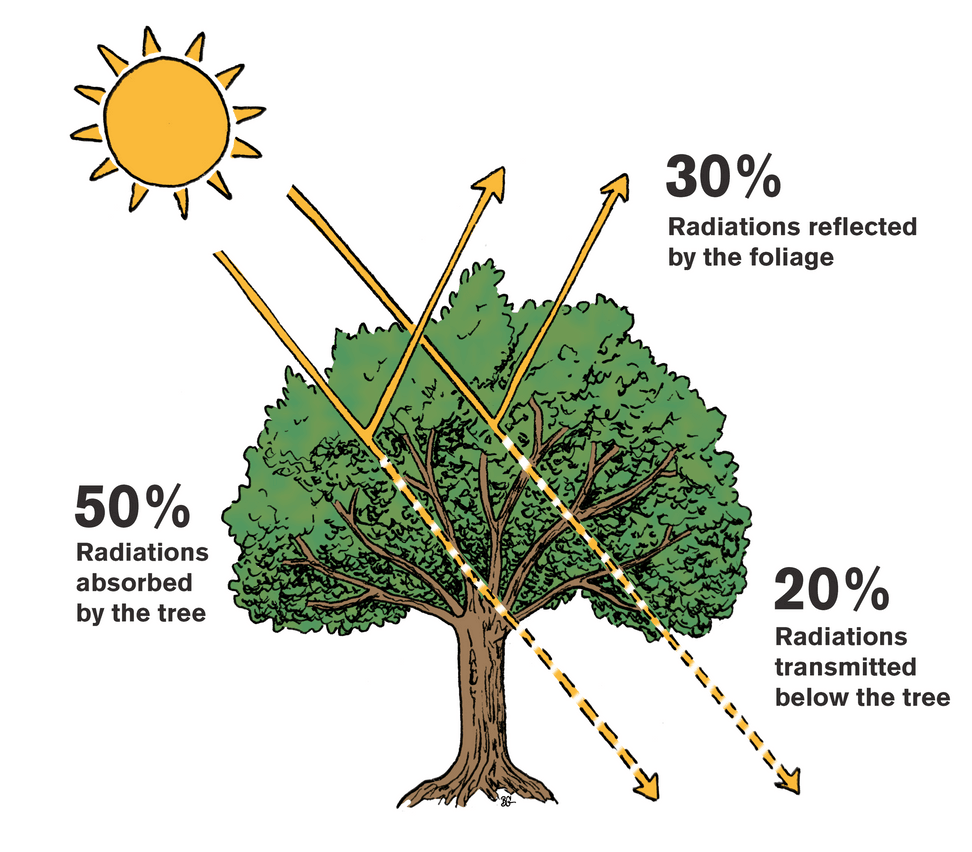
A tree’s foliage intercepts a large proportion of solar radiation: around 50 per cent is absorbed, 30 per cent is reflected and only 20 per cent reaches the ground, thereby helping to limit the heating of surfaces. (Infographic: “Urban Lines #01”, Energie et Environnement)
Recognising a cooler neighbourhood
Certain features already make it possible to identify the neighbourhoods best suited to hot weather. For Thomas Löffler, vegetation is often the first clue. “The neighbourhoods where I go for walks and where there is plenty of vegetation are always very pleasant, even in the height of summer.”
To provide a more concrete guideline, he recommends referring to the 3-30-300 rule, developed by the Dutch expert Cecil Konijnendijk. This rule suggests that you should be able to see at least three trees from your home, live in a neighbourhood where around 30% of the area is covered by tree canopy, and have a green space within 300 metres of your home.
Thomas Löffler also advises people to look out for other indicators, such as “shade along footpaths during the hottest part of the day, light-coloured surfaces rather than dark tarmac, and the presence of water”.
According to him, certain aspects remain more difficult to assess with the naked eye, particularly the orientation of buildings or the choice of materials. He also mentions a detail that is often overlooked: “Neighbourhoods where the outdoor units of heat pumps and air-conditioning systems do not discharge their hot air directly into the side streets.”
Cities in the process of adapting
Most towns in Luxembourg were not designed to cope with the heatwaves the country is currently experiencing. However, Thomas Löffler believes this observation needs to be qualified. “No neighbourhood, however well designed, can truly counteract heatwaves such as the 38°C we have experienced. Good design mainly affects the extent of the discomfort, not the heat itself.”
The co-author of “Urban Lines #01” points out that most existing neighbourhoods were planned at a time when extreme heat was not yet a priority. “It’s hard to blame them for not having been designed with that in mind. It’s a very recent concern.”
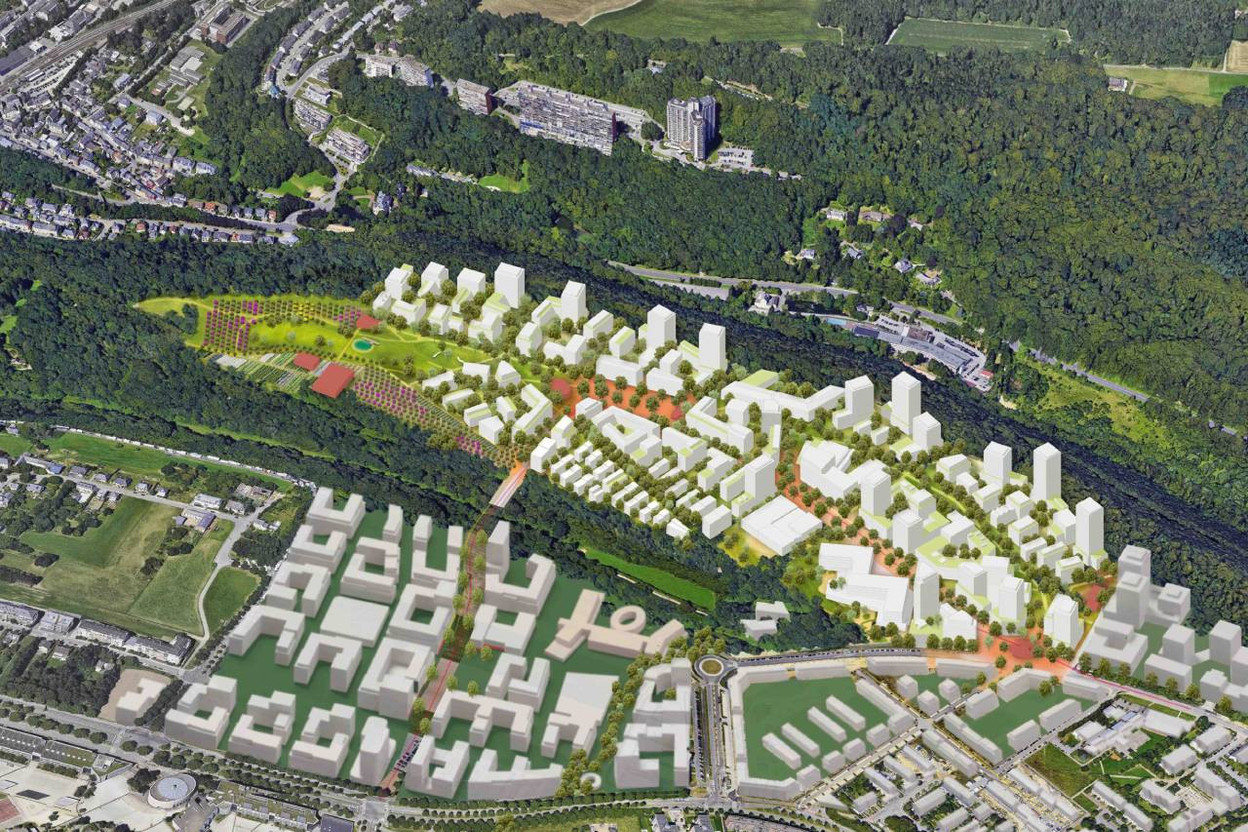
Thomas Löffler has, however, noticed a shift in the most recent projects. He cites, in particular, the future Kuebebierg neighbourhood, being developed by the Kirchberg Fund. Designed to accommodate more than 3,000 homes, the project includes native tree species, ecological corridors, integrated water management, a strong focus on sustainable transport, and a district heating network for which geothermal energy is being considered as a potential source. The microclimate is also one of the factors taken into account right from the design stage. “It’s inevitably more complicated in densely built-up neighbourhoods where we’re not starting with a blank slate.”
Rethinking urban design
According to Thomas Löffler, Julien L’Hoest and Baptiste Guelorget, heat islands cannot be eliminated, but their effects can be mitigated through appropriate planning decisions. The authors argue that thermal comfort should be incorporated right from the design stage of neighbourhoods, in order to improve their resilience to heatwaves.
This approach is also in line with the vision put forward by Thomas Löffler. In his view, thermal comfort cannot be separated from the city’s other functions. “A city is about much more than just thermal comfort. We must always consider its overall functioning and other forms of comfort, whether acoustic, social or related to safety. The real change I would like to see would be to integrate thermal comfort right from the design stage, in balance with these other dimensions, rather than addressing it as an afterthought.”