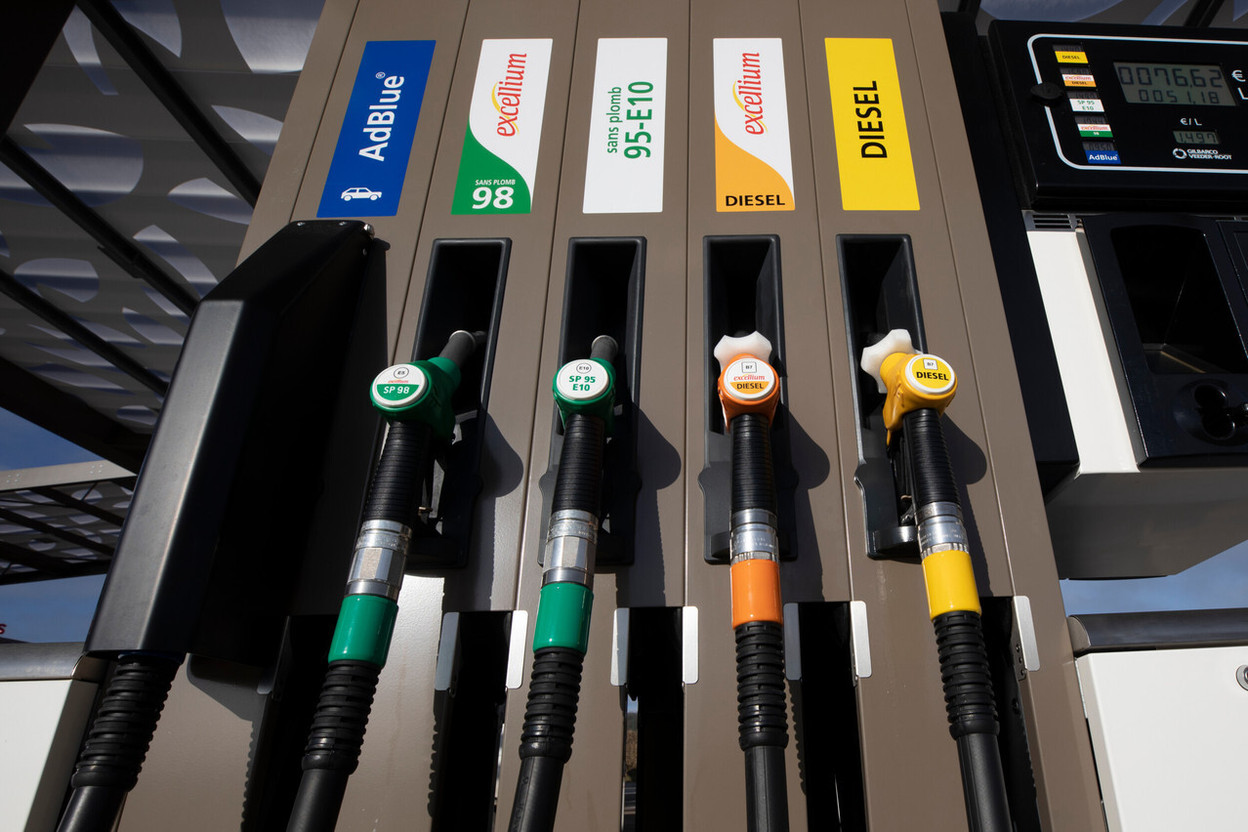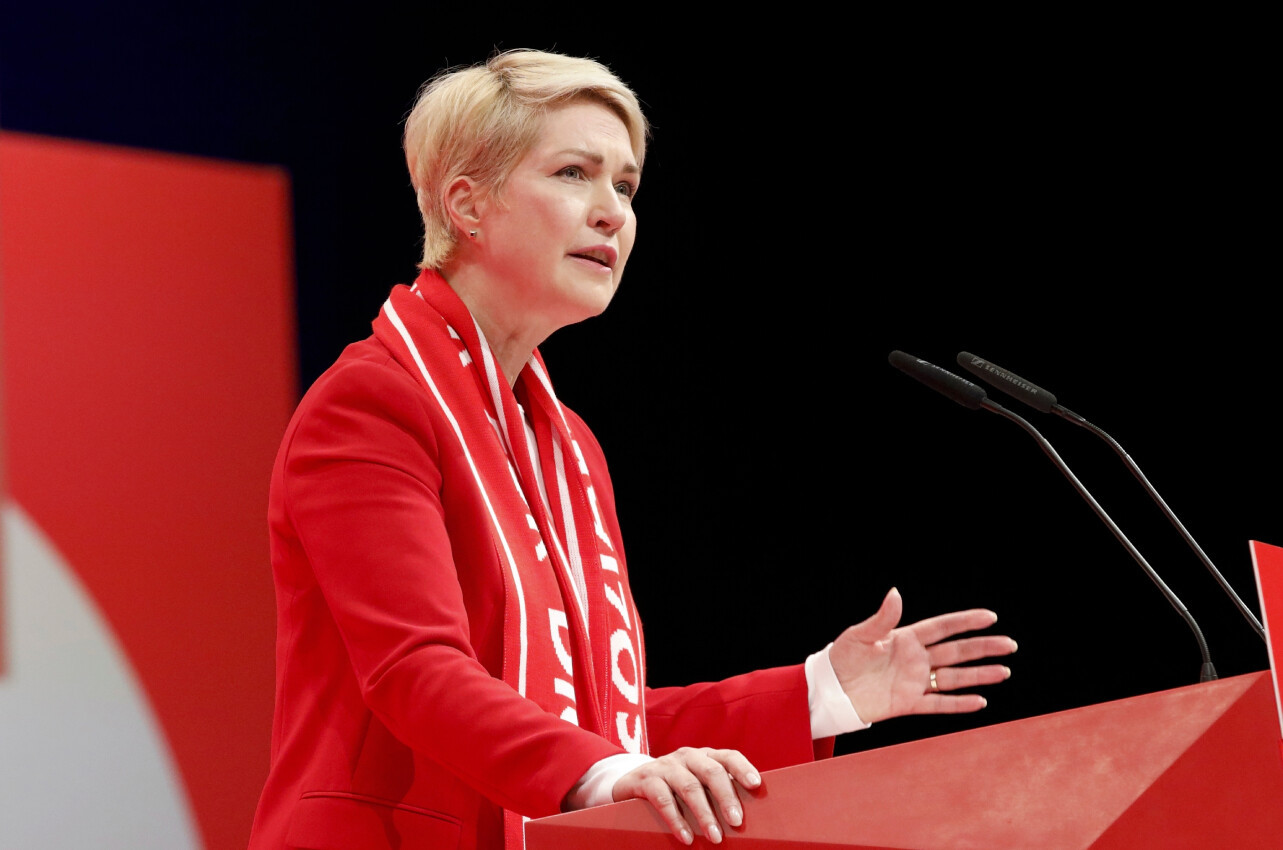
Three euros per litre for certain premium fuels in Germany, compared with less than two euros for unleaded 95 petrol in Luxembourg. This difference is enough to turn the price cap mechanism into a political model. However, it does not tell the whole story. The Minister-President of Mecklenburg-Western Pomerania, Manuela Schwesig, is calling for the introduction in Germany of a fuel price cap modelled on Luxembourg’s. “We cannot carry on like this with fuel prices,” the Social Democrat leader told the Rheinische Post, as quoted by the Frankfurter Allgemeine Zeitung (FAZ).
His appeal comes as the price of a litre of E10 petrol has reached a record average of €2.273 in Germany. Diesel has risen to €2.404. At some petrol stations, particularly on motorways, premium fuels have broken the three-euro mark.
“The Chancellor can no longer afford to drag his feet on this issue. A solution is now needed,” urges Manuela Schwesig. She cites commuters, tradespeople, healthcare workers and farmers as among those who could no longer cope with the increase.
However, this request does not represent the German government’s position. It has been made by the leader of a federal state, just a few days before a regional election in which Manuela Schwesig is due to stand for re-election. The Federal Minister for Economic Affairs, Katherina Reiche, a member of the CDU, is, for her part, reluctant to see further state intervention on prices.
A different model
Luxembourg nevertheless provides a clear point of comparison. According to figures published by the Automobile Club of Luxembourg, unleaded 95 cost €1.87 per litre in the Grand Duchy as at 7 September, and diesel €2.02. These figures predate the German record prices reported by the FAZ by one week. They therefore do not allow for a perfectly simultaneous comparison. Nevertheless, they show that German motorists were paying significantly more at that time than consumers in Luxembourg.
This benefit does not stem solely from the existence of a maximum price. In Luxembourg, the government sets a maximum retail price for the main petroleum products. This is based on a pricing structure which takes into account, amongst other things, international prices for refined products, the euro-dollar exchange rate, certain costs associated with importation and distribution, and taxes.
Petrol stations cannot exceed this maximum, but they are free to sell at a lower price. In practice, most charge the maximum price, which results in a high degree of price uniformity across the country. However, the scheme does not legally require all petrol stations to charge the same price, nor does it prohibit discounts. As a result, petrol that is consistently more expensive eventually reaches the pumps in Luxembourg.
This is the main limitation of the comparison put forward by Manuela Schwesig. Brent briefly exceeded $108 per barrel on 14 September, according to the FAZ, following a rise of nearly 80% since the start of the year. The Luxembourg price cap cannot, on its own, offset such a rise.
Nearly 2 billion tax assessments in two months
Nor does the trend in Brent prices allow the next price at the pump to be calculated automatically. The price of petrol and diesel depends not only on the prices of refined products, but also on exchange rates, refining capacity, available stocks and logistics costs. The price of crude oil is only part of the equation.
Taxation also accounts for part of the difference between the two countries. In Germany, each litre of petrol is subject to an energy tax of 65.45 centimes, compared with 47.04 centimes for diesel. Added to this is the CO2-related component and VAT. Luxembourg benefits, in particular, from a standard VAT rate of 17%, compared with 19% in Germany, as well as a generally more favourable fuel tax regime.
Germany has already tried a direct fiscal response. A temporary reduction in fuel taxes, which was in place for two months, cost the public purse around €1.7bn, as the FAZ points out. The current budgetary situation makes it more difficult to repeat this measure today.