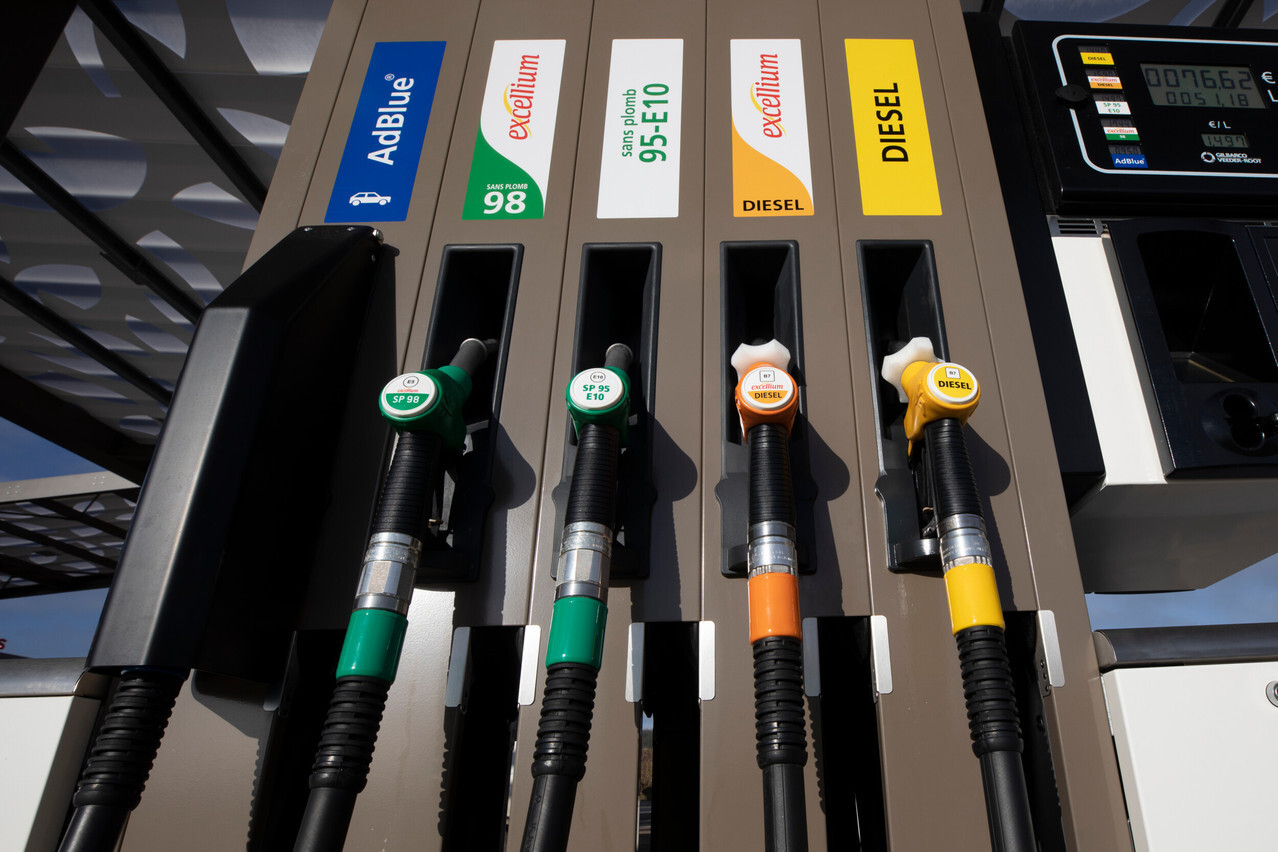
Filling up at the petrol station is significantly more expensive than it was a year ago. In August, the price per litre of diesel in Luxembourg rose by 33.7% year-on-year, whilst petrol cost 16.1% more. In August alone, diesel prices soared by 12.3% and petrol prices by 0.8%, according to figures published on Friday 4 September by Statec.
And the rise continued in September, with the maximum price of diesel rising from €1.865 per litre on 1 September to €2,024 from this Thursday 3 September, an increase of 15.9 centimes in two days. For a 50-litre fill-up, this amounts to nearly €8 extra.
However, energy bills are moving in the opposite direction for households that heat their homes with gas or electricity. Thanks to the ‘Resilienzpak’ measures resulting from the tripartite agreement, the price of electricity has fallen by 13.9% in a month, with part of the network costs being covered. The price of gas has fallen by 14.3%, following a reduction of 15 centimes per cubic metre. Overall, energy prices are down by 2% compared with July, but remain 5.8% above their August 2025 level.
A more moderate rise for food prices
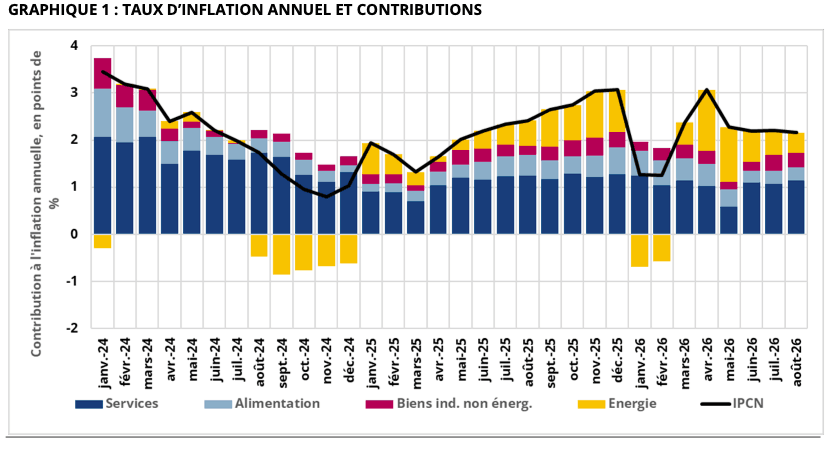
The price of diesel rose by 33.7% year-on-year in Luxembourg, whilst petrol prices rose by 16.1%. At the same time, electricity and gas prices fell sharply in August. Inflation remains stable at 2.2%. (Photo: Statec)
Heating oil has bucked this trend. Its price rose by 5.2% in August, despite the implementation of a 15-centime reduction agreed as part of the same deal. In the food aisles, the rise remains more modest, at 1.6% year-on-year, including alcohol and tobacco. However, there are significant variations: fruit and vegetables cost 12.5% more than in August 2025, frozen fruit 6.3% more and chocolate 5.6% more. Conversely, stone fruit is down by 3.8%, vegetable oils by 3.2% and citrus fruits by 2.2%.
Services, meanwhile, continue to drive prices up, with an annual increase of 2.6%, compared with 2.4% in July. In the height of the summer season, airfares rose by 5.8% over one month and by 3.6% year-on-year. Package holidays have become 3.5% more expensive since July.
Ultimately, annual inflation has remained at 2.2% for the third consecutive month. The next wage indexation has not yet been triggered: the half-yearly average of the index stands at 1,054.27 points, compared with a threshold of 1,064.75 points.