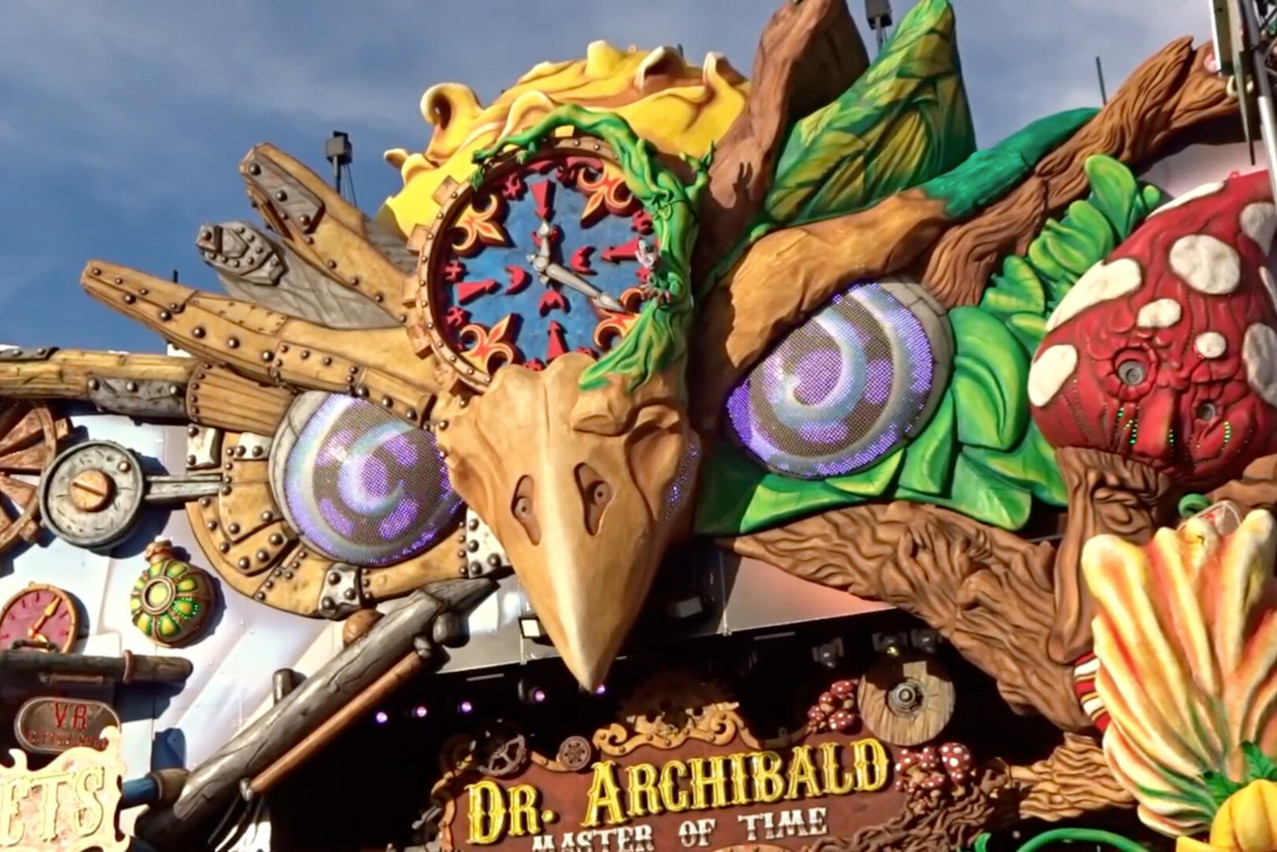
Dr Archibald costs €9 per ride. Behind its fantastical laboratory façade, however, lies a structure that was first established in 1971, renamed several times, and then transformed into a virtual reality attraction. The star attraction of the 2026 Schueberfouer epitomises the fairground economy: selling a new experience with a machine capable of spanning the decades.
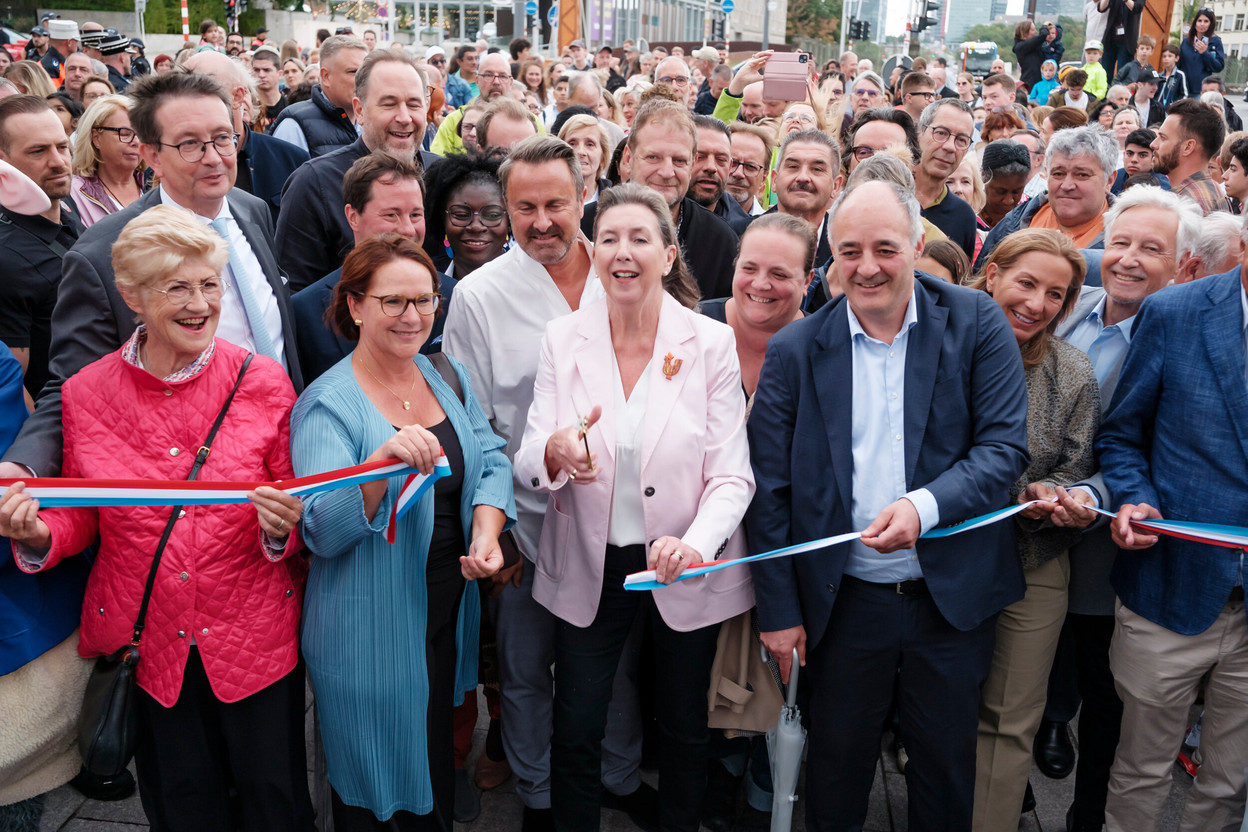
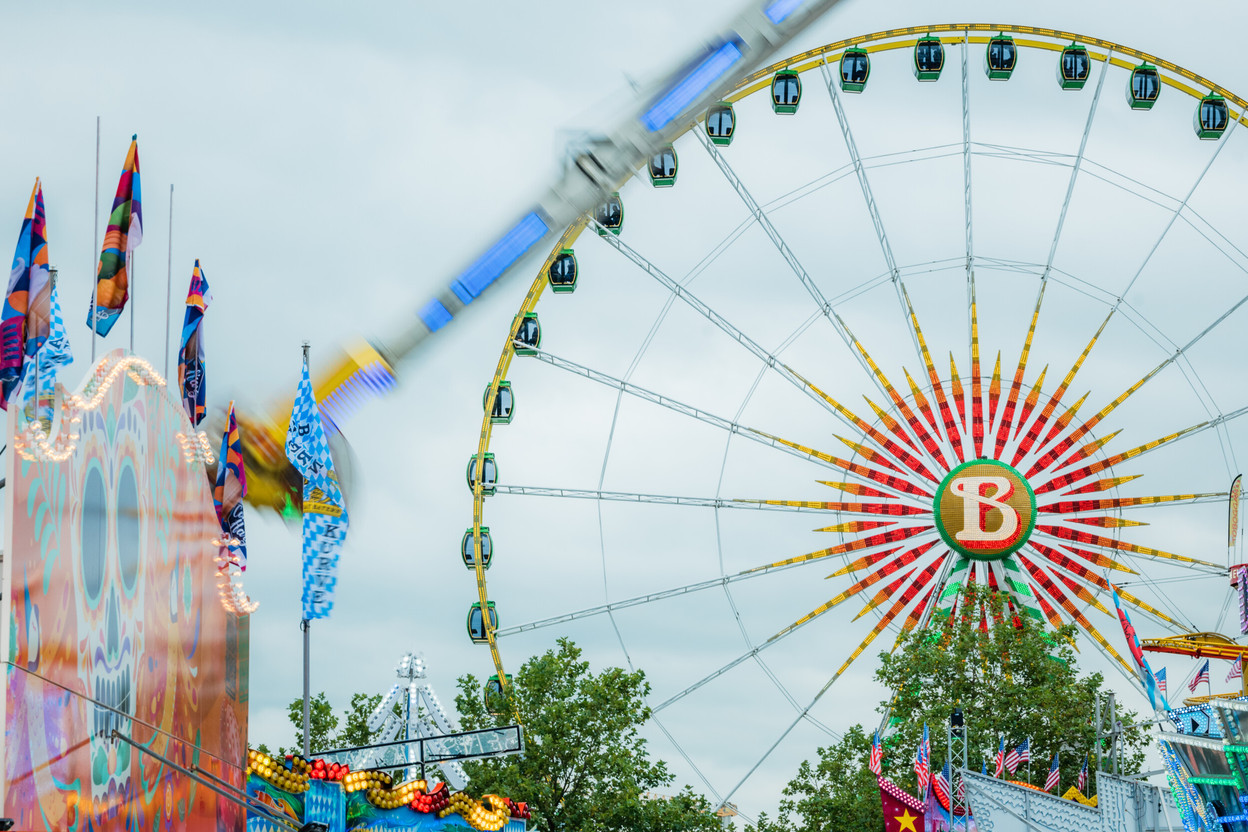
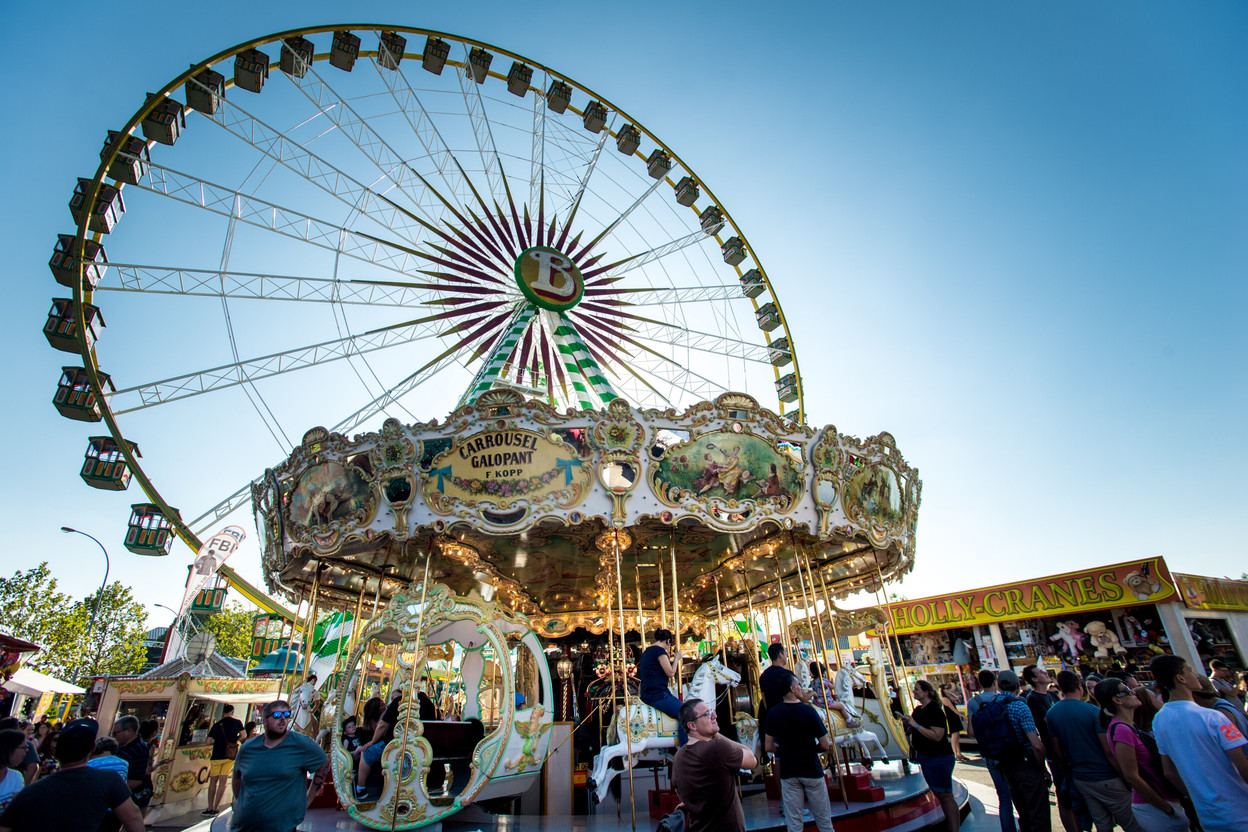
The Schueberfouer, officially opened on Friday 21 August at 5.00 pm at the Champ du Glacis, brings together 214 attractions across 4.44 hectares. The City of Luxembourg has nine flat rides, eight high-altitude attractions, two rail-guided or flume-type rides, 19 children’s attractions, six ghost trains, other rides and miscellaneous attractions, and a bumper car ride. Eight attractions are new, including four rides. The fair therefore showcases both its mechanical heritage and recent additions to the market.
Dr Archibald – Master of Time is the most impressive new attraction. Laurent Schwaller, head of the Festivals and Markets department, described it as ‘the only one of its kind in the world’. Visitors set out in search of a missing professor via a trail, a guided tour and VR headsets. The official Oktoberfest website describes it as the world’s largest transportable VR ride, featuring 32 two-seater pods, water, fire and smoke effects, and over a million LEDs.
Fairground rides and their secrets
Its modernity is rooted in a much longer history. The specialist blogs Ride-Index, Coaster Cloud and Vienna’s Prater credit Mack Rides with building the original ride in 1971. It was originally called Mammut-Höhle, then Geister-Tempel and Geisterhotel, before being renamed Dr Archibald in 2017. According to Ride-Index, the ride spans approximately 44 metres in width, 22.5 metres in depth and over 21 metres in height. Luxembourg’s new attraction for 2026 is therefore also a 55-year-old industrial asset whose value has been revitalised by its storyline, décor and technology.
The invoices for the attractions in Luxembourg are not in the public domain. Their book value, year of purchase, refurbishments and any funding arrangements also remain unknown. It would therefore be unfair to attribute the price of an advert found elsewhere to a specific ride at the Glacis. Trade catalogues do, however, provide a way of gauging the order of magnitude for a particular family of machines.
The opening balance first establishes the apparent unit revenue. The Miniquad costs €3.50, with four tickets for €10 or ten for €20. The Venetian Carousel also costs €3.50, compared with €5 for the Circus, the One Man Show, the Pinball Machine and the Sailor. The Wilde Maus costs 6 euros, or €4 for children aged 6 to 11. The Rotor and the XXL cost €7. The Booster Maxxx costs €9. The height and intensity of the movement factor into the price, but they do not fully explain it.
Spectacular events are driving prices sky-high
In the Intermark Ride Group’s Summer 2026 catalogue, the 165 items on offer provide an initial guide to prices. A 1989 Zamperla Mini Enterprise, whose carriages require some work, is listed at around €6,800. A 1964 Hollingsworth portable fun house costs around €25,600. A portable Rotor is on offer for €81,200. A 2007 Zamperla Skater is priced at €166,700, a 2008 Street Fighter Technical Park at €384,600 and a 1991 Vekoma Boomerang at €1.61m.
The median-priced ride in this catalogue is worth around €72,700, out of the 145 items priced in dollars. But this median figure lump everything together: six bumper car sets, 12 carousels, 29 children’s rides, 55 family or major attractions, 11 roller coasters, 11 spectacular attractions, nine Ferris wheels and 21 trains, trams or trolleys. It therefore does not represent the ‘price of a ride’; rather, it shows just how many different types of assets this expression encompasses.
Unsurprisingly, the spectacular attractions top the catalogue. A 109-foot – approximately 33-metre – Skycoaster is on offer for €158,100. A Zamperla Power Surge is priced at €213,700, a Nitro from the same manufacturer at €277,800, a 1996 Huss Giant Frisbee at €410,300, and a 2015 Fabbri Turbo 360, €444,500. A 2012 Rock Star ARM is listed at around €530,000. The 2018 Wave Swinger Extreme Lamborghini, with 48 seats, has seen its listed price fall from around €769,300 to €577,000.
But family attractions are holding their own
The family attractions market is not necessarily cheap. New Gosetto rides are advertised at under €64,100 for three units and under €128,200 for six. A 10-metre Drop N Twist SBF tower, built in 2016, has dropped in price from around €213,700 to €196,600. A Zamperla Kite Flyer is priced at €192,300. A 1977 Zierer Wave Swinger, modernised with LEDs, is worth around €341,900. The perception of a ride’s newness therefore also depends on its appearance, lighting and the work carried out on an older structure.
The Rotor, priced at €81,200, is equivalent to around 11,600 tickets at €7 each. The Skater, priced at €166,700, is equivalent to 23,800 tickets at the same price. The Street Fighter, at €384,600, requires 54,900 tickets. The Turbo 360, priced at €444,500, equates to 49,400 tickets at €9 each. When expressed in a single currency, the differences become immediately apparent: purchasing a large, spectacular ride may require 40 times as many ticket sales as buying a second-hand Rotor.
The 2011 Speed KMG offered by Rides 4-U is valued at around €725,700, which is equivalent to 80,600 tickets at €9 each. Intermark’s Vekoma Boomerang comes to €1.61m, the equivalent of nearly 179,000 tickets at the same price. These figures do not represent payback periods: they assume that every euro taken in goes towards repaying the ride, which is never the case.
Logistics that are putting a strain on revenue
The ticket price also covers wages, electricity, insurance, maintenance, inspections, spare parts, site hire charges and days lost due to rain. VAT must be added, as well as financial costs, depending on the purchase. A permanent attraction may require foundations and a building. A fairground ride, on the other hand, must withstand the repeated stresses of dismantling, transport and reassembly. Its commercial advantage – reaching audiences from town to town – becomes a cost item.
The catalogue makes these logistics almost tangible. A Jurassic Jeeps ride is priced at around €64,100, but its trailer costs an additional €34,200: transport therefore accounts for more than half the price of the ride. A Schwarzkopf Wildcat requires seven trailers. At each stage, there are additional costs for tractors, drivers, fuel, tolls, cranes, connections, accommodation for the teams and set-up time. Two rides listed at the same price can therefore have radically different cost structures.
Capacity then translates into turnover. The Swiss manufacturer RES Rides claims a capacity of up to 480 passengers per hour for its Super Swing M20. At €7 per passenger, the purely arithmetical ceiling stands at €3,360 per hour; at 5 euros, €2,400. But this maximum requires all seats to be occupied on every cycle, boarding without delay and no interruptions. With only half of this capacity utilised, the theoretical revenue is also halved.
The face value must also be adjusted to take account of package deals. Ten rides on the Miniquad for €20 brings the price per ride down to €2, compared with €3.50 per ride. Five rides on the Sailor for €20 reduce the price per ride from €5 to €4. For the operator, the discount secures an immediate payment and can cover several ride cycles. For the visitor, it obscures the comparison between the advertised price and the actual revenue collected per ride.
The price list at the Glacis also reveals several price brackets. The Bellevue charges €8 for heights over 1.40 metres and €5 for those under; the Tower Jules Verne charges €7 and €5 respectively. The Rio Rapidos offers four seats for €26, which works out at €6.50 per person instead of €7. The Wilde Maus has reduced its price from €6 to €4 for 6–11-year-olds. The profitability of a family attraction therefore depends as much on the number of seats actually sold in a gondola as on the price displayed at the ticket office.
Even the smallest entry in the catalogue sheds light on this model. Bumper cars are priced from around €17,100 for eight Spin Zone vehicles from 2009 to €115,400 for a 1998 Majestic set comprising 16 cars. Cars can also be sold separately. The value is then split between the track, the power supply, the vehicles, the trailer and the décor elements. The public sees a single attraction; the owner manages a portfolio of components.
Paying between €5 and €9 therefore does not mean recouping the cost of a machine in just a few evenings. The visitor is funding available capacity for a very short period within a trade fair calendar, with assets that must retain their safety, appeal and resale value for several decades. It is this residual value that makes the equation work – and that fuels the much less visible market covered in the second instalment of our series.