What exactly does IL Cosmetics do?
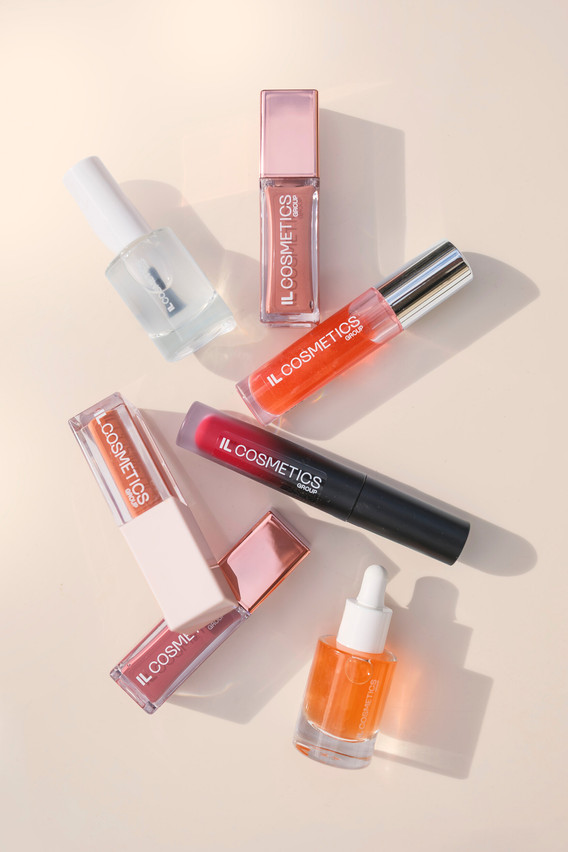
Aurélie Ignaccolo: “Our business began as International Lacquers in 1984, making nail varnish formulations in bulk. We added filling and packaging in 1999, expanded into eye make-upin 2003, and later developed liquid lip products. We have no consumer brand of our own. Clients can buy formulations in bulk, supply packaging for us to fill, or ask us to source the packaging and deliver finished products under their names.
Christophe Delas: “Full service is central to our business, mainly in Europe, but we also see prospects in the Middle East and South America. We sell bulk formulations, bases and components worldwide. Contract manufacturing is a discreet business: our clients are experts in marketing, but do not necessarily have the capacity to manufacture their products.
Why do shoppers rarely know your name?
A.I.: “Confidentiality agreements prevent us from naming the brands we work with. A decade ago, brands were reluctant to say they used outside manufacturers. That is changing. Some now show those partnerships on social media. Consumers understand that a brand does not necessarily run its own laboratories or factories.
Nail varnish made your name. Why expand into new categories?
C.D.: “The nail varnish market is cyclical. Expanding into eye and then lip products has reduced our dependence on it. Nail varnish and eye products each account for roughly 45% of turnover; lip and complexion products make up the rest, with room to grow. Our 2024 acquisition of Cosmetion in Italy adds powders to our range. Our first liquid foundation, developed in Luxembourg, was presented to clients in March 2026 and is still being tested.
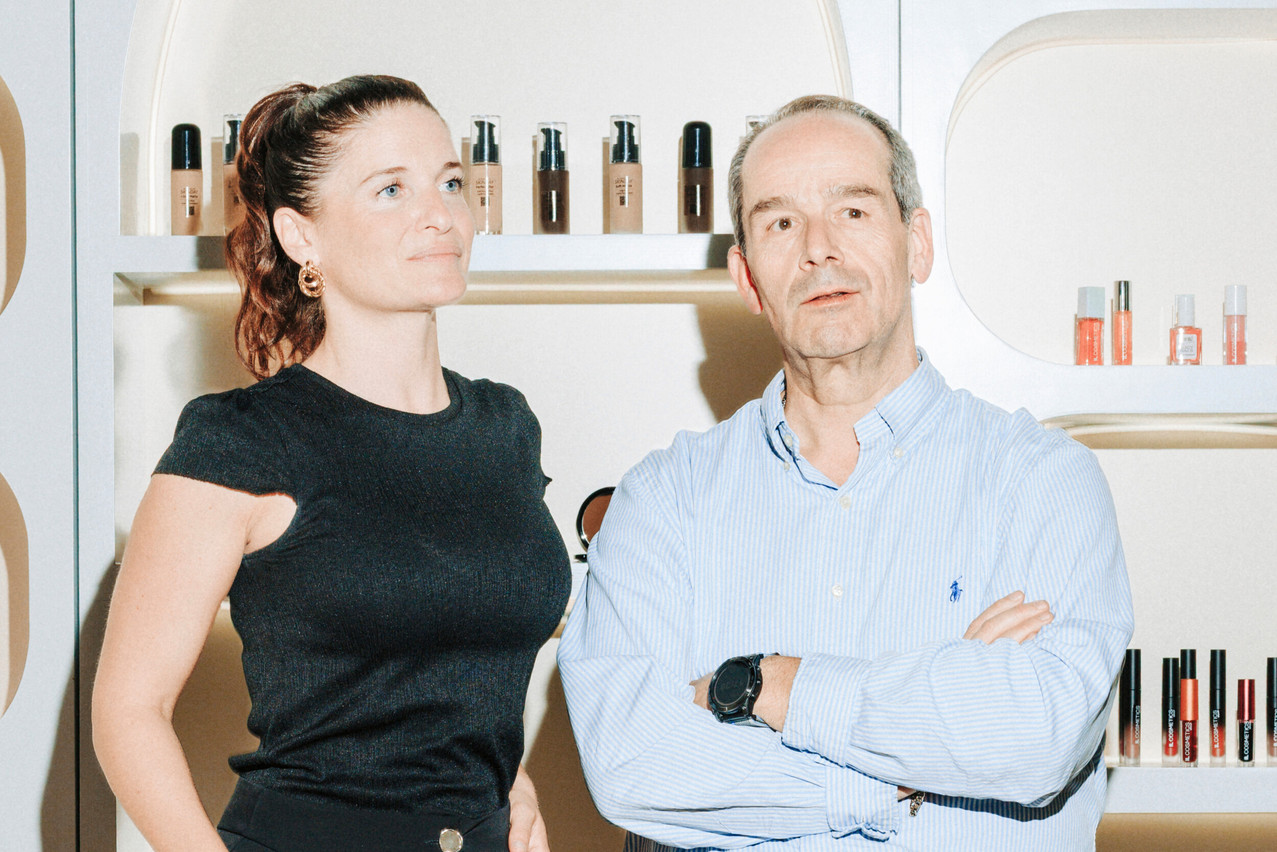
Aurélie Ignaccolo and Christophe Delas describe the path from lab sample to production line. Photo: Jan Hanrion/Paperjam
How do you develop and test new products?
C.D.: “Around 50 people are involved in product development, from formulation and testing to colour, packaging compatibility and regulatory matters. Of our roughly 250 projects under way, 130 to 140 began in-house; the rest come from client briefs. We might make 15 or 20 different mascaras for a single brand. How well they perform depends on the formulation, but also on the brush, stem and wiper.
A.I.: “For our own projects, marketing briefs R&D and presents concepts to brands quarterly. After a laboratory sample, we make one or two pilot batches to check performance at scale, then validate the first production run.
C.D.: “Consumer testing is part of the process. A panel may lead us to change a formula because a mascara flakes or does not wear well. That takes time, but it prevents us from presenting a product to clients before it performs as intended. It takes between six months and a year to develop a formulation that has passed these checks and is ready to offer to brands.
A decade ago, brands were reluctant to say they used outside manufacturers. That is changing.

What does “Made in Luxembourg” mean in practice?
C.D.: “We are the only manufacturer of this kind in Luxembourg. We develop and make liquid formulations in Bettembourg, with filling and packaging in Poland and Bulgaria. Powders are developed and made in Italy. This arrangement keeps R&D and high-value production in Luxembourg while allowing us to remain competitive.
Social media is accelerating trends. How do you keep pace?
A.I.: “By the time a trend reaches the market, we have often been working on it for up to two years. We follow social media and speak with brands and suppliers. Across the beauty industry, major groups plan launches two or three years ahead; more agile brands can launch in a year.
You use more recycled plastic in your packaging. What remains the main environmental challenge?
C.D.: “The recyclability of packaging. Nail varnish packaging combines glass, plastic and brush fibres; mascara packaging also mixes materials. Their small, rounded packs are hard for sorting equipment to handle. We estimate that packaging for 70% to 80% of our products now contains recycled plastic, compared with almost none ten years ago. The next step is ensuring those packs can themselves be recycled.
From an investor’s perspective, where does IL Cosmetics’ value lie?
A.I.: “In our product expertise. Few manufacturers can produce nail varnish at our scale. We also have deep expertise in mascara, particularly waterproof formulas. Even knowing the ingredients is not enough to reproduce a formulation. Our value also lies in our service, our transparency and the trust we have built with clients.
C.D.: “We invested €25 million in 2025 and 2026, notably in Luxembourg and Italy. A new make-up production unit began operating in Bettembourg in June 2026. These investments will expand production capacity and support our €200 million turnover target for 2030. We remain family-owned, with no investment fund holding a stake and no plans to sell.
IL Cosmetics in figures
€130 million: group turnover in 2023, boosted by unusually large orders from brands.
€110 million: expected turnover in 2026, up around 15% on 2025.
350 to 360 million units: the group’s annual production capacity, including around 250 million units of nail varnish.
600 to 650 employees: across the group.
300 to 400 clients: mainly international brands
2nd
IL Cosmeticsis the 2nd largest nail varnish producer worldwide by volume and one of Europe’s three leading make-up suppliers, according to IL Cosmetics.
Nail varnish built the business; eye make-up now accounts for roughly the same share of turnover. With powders added and liquid foundation in testing, IL Cosmetics is expanding well beyond its original speciality.
This article was written for the November 2026 issue of Paperjam magazine, published on 14 October. The content is produced exclusively for the magazine. It is published on the website to contribute to Paperjam’s comprehensive archive. Click on this link to subscribe to the magazine.
Is your company a member of the Paperjam Club? You may be eligible for a magazine subscription in your own name. Let us know at club@paperjam.lu.