The star attraction of the Schueberfouer is 55 years old. Yet Dr Archibald seems to belong to the latest generation of attractions: virtual reality glasses, an interactive storyline, water, fire and smoke effects, and a façade covered in lights. The ride was first built in 1971. Its history shows that a fairground ride does not age in the same way as a car. It can change its name, décor, technology and owner without disappearing.
Before becoming Dr Archibald in 2017, the attraction was known as Mammut-Höhle, Geister-Tempel and then Geisterhotel. It began as a ghost train before being transformed into a time-travel adventure. Visitors in 2026 are therefore not buying a ride on an antique attraction, but an experience recreated around an old asset. This capacity for reinvention gives the machinery economic value long after its initial useful life.
This is where the second-hand market comes in. When a fairground operator renews their stock, the old ride does not necessarily end up as scrap. It is offered to another operator, an amusement park or a broker. The seller may sell the entire ride, sell only the carriages, or keep the trailers. A ride may then be moved to another country, fitted with a new façade, and continue operating for several more decades.
A secondary market, but no official listing
This market has its own brokers and classifieds websites, but no official price index. Intermark Ride Group features 165 items in its summer 2026 catalogue. Rides 4-U and RidesZone publish other listings. Manufacturers also sell new or refurbished machines directly. However, readers generally only see the asking price. The final price, the buyer’s identity and the terms of the sale remain confidential.
The Intermark catalogue at least gives an idea of the scale involved. Of its 165 listings, 146 include a usable price figure, whilst 19 have hidden prices, are subject to an offer or are ambiguous. After conversion to euros, the median price stands at around €72,700. Half of the listed attractions are priced below this figure, whilst the other half is priced higher. The average stands at €117,300, pushed up by a few attractions costing several hundred thousand euros.
This median figure does not represent the price of a typical fairground ride. The catalogue includes a small children’s ride, a full-scale carousel, a Ferris wheel, a ghost train and a rollercoaster. Forty-nine listings are priced below €50,000, whilst three exceed €500,000. The cheapest ride is on offer for around €6,000; the most expensive, a permanent rollercoaster from 1991, is priced at €1.61m.
Behind the vintage
The condition is just as important as the model. For cars priced at under €10,000, an advert specifies that they require work. Elsewhere, a car priced at around €30,000 is described as non-roadworthy. The lowest prices may, therefore, lead you to a garage rather than a party. Conversely, a vehicle sold with its trailers, new lighting and a renovation file may be ready to hit the road again.
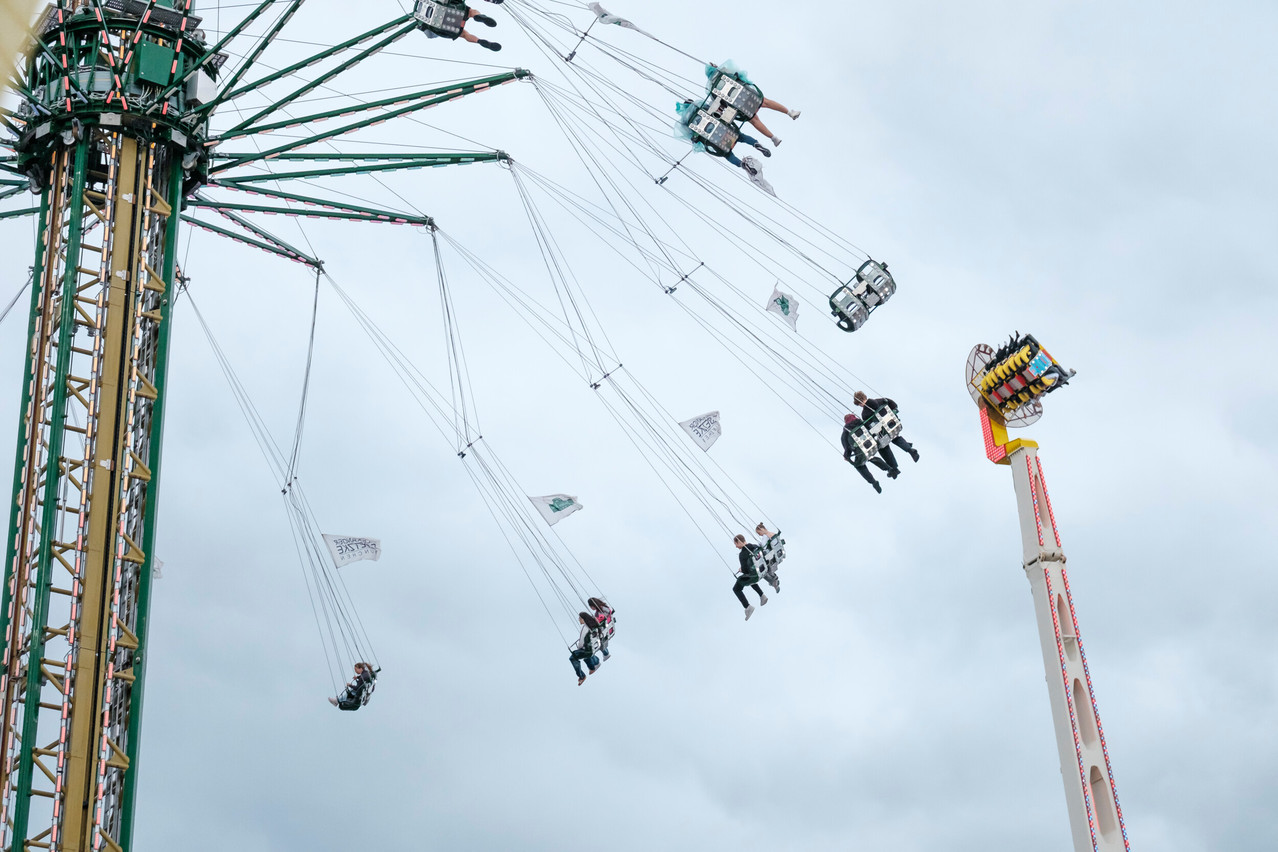
Age alone is not enough to determine the discount either. A portable carousel from 1928 is still listed at €72,700. Its seller is asking for as much as the median price of the entire catalogue, nearly a century after it was built. A large “flying chairs” carousel from 1977, modernised with LEDs, is on offer for around €341,900. The owner of another ride, built in 1979 and rebuilt in 2009, is asking for €102,600. The year of manufacture provides information about the original structure, not the age of all its components.
A refurbishment can replace the controls, motors, wiring, seats, restraint systems and lighting. It can also completely transform the commercial proposition, as Dr Archibald illustrates. The old machine then becomes the platform for a new product. For the owner, the decision is no longer simply a choice between buying new and keeping the old: it involves comparing the cost of a refurbishment with that of a replacement.
The Bayern Kurve remains a safe bet
The Bayern Kurve offers another example of this longevity. This ride spins its passengers round an inclined circular track, simulating the speed of a bobsleigh descent down a Bavarian track. A Schwarzkopf model manufactured around 1967 was listed by RidesZone at around €141,000. The advert mentions 16 carriages, 32 seats and a diameter of nearly 20 metres. More than half a century after it was built, the ride therefore still commands a higher price than many more recent rides.
This value does not stem solely from steel. Bayern Kurve rides that are still in operation are rare, which may appeal to collectors, nostalgia parks or operators seeking an instantly recognisable attraction. However, the figure quoted in the advert does not prove either that the sale took place or that it was concluded at that price. In this market, rarity attracts attention without necessarily establishing a transparent market value.
The listings even publicly indicate the start of negotiations. A large “flying chairs” attraction built in 2018 has seen its asking price fall from €769,300 to €577,000, a drop of 25%. Other listings bear the phrases “make an offer” or “reasonable offers considered”. The price is used to gauge interest, initiate a discussion or speed up a sale. It does not constitute a valuation, a guaranteed value or an invoice.
The merry-go-round, a small part of the sale
Transport can then turn the whole deal on its head. A small jeep ride is on offer for around €64,100, but the suitable trailer costs an additional €34,200. For a single ride, transport therefore accounts for more than half the price of the ride itself. A portable rollercoaster advertised in the same catalogue takes up seven trailers. The buyer must, therefore, factor in tractors, drivers, fuel, tolls, cranes and assembly time before knowing what the purchase will actually cost them.
It is also necessary to determine what is included following the sale. Cars, the cash register, the electrical system, the stock of spare parts, plans, previous inspections and decorative elements may be included or negotiated separately. Intermark, for example, offers a mobile ticket office for around €17,500 and a sweet trailer for €15,400. A funfair therefore consists of a range of mobile assets whose value exceeds that of the visible attractions.
Brokers thrive on this fragmentation. They bring sellers and buyers together, sometimes protecting their identities, and can facilitate the trade-in of an old machine when a new one is purchased. The second-hand market therefore does not merely compete with manufacturers. It provides the liquidity that enables an operator to renew their fleet without forfeiting the full value of their previous equipment.
This lack of transparency explains why it is impossible to accurately calculate the total value of the fairground rides installed at the Glacis. A brand-new façade may conceal a structure that is several decades old; a recent machine may already have changed hands; a public price may not cover either the trailers or the installation work. Every summer, the Schueberfouer showcases the spectacular side of this industrial heritage. The transactions that enable it to travel, however, remain hidden from public view.