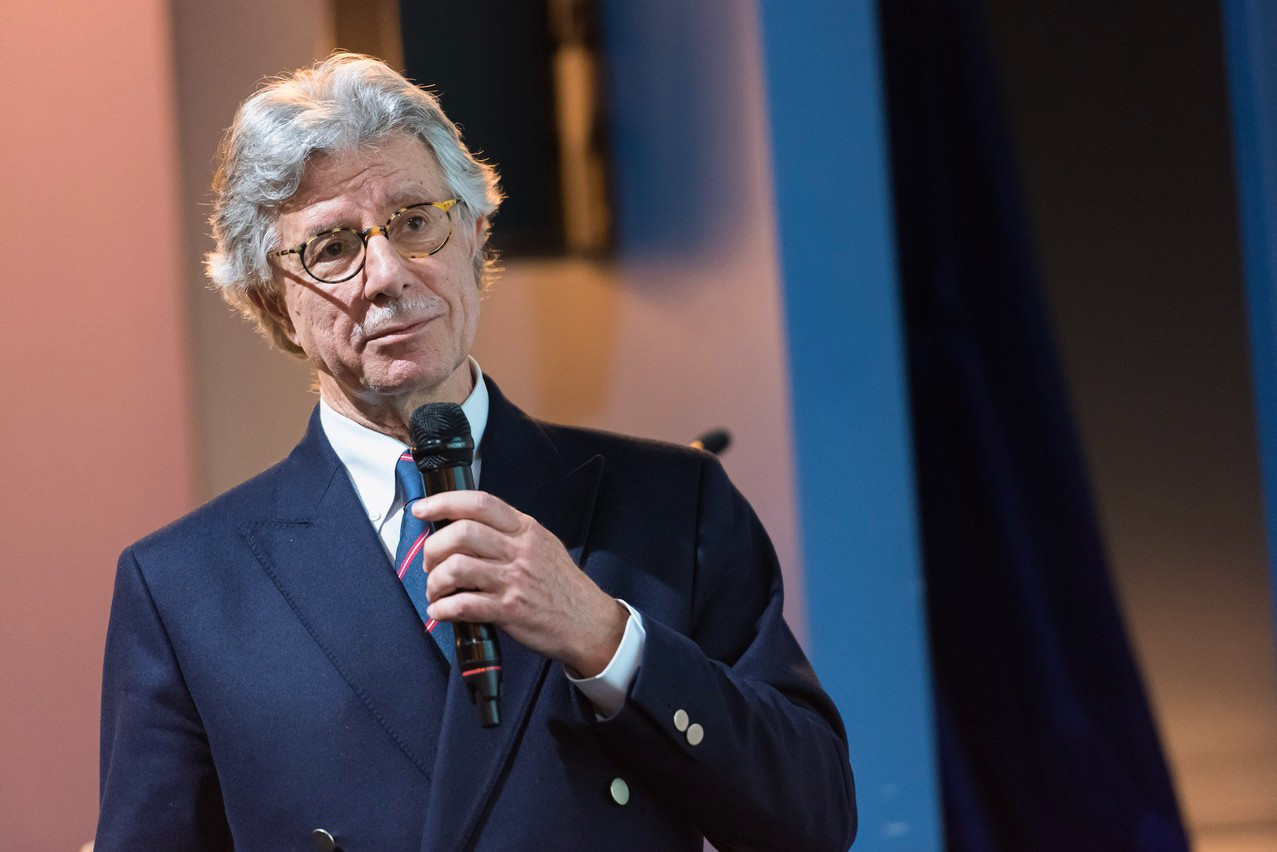
The national--or even international--sport of investment vehicle promoters is to beat a benchmark index and to promise their investors a return higher than that index. In the defence sector, as in other sectors, it is difficult to compare oneself with indices that have nothing to do with each other, constructed from companies with completely different universes. “This is not the only aspect,” stresses François Chauvet, co-founder and CEO of Fair Cost Index. “If the idea is to promote the European defence sector and give it the means to develop, we need to be able to build a benchmark index that takes this specificity into account.”
With European authorisation and certification from the European Securities and Markets Authority (Esma), FCI has built around a hundred indices, including an equity index linked to European defence. The latter is aimed not only at European companies that produce tanks, for example, but also at those involved--in one way or another--in bringing defence and security products to market: in other words, dual-use technologies, i.e., bits of technology needed by the sector. “There is artificial intelligence, raw materials, everything that defence needs with only European companies, Europe in the sense of the European Union plus the United Kingdom,” adds FCI’s chief operating officer Jean-Hugues Lasbatre. “The key thing for us was that it was legitimate in terms of investment.”
A question of sovereignty
“This European dimension of the index is very, very important,” adds Luc Neuberg, co-founder of FCI. “Everyone knows very well how it works from a technological point of view. If there’s going to be a war against X or Y and you use a technology that you don’t control, you run the risk that whoever controls it will cut you off for diplomatic or geopolitical reasons. For example, with SES, one of the world leaders in satellite communications, Europe is ensuring a certain degree of sovereignty.” But is listed SES in the index? “No, not for the moment,” they reply in unison. And it’s not a question of the very low share price since the full acquisition of O3B MPower, as “we don’t prejudge the profitability of a company,” they point out.
So how do you make sure you have the right players? “We used a document published by the French ministry of defence, or more precisely by the Directorate General for Armaments, which enabled us to arrive at an investment universe of 1,200 stocks for an index of 100 stocks,” explains Chauvet. One hundred stocks from 14 European countries, according to the detailed version of the FCI Europe Totalcap Impact Defence 100 as at 30 May, of which 29.53% come from French companies, 13.58% from the UK, 11.37% from Germany and 11.17% from Sweden, to name the four main weightings.
Of the 122 sectors in which these companies operate, 81 have been eliminated to retain only those that are close enough to the core defence business. And even when a company has foreign capital--a subject on which the European Union is already working with the idea of better protecting its vital companies from foreign investment--the FCI index includes companies with European headquarters.
A tracking error of less than 3%
“We do not and cannot do primary capital analysis, but the DGA document can be relied upon.”
The two men assure us that their index has a systematic correlation of 99% on average and a tracking error of less than 3%, a sign that this index--which, of course, includes already identified European champions such as BAE Systems, Safran, Airbus, Sopra Steria, Rolls-Royce and Thales--makes sense. These certainties are the result of a study, since 2021, of the behaviour of this basket of shares, which is updated once a month and is always up to date. “We noted, for example, a strong performance by the index in March 2022,” notes Lasbatre, “which is fairly correlated with the events in Ukraine. And we’ve also seen a sharp increase since the start of the year,” which coincides, in turn, with the statements made by the new US president, Donald Trump, and with the European projects announced in the wake by the president of the European Commission, Ursula von der Leyen.
Fair Cost Index has, as part of its certification, filed its methodology and must stick to it or risk getting into trouble with regulators. This should also help to avoid the kind of defence washing that can sometimes be seen with green washing. “What’s ‘amusing,’” says Chauvet, “is that our index outperforms the conventional index and has a better ESG score. It depends on the distribution.”
“But this is excellent news: it shows that investing is interesting for many investors,” adds Neuberg. “If I put myself in the shoes of an investor, I say to myself that this is good for helping Europe to find the €800bn it needs as part of its Rearm strategy, and that it benefits investors. Five years ago, when defence investments were discussed on boards of directors, they were directly considered unethical. Not only was armament not a subject, but it was better not to talk about it. Now it’s a necessity and it can be profitable!”
An exhibition for challengers
What about chemical companies, those working on the materials of the future and those linked in one way or another to the nuclear industry? “We have a methodology that has enabled us to be certified, and we cannot deviate from our methodology,” replies Chauvet. “When it comes to nuclear power, for example, these discussions are eminently political. It’s not our job to carry out a primary analysis or to discuss things again. After that, it’s up to the fund manager to choose his strategy and decide what he wants to invest in. There’s nothing to stop them investing in one area or another, or even over-investing in some companies and under-investing in others. But if you are no longer in line with the index, you also have to recalculate the risk.”
Behind the champions on which the few indices that exist on this subject agree, it will also be interesting to observe the development of challengers or newcomers. The directors of Fair Cost Index admit that they are keeping a close eye on the list of companies that could be included in this index, and could modify the basket by 1% per month and 5% to 7% per year at the end of the year, depending on performance.
About the Fair Cost Index
The FCI was born of a desire to restore transparency and fairness to the field of financial indices. Founded by Luc Neuberg, former CEO of BCEE Asset Management, and François Chauvet, chairman of Aptimum Conseil and Fundclass, FCI is a response to the increasing complexity and prohibitive cost of market indices. Over the years, the major index providers, such as MSCI or Stoxx, have multiplied their acquisitions, making their methodologies opaque and their products difficult to read.
This opacity has justified significant price rises, creating an oligopolistic market where customers are captive. In addition, indices have become forward-looking tools, moving away from their primary function of accurately representing a market. The European Benchmark Regulation, which came into force in 2018 after the Libor and Euribor scandals, has strengthened the resolve of FCI’s founders. This regulation aims to limit conflicts of interest between index providers and investors. To guarantee the objectivity of its indices, FCI uses the APT (Arbitrage Pricing Theory) method and works directly with the world's stock exchanges to obtain data in real time, without going through intermediaries.
29.53%
As at 30 April, Fair Cost Index’s Totalcap Impact Defence 100 referenced a third of French company stocks. It’s the top country in this index, which includes stocks from a total of 14 European countries.
Some figures
Twenty-six companies in the Top 100: According to the Stockholm International Peace Research Institute (Sipri), 26 European companies were in the Top 100 of 2023, published in 2024, led by the trio of BAE Systems (UK, 6th), Airbus (EU, 12th), Leonardo (Italy, 13th). The top five in the world are American.
4,000 SMEs, including 1,000 strategic companies: According to the French Directorate General for Armaments, the nine French or European industrial groups in France rely on 4,000 SMEs, 1,000 of which are considered strategic.
One million direct jobs: For the European Defence Agency--the association of aerospace, security and defence industry that which represents 98% of the turnover of professionals in the sector in Europe--the sector will be worth €290.4bn in 2023, up by more than 10% on the previous year, and will directly employ 1.03m people. Add to that 3.9m indirect jobs and a further €286bn in revenue.
This article was written for the supplement Alternative investments from the Paperjam issue for July 2025 published on 13 June . The magazine's content is produced exclusively for the magazine. It is published on the site to contribute to the complete Paperjam archive. Click on this link to subscribe to the magazine.
Is your company a member of Paperjam Club? You can request a subscription in your name. Let us know via club@paperjam.lu