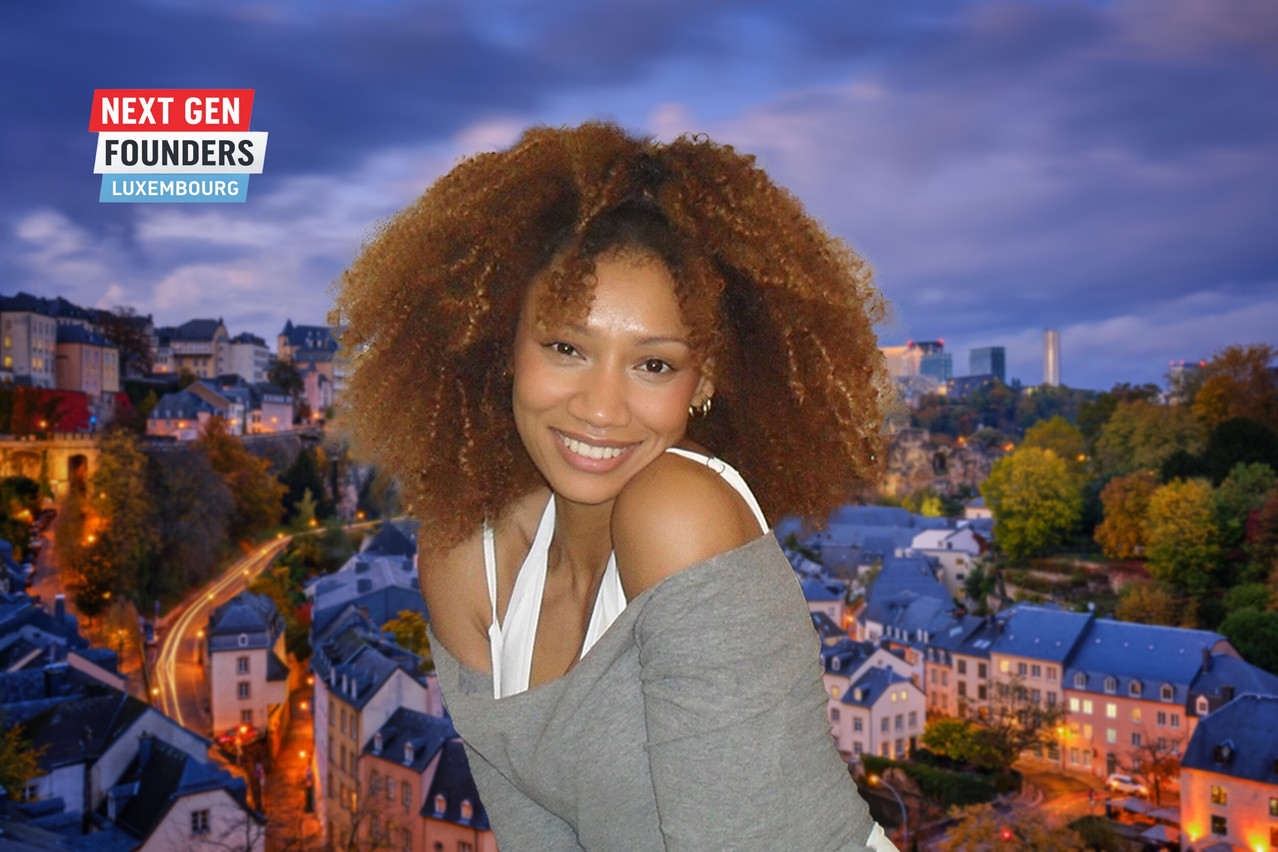
At the age of 34, Erin Figueira is developing Rebelderose alongside her job at the Luxembourg House of Cybersecurity. For just over a year now, she has been dividing her time between her full-time job and a workshop in Bonnevoie, where she designs her collections with a seamstress. Her ambition is to build a Luxembourgish fashion brand based on upcycling, small-batch production and, eventually, passing on her expertise.
The project, however, is the result of a journey that has been anything but straightforward. Having arrived in Luxembourg from Cape Verde at the age of 11, Erin Figueira explored various professional fields over the years. She worked in hairdressing, the automotive sector, design and the audiovisual industry before spending two years in Paris, where she got a behind-the-scenes look at a haute couture house. “My journey really is about not accepting one’s fate,” she sums up. “I’m someone who doesn’t let a ‘no’ stop me.”
Creating fashion without attending fashion school
Her interest in clothes, however, dates back to well before her time in Paris. Even as a child, she would alter the clothes she was given if they weren’t the right size or weren’t what she wanted to wear. “I’d been upcycling since I was very young, but for me, it was so normal that it didn’t even have a name.”
In Paris, this practice took on a whole new dimension. Whilst working for Schiaparelli, she discovered the haute couture ateliers and began to take an interest in the founder’s story. She particularly identified with the way Schiaparelli conceived her early designs. “I thought to myself: she was doing exactly as I do. At first, she didn’t know how to sew; she used pins instead.”
Back in Luxembourg, Erin Figueira bought her first sewing machine and taught herself using online tutorials. With no formal training in fashion design or pattern-making, she experimented repeatedly before gradually posting her alterations on social media.
It didn’t take long for reactions to come in. Internet users asked her where they could buy her designs or suggested she transform their own clothes. Erin Figueira, however, turned down the initial requests. “I didn’t feel I was up to the task yet,” she explains. As a perfectionist, she prefers to continue developing her technique before taking the next step.
Turning a passion into a business
The name Rebelderose didn’t originate with the company: Erin Figueira was already using it on Instagram. She sees it less as a reference to rebellion than to her determination not to accept things as they are. “It’s not about being rebellious in the sense of causing trouble. It’s about wanting to change things, not staying within the box.”
As the months went by, her project evolved. “I didn’t just want to get likes and be recognised by people. I asked myself: what am I bringing to all this? What I wanted was to pass something on.” This realisation marked a turning point. In February 2025, she organised her first upcycling workshop for children to show them that it’s possible to give clothes a new lease of life rather than replacing them. The feedback was encouraging, and several parents soon asked her to repeat the experience.
A few months later, she decided to formalise the project. She found a workshop in Bonnevoie and enlisted the help of a seamstress to develop her first designs. “She believed in me,” says the founder. “Without her help, it really wouldn’t have been possible.”


The World Cup as a turning point
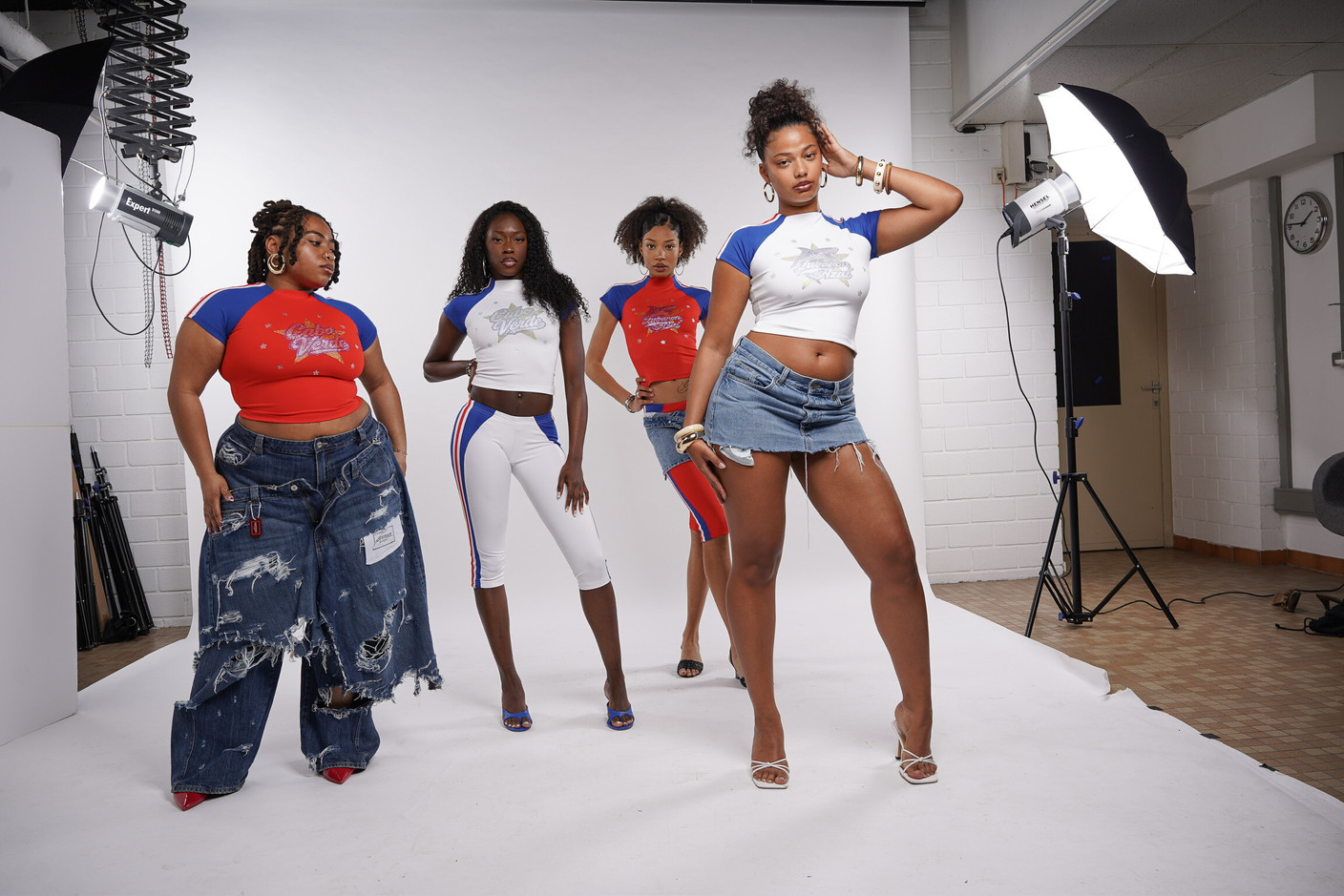
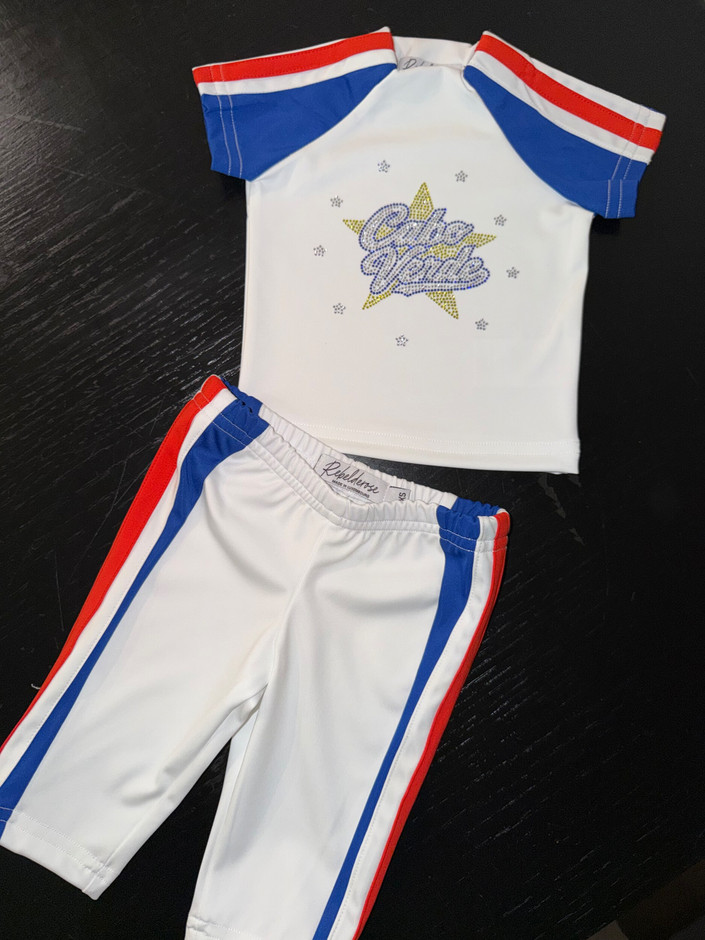
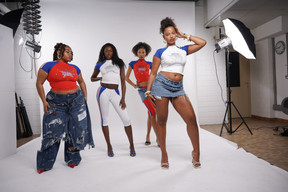
Her first collection, inspired by Cape Verde, enabled her to turn a creative project into a fully-fledged business. Produced as a limited edition, it was offered exclusively on a pre-order basis to avoid unsold stock. “For me, it was clear from the start. I wanted to operate on a pre-order basis to avoid waste.”
The success quickly exceeded her expectations. Orders poured in from Luxembourg, as well as from France, Portugal, Switzerland, the United Kingdom and the United States. The family of a player on the Cape Verde national team also commissioned several bespoke pieces from her, giving Rebelderose unexpected exposure during the 2026 World Cup.
The collection is now sold out. Erin Figueira has no plans to reissue it, as she wishes to preserve the limited-edition nature of each series. This decision is in keeping with Rebelderose’s philosophy, which is based on small-scale production rather than mass manufacturing.
Behind the scenes at a young brand
This first collection has also given her an insight into everything involved in launching a brand. As well as designing the clothes, she had to set up her website, manage pre-orders, payment methods and international shipments, as well as the associated taxes and fees, whilst continuing to make the final technical adjustments to the collection. “I didn’t expect so much all at once. We very quickly found ourselves overwhelmed,” she says. “I faced challenges at every stage.”
Like many young entrepreneurs, she is funding every stage of the project herself. Her first expense was a training course in CLO 3D software, which enables her to design her models virtually before creating the patterns. Next came the machines, equipment, premises, fabric testing and the tools needed to apply the rhinestones. “This was the launch of the brand. I knew I wouldn’t make any profit at first.”
Looking beyond the next collection
Nevertheless, Erin Figueira intends to grow Rebelderose gradually. “I’ve always believed it would work. I’ve never had any doubts.”
The next collection is already in the pipeline for spring 2027. Like the first one, it will be produced in limited quantities. “I’m all for rarity,” says the founder. “I find that everyone dresses the same. I like the idea of someone wearing a piece that very few people own.” Upcycling will remain at the heart of the project, as will the use of pre-orders to minimise unsold stock.
In the longer term, however, the founder sees Rebelderose as much more than just a clothing brand. She envisages a workshop open to the public, services to alter garments with great sentimental value and, above all, a business dedicated to passing on fashion craftsmanship. “I’d like to welcome young people who want to learn, because I had to learn everything on my own,” she explains. “I'd like to run a company that trains young people and do my bit to bring about change in Luxembourg.”