The European Investment Bank Group has unveiled plans to reinforce European defence financing and accelerate funding for the bloc’s technology scale-ups, as policymakers and investors gathered in Luxembourg for the fourth EIB Group Forum.

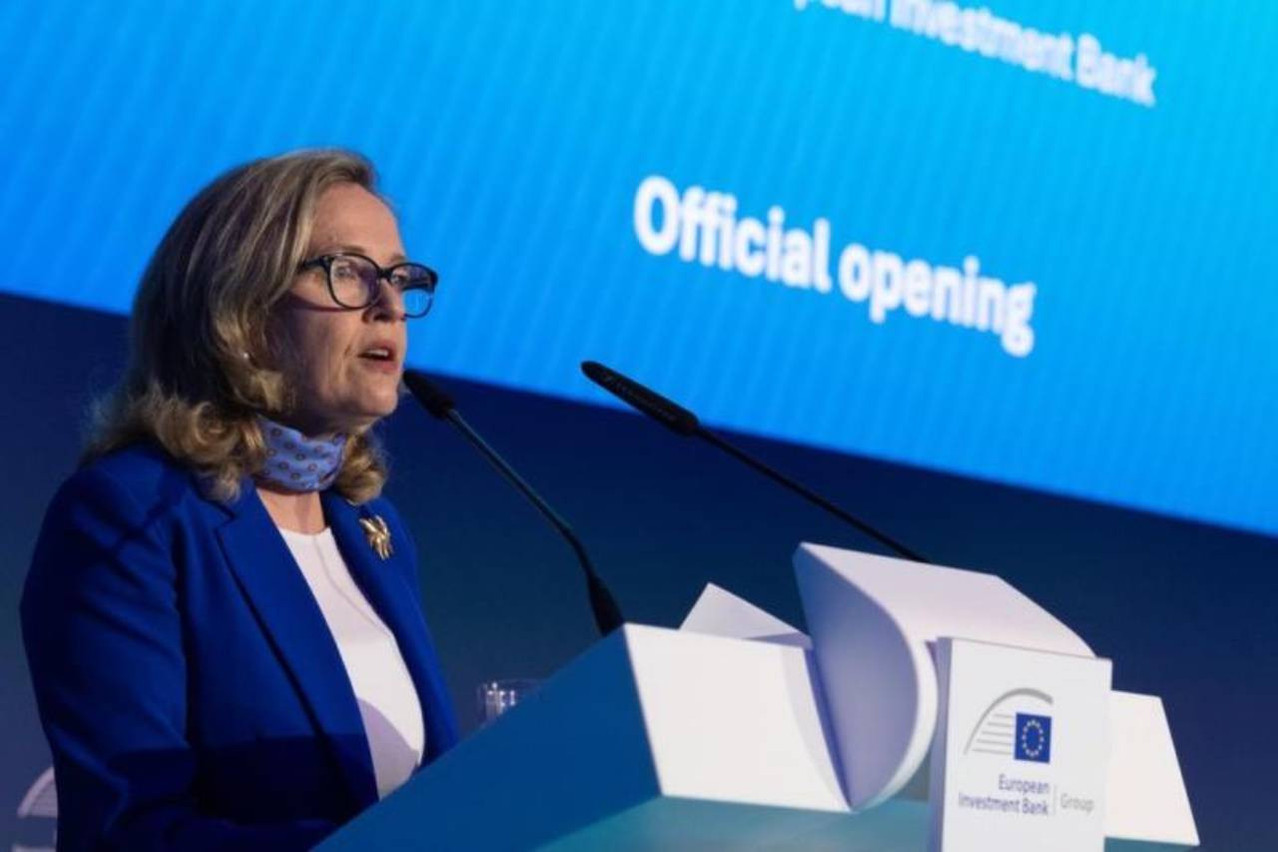
Calviño emphasised in her opening remarks that Europe’s economic fundamentals remained strong but argued the region needed to move faster on investment, capital markets integration and simplification, while reinforcing sovereignty and global partnerships amid geopolitical turbulence.
Closing Europe’s funding gap
The EIB Group stated it would propose to its board, comprising representatives of the 27 EU member states, an expansion of the European Tech Champions Initiative, the fund-of-funds launched by the European Investment Fund and six member states in 2023 to increase scale-up funding.
Alongside that, the bank outlined a pilot “exit toolbox” for early investors and start-up founders, including expanded scale-up debt, convertible instruments, acquisition finance and support for listings on European stock markets, framing the initiative as a concrete pan-European complement to regulatory measures associated with the Savings and Investment Union.
The EIB Group also highlighted its ambition to strengthen Europe’s venture capital ecosystem in what it described as a push for speed and scale to close the funding gap for the EU’s technology pioneers.
Defence Equity Facility
Calviño stated that the EIB Group planned to expand the Defence Equity Facility, under which the EIF acts as an anchor investor for equity investments into European defence companies via specialised private funds.
The EIB Group also indicated that another major investment into a pan-European venture capital fund focused on deep tech and defence technologies would be announced during the week of the forum.
European Commission president Ursula von der Leyen, also addressing the gathering, argued that the EIB Group played a vital role as Europe navigated profound geopolitical shifts, stressing the need for Europe to become more independent and more competitive and describing the bank as an “indispensable partner” because its investments “multiply opportunities”.
Investment report
The EIB Group published its annual investment report on 3 March, based on a survey of around 13,000 businesses across the EU, concluding that firms had proved resilient despite heightened uncertainty driven by geopolitical shifts and recent tariff and energy shocks, while global investors continued to view Europe as a stable market.
The report found that EU firms matched US peers in digitalisation and artificial intelligence adoption and that 90% continued to invest in the green transition, an effort the EIB Group linked to energy security and sovereignty. The report also noted that renewables had reached two-thirds of EU power capacity, which it argued was reducing costs and dependence on exports.
Debora Revoltella, EIB chief economist, concluded that investment in Europe had been resilient but needed to accelerate, arguing that future growth would depend on a decisive push for private investment and that leveraging the scale of the EU single market was critical for business opportunities, strategic sectors and resilience to external shocks.
The report also reasoned that removing barriers within the single market could raise firms’ investment intensity by 10%, particularly for intangible assets linked to innovation. It added that free-trade agreements under negotiation could increase exports by more than 20% to partner countries.
On energy and defence, the report stressed the need to accelerate investment in grids, storage and cross-border interconnections to address bottlenecks in the energy transition, and called for stronger coordination in defence investment as EU governments move towards spending 5% of GDP on security and defence by 2035.
Beyond capital markets
Over the three-day event, participants including European Council president Antonio Costa and Eurogroup president Kyriakos Pierrakakis are set to discuss investment priorities spanning digital infrastructure, climate action, strategic autonomy and deeper capital markets, alongside global partnerships.
The EIB Group stated that new agreements and financing commitments would be announced during the forum, including financing for security and defence capabilities, energy efficiency and technology innovation, deeper cooperation with EU partner financial institutions, clean energy projects in Africa and a new partnership with the World Trade Organization. It also plans to launch its third Gender Action Plan, aimed at gender equality and women’s economic empowerment in Europe and worldwide.
The EIB Group has signed €100bn of new financing and advisory services in 2025 for more than 870 projects across eight priorities, ranging from climate action and digitalisation to security and defence and the savings and investment union.