Finding the right person to contact to ask for support, choosing the right support services or accessing suitable training: the new National Action Plan for the Rights of People with Disabilities sets out a number of measures that directly affect their daily lives.
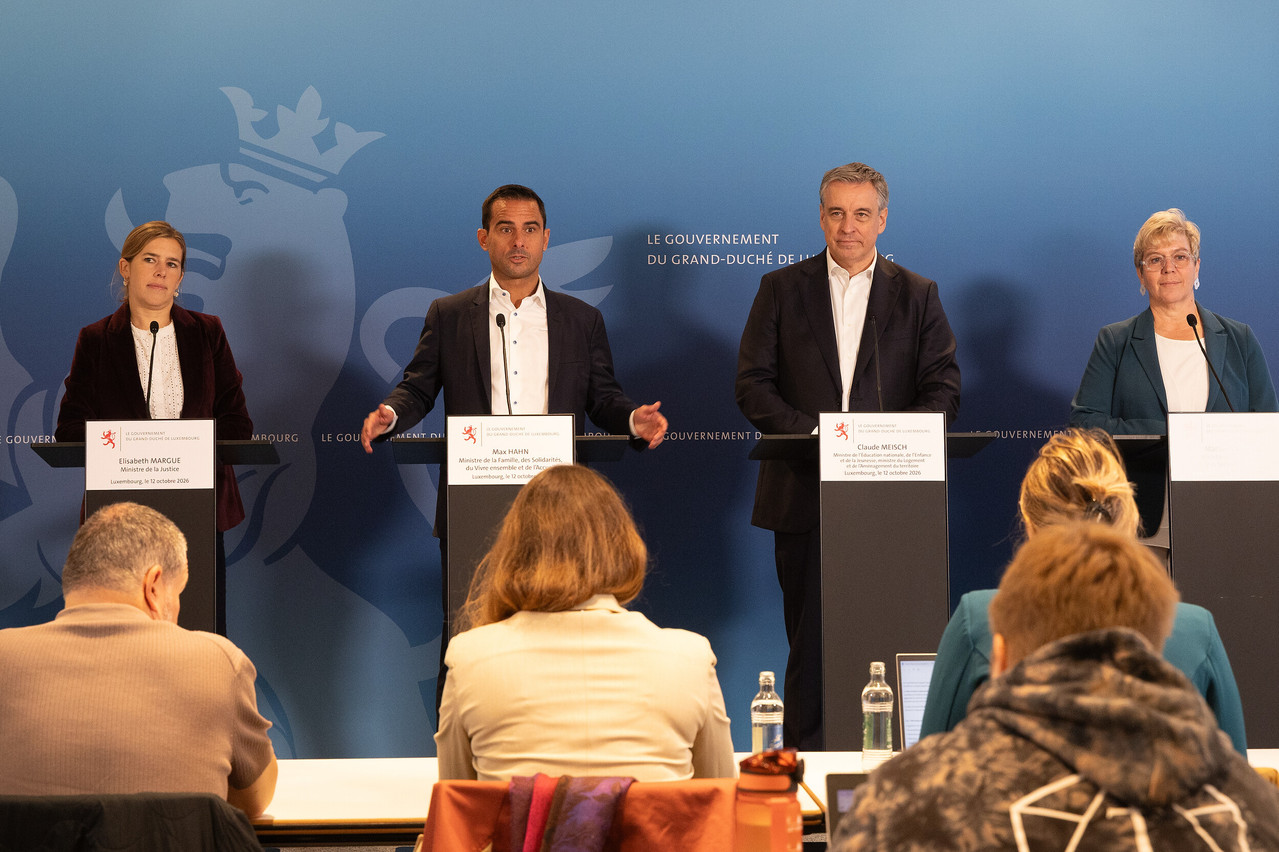
This third plan, which comprises 50 objectives and 119 actions, was presented on 12 October by 


According to the 2021 census cited by the government, more than 94,000 people – 14.6% of the population living in Luxembourg – reported living with a disability. Physical, digital, communication-related, institutional and societal barriers persist, despite the progress made.
A one-stop shop to simplify the process
The plan provides for a one-stop shop accessible in person, online, via videoconference and via chat. Reporting to the Ministry for Family Affairs, it is to be supported by a network of case managers to facilitate access to support and simplify administrative procedures.
For someone seeking appropriate support or services, the aim is to provide a central point of contact and guidance throughout the process. The plan also provides for a participatory and ongoing assessment, based on the individual’s needs and abilities. The corresponding bill is scheduled to be tabled in 2027. This deadline therefore relates to a legislative stage; it does not mark the date on which the service will open.
The programme also provides for the development of personal assistance and a personal budget, as well as a legal framework for community-based support services and the personal budget. Community-based support services are designed to support people living outside an institution. The bills are due to be tabled in 2027. These measures form part of the aim to provide greater choice in terms of support and place of residence, with a wider range of housing options and a strategy to develop alternatives to living in care homes.
Respecting the choices of those in care
The reform of guardianship aims to strengthen the autonomy of protected adults, that is to say, adults subject to a court-ordered protection order. In particular, the plan aims to preserve their autonomy in decisions concerning their own person and to specify, in the judgement establishing the guardianship, the acts they may carry out themselves, without another person acting on their behalf.
It also provides for giving priority to the least restrictive judicial measure, taking into account the person’s wishes and preferences, limiting the duration of the measures and reviewing them regularly.
For those affected, the challenge is to retain their decision-making capacity whilst receiving appropriate protection. They must also be able to lodge complaints and grievances with the guardianship judge and receive information tailored to their mental capacity. These provisions are scheduled to be incorporated into the reform bill in 2027.
Facilitating access to work and training
The reform of the status of employees with disabilities is intended, in particular, to simplify the administrative procedures and the process for gaining this status. The bill is due to be tabled in 2027, as is the one concerning inclusion support workers.
In the civil service, the plan aims to make teaching materials and written tests accessible during recruitment, preparatory training and examinations. Reasonable adjustments must be offered, taking into account, as far as possible, specific needs in digital formats.
For a candidate, this relates to the conditions under which they can demonstrate their skills. These initiatives are included in the 2027–2028 programme, as is a skills development and retraining scheme aimed at jobseekers with the status of disabled employees.
Extending support for children
In the health sector, one measure directly affects young children and their families: access to early rehabilitation is to be extended to children up to the age of six, compared with the current provision for children aged between zero and four as set out in the plan. This initiative is scheduled to begin in 2026 and is to be continued on a long-term basis.
The programme also aims to strengthen the existing autism diagnosis service at the Luxembourg Hospital Centre (CHL) for children aged between zero and six, and to develop a diagnosis service for six- to twelve-year-olds at the Maison de l’Enfance in Pétange. A platform to coordinate the care pathways for children with neurodevelopmental disorders is planned to be introduced from 2027.
More broadly, the measures focus on training for healthcare professionals, providing information on care pathways, and access to prevention and screening. Recommendations on screening procedures tailored to people with disabilities are scheduled for 2029.
In schools, the plan aims to strengthen cooperation between formal and non-formal education, to develop support programmes for pupils with behavioural difficulties, and to review the way inclusion committees operate. For newly arrived pupils with special educational needs and their families, an accessible, multilingual welcome and information service is also planned.
Stakeholders involved in monitoring
The plan builds on those for 2012–2017 and 2019–2024, following the ratification of the United Nations Convention in 2011. It takes into account the evaluation of the previous programme and the recommendations of the United Nations Committee. Its development was based in particular on two workshops held in October 2025, each attended by more than 150 participants. Info-Handicap, the High Council for People with Disabilities and the National Action Plan Monitoring Group (GroSuivi) were involved.
This involvement must continue. GroSuivi brings together, in particular, those directly affected, organisations, the Centre for Equal Treatment, the Consultative Commission on Human Rights and the Ombudsman. It is tasked with reporting on experiences on the ground and reviewing the progress of initiatives, complementing the inter-ministerial committee responsible for their operational coordination.
The programme covers seven areas, ranging from equality and accessibility to employment and international cooperation. The rights and needs of people with disabilities must also be given greater consideration in development aid and humanitarian aid.
A review will be carried out annually, and an external evaluation is scheduled for 2031, followed by evaluations every five years. Designed as a multi-year, evolving programme, it can be adapted to meet new needs and take on board feedback from those involved.