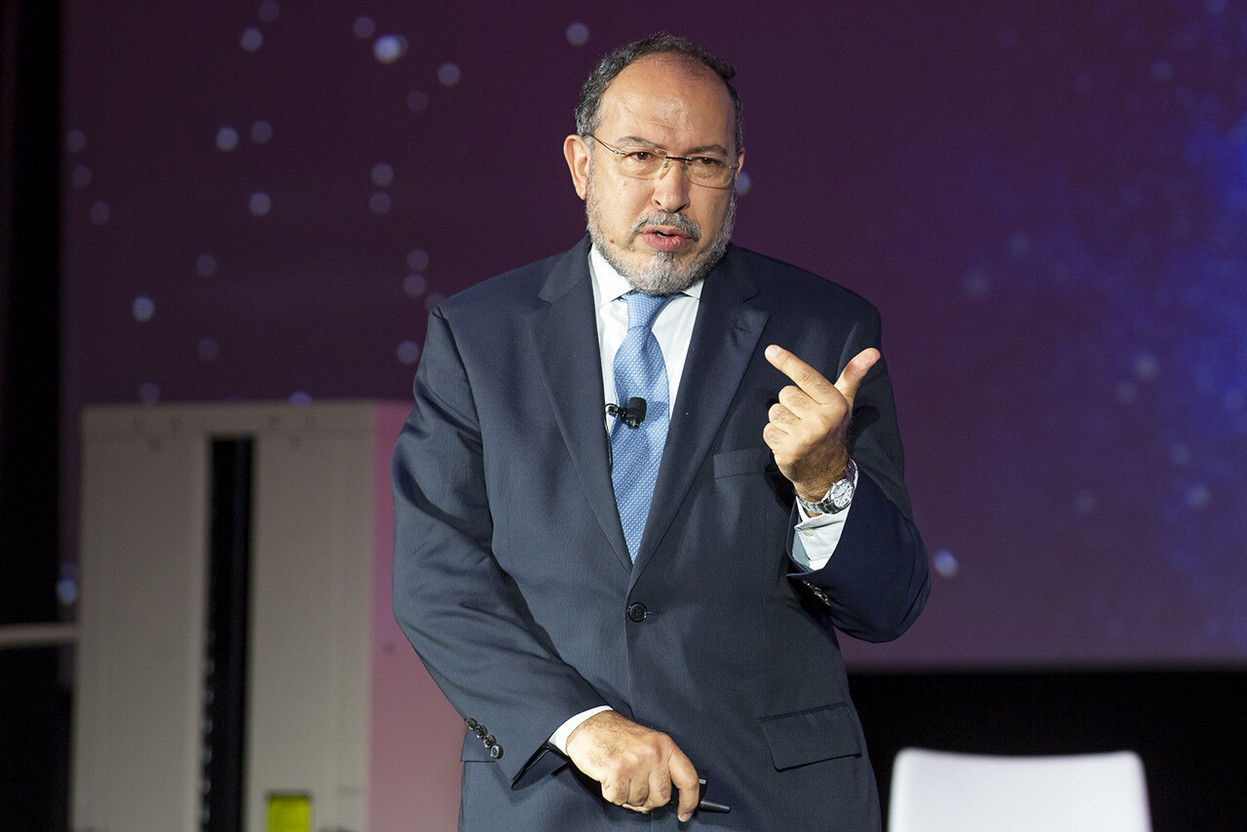
Can diplomacy still be left solely to states? For Dr Tawfik Jelassi, Assistant Director-General for Communication and Information at Unesco, speaking in a personal capacity, the answer is unequivocal. “Digital governance is not the business of states alone. Nor is it the sole responsibility of regulators. It concerns civil society, universities, research institutions and the private sector because digital technologies affect all of us,” he said, adding: “The digital world is global and borderless. We therefore need a space for dialogue to develop international standards that can govern it ethically.”
The Unesco official argues that the United Nations--the only organisation bringing together 193 states--should serve as the natural framework for global digital governance, beyond regional approaches such as those of the European Union or the Organisation for Economic Co-operation and Development (OECD), while involving all relevant stakeholders. “Digital issues must be addressed through an inclusive and genuinely multi-stakeholder approach,” he insists.
For Ayumi Moore Aoki, founder and president of the Tech Diplomacy Global Institute, tech diplomacy begins with a set of fundamental questions: who owns data? Who controls it? Who sets the rules for artificial intelligence? And who owns the submarine cables connecting digital infrastructure around the world?
A new diplomacy with many faces
From there, she distinguishes between diplomacy ‘about’ technology: how countries come together around a table and agree on rules for the governance of technologies, such as, for example, the European Union’s Artificial Intelligence Act (EU AI Act) or the Global Digital Compact adopted by the United Nations.
‘Technology diplomacy’ refers to the relationship between governments and technology companies. It is worth noting that the world’s first technology ambassador, the Dane Casper Klynge, was not posted to a country but to Silicon Valley, with the aim of engaging with companies such as Google, Microsoft and Meta. That was in 2017.
‘Technology-driven’ diplomacy refers to the way in which digital infrastructure and capabilities can become instruments of foreign policy. “Even without having a Google or a Huawei, a country like Luxembourg can use shared infrastructure, such as a data embassy, to build trust and develop its bilateral relations,” she emphasises.

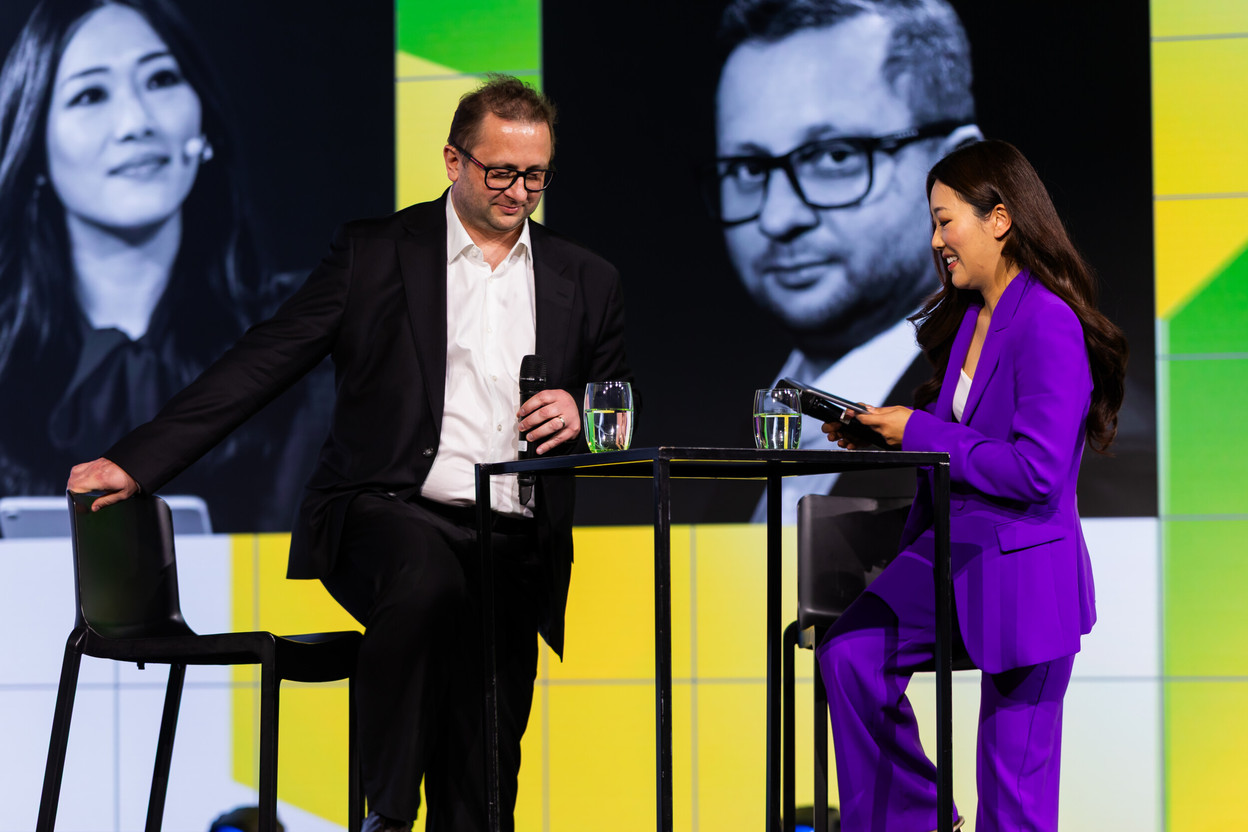
Manuel Schiappa Pietra, Chairman and CEO of FreeBalance; Laurent Mosar, Member of the Luxembourg Parliament; Ayumi Moore Aoki, Chair of Women in Tech; Dr Tawfik Jelassi, Assistant Director-General for Communication and Information at UNESCO; and Maria Tadeo, Chief Europe Editor at Euronews. (Photo: Julian Pierrot/Paperjam)
For Ayumi Moore Aoki, this kind of diplomacy is now more necessary than ever. She is particularly concerned about the influence of figures such as Elon Musk and Mark Zuckerberg. “These individuals can pose a danger because they wield enormous power. They make decisions that affect the future of countries, security and our data. This affects not only international relations, but also world peace.”
She believes that discussions on digital governance remain too one-sided. “There’s a lot of talk about Europe, the United States, and China, but it’s still very much a Northern Hemisphere conversation.” In her view, true global technological governance requires greater inclusion of countries from the Global South in discussions and decision-making processes.
In Luxembourg, regulation is necessary, but there is a real risk of over-regulation. According to 
For Manuel Schiappa Pietra, “sovereignty does not mean building everything ourselves; in the long run, we would lose the race”. In his view, the real issue lies elsewhere: ensuring control over data, regulations, tax systems and decision-making authority. “Every country must do its own work on data protection to make it operational between the government and the private sector. It is not just a question of technology; it is a question of culture and national identity.”
Infrastructure and energy: the foundations of sovereignty
Several speakers emphasised that no artificial intelligence strategy can succeed without the necessary infrastructure. According to Laurent Mosar, Europe must look beyond legislation and invest in digital economy infrastructure.
“Without data centres, without the cloud and without energy, we can forget about AI.” This observation sometimes meets with local resistance, even though these infrastructures have become a matter of national sovereignty. He also points out that Luxembourg was a pioneer in concluding an agreement aimed at developing the use of artificial intelligence in the public sector.
Another advantage Luxembourg has, according to Laurent Mosar, is financing. Thanks to its status as an international financial center and its expertise in fund management, the Grand Duchy could become one of the main drivers of AI financing. “Luxembourg could eventually become a kind of ‘European AI bank’!” he exclaims.
The issue of the state’s capabilities also featured prominently in the discussions. According to Manuel Schiappa Pietra, governments must stop viewing the procurement of technology as a standard public purchasing exercise. “The procurement of technology must be seen as a strategic capability of the state,” he argues, calling for more ambitious public-private partnerships. In his view, the private sector should not replace the judgement of public authorities, but rather reinforce it.
For Ayumi Moore Aoki, the requirements are many and varied and are not limited to training alone; they also involve access to infrastructure such as energy, data centers, undersea cables, satellites, and digital connectivity. “If they have the human skills but lack energy or infrastructure, they won’t get very far.”
Ayumi Moore Aoki is already urging decision-makers to look beyond AI. “Quantum computing is going to change everything; it will transform cybersecurity, defence and international relations. The question is what we need to do today to be ready in three or five years’ time.” Failure to prepare is preparing for failure.
She also highlights an imbalance between the North and the South: “African countries and Brazil export their data and import innovation without having a say in the matter. By 2040, one in four people will be African. There is immense talent there, but we need to build their capacity, not just through training, but through data centres and energy,” she says.
For Dr Tawfik Jelassi, building standards from the national to the global level is a mistake in terms of sequence. “The purpose of global regulation is not to hinder innovation. We need to put safeguards in place to ensure that technology serves humanity and respects human rights, dignity and freedom. Today, we want AI to be a force for good, not a source of danger, nor an online Wild West. No country can tackle disinformation on its own. That is why we at UNESCO have drawn up global guidelines with the contribution of 193 countries.”
What Europe must do now
Maria Tadeo, Euronews’ European editor-in-chief, asked the panellists what concrete steps Europe should take within the next year to remain in the global technology race. The answers varied widely, which speaks volumes about the complexity of the challenge.
For Tawfik Jelassi, the most pressing issue is democracy. He points out that 72% of female journalists are victims of online harassment, that 42% end up suffering physical assault, and that more than half of the world’s population now lives under authoritarian regimes. As long as these realities persist, making AI a force for good remains nothing more than wishful thinking.
Ayumi Moore Aoki, for her part, emphasises the need to build up skills. In her view, diplomats and public officials must be trained in the technologies they are expected to oversee. “You cannot regulate what you do not understand.”
In between lies the political tension: should we first transpose the EU AI Act, secure funding and reassure citizens about jobs, as Laurent Mosar argues? Or should we build balanced partnerships with the private sector, as Manuel Schiappa Pietra believes, so that it is the states, and not the markets, that decide how and for whose benefit AI is deployed? In the global technology race, the United States and China dominate. As one of the speakers pointed out in conclusion, the challenge is no longer to win this race alone, but to ensure that the technology remains under the jurisdiction of the states that deploy it.