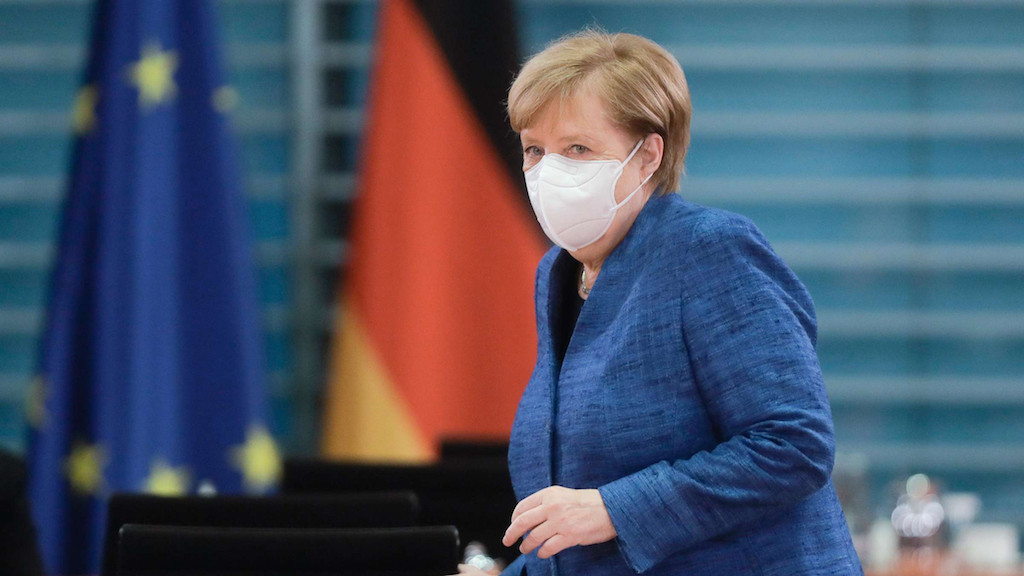
Europe’s big two set new partial lockdowns
As we reported in our rolling coverage on Wednesday evening, France and Germany have announced new restrictions on movement and socialising in an effort to tackle the covid-19 pandemic. In France residents are being asked to remain at home, aside from going to work and for essential shopping, exercise and to seek or provide care. Schools remain open, but most shops as well as bars and restaurants will be closed. Gatherings will not be allowed. Germany has introduced similar measures that will come into effect on Monday 2 November. Although travel between cities and regions has been curtailed, neither country is closing its borders. French president Emmanuel Macron said the new measures were meant to apply a “brutal brake” to the spread of coronavirus, with a second wave “set to be harder and more deadly than the first.” Germany’s Angela Merkel said she recognised what her government was putting people through, but added that affected companies, institutions and clubs would be compensated. In both countries the new rules will apply for four weeks. Stock markets went into a dive when the announcements were made. More from The Guardian, the BBC, Reuters and Deutsche Welle.
Vote on Luxembourg restrictions delayed
Luxembourg MPs on Wednesday postponed a vote on new covid-19 restrictions to allow proper scrutiny of the bill and the council of state’s verdict on the legal text. Minister of internal security Henri Kox and representatives from the police are due to brief the media on the application of the new restrictions on Thursday afternoon. Delano is maintaining rolling coverage of the most important covid-19 related news.
Fauci issues stark warning
White House coronavirus advisor Dr. Anthony Fauci has said the USA will experience “a whole lot of pain…with regard to additional cases and hospitalizations, and deaths” from coronavirus if it does not change course. In an interview with CNBC on Wednesday, Fauci said that doubling down on masks and social distancing would help alleviate the situation, but he admitted there was “very little appetite for a lockdown in this country.”
Luxembourg hospitals in phase three; extended working hours
As Delano reported, Luxembourg’s chief medical officer has said that hospitals in the grand duchy had launched their phase three covid response level. That means that they can begin rescheduling procedures not linked to covid-19. Meanwhile, a new law that allows for hospital workers and other essential health sector staff to work 12-hour shifts of up to 60 hours a week has also been passed by parliament. More details on that from Delano later this morning.
Supreme Court allows extended mail voting
The Supreme Court on Wednesday ruled that it would allow extended deadlines for receiving mail-in ballots in Pennsylvania and North Carolina. The decision in both states had been challenged by the Republican party. But new justice, Amy Coney Barrett, did not vote on the matter as she did not have time to fully review the case. Reuters and The Washington Post have details.
Biden to consult allies if elected
Reuters has an exclusive interview with two aides to presidential candidate Joe Biden in which they say he would seek “collective leverage” to deal with trade competition from China if elected. The advisers said Biden would not commit to any position on China, but that “consulting with allies is going to be a central part” of the decision-making process.
White House dismissive as Anonymous steps forward
A former chief of staff at the Department of Homeland Security has come forward to claim he is the author of “A Warning”, the scathing 2019 critique of the Donald Trump administration. Miles Taylor, who is openly campaigning for Joe Biden, had previously denied he was the author. But the White House was dismissive of Taylor, with chief of staff Mark Meadows saying via Twitter: “I’ve seen more exciting reveals in Scooby-Doo episodes.” Politico, Business Insider and NBC have more, while The New York Times has a profile of Taylor.
Gilead reports strong third quarter report
The maker of antiviral drug remdesivir has reported a 17% increase in revenue for its third quarter compared to 2019. Gilead Sciences said sales of its Veklury remdesivir brand, which last week became the only coronavirus treatment granted full FDA approval, generated $873 million in sales during the third quarter. But a lowering of its annual forecast meant that although shares in the company rallied they soon dropped again. CNBC and MarketWatch have details.
Something for the weekend
Friday 30 October: Tune in to 100,7 for English-language programme “Connecting” at 6pm, with the first hour featuring Delano’s seven-day round-up. Hear accordion maestro Richard Galliano perform with the OPL at the Philharmonie at 7pm. Sunday 1 November: Choose one of four movies at Ciné Utopia’s Sunday morning Ciné Breakfast at 10am. Or catch Federico Fellini’s classic “81/2” at the Cinémathèque at 5pm.
Hear MEP on Brexit
Luxembourg MEP Christophe Hansen, who is the Brexit rapporteur for the European Parliament's trade committee, will join me for a Delano Live Chat at 11am today. Register here to join the chat.
Football: Davies and Haaland up, Hazard and Messi down
Bayern Munich left back Alphonso Davies, Barcelona winger, Ansu Fati and Borussia Dortmund’s Norwegian striker Erling Haaland are the players whose valued has increased most in 2020, according to data on Safebettingsites. Real Madrid midfielder Eden Hazard, Chelsea’s goalkeeper Kepa Arrizabalaga and Barcelona icon Lionel Messi were the three players whose value dropped the most.
Fighting cock kills police chief
A police chief in the Philippines was killed when a cockerel he was trying to confiscate as part of a raid on an illegal cock fight inadvertently severed his femoral artery with one of the razor blades strapped to its leg. Some cockfighting is legal in the Philippines, but even those events have been banned under coronavirus restrictions. The Guardian and The Straits Times have more.
Today’s breakfast briefing was written by Duncan Roberts