How did you make the transition from graffiti to a career as an artist?

In 2007, I opened a concept store with some partners, dedicated to streetwear, books and urban art. When I exhibited my own paintings there, I developed a taste for exhibitions. I sold my shares at the end of 2010 and set up on my own, initially dividing my time between graphic design and art. I then stopped taking on new design projects to devote myself to painting. My solo exhibition at the Galerie Indépendance de la Bil in 2013 marked a real turning point.
How did you manage to make a living entirely from your art?
“The transition happened gradually. Freelance design allowed me to maintain a degree of financial security whilst I developed my artistic work. Today, I make a living entirely from my art. If I produce around twenty paintings a year, that’s already quite a lot. I’m always working on several pieces at the same time. Some take a few weeks, others several months, or even several years.
I think the best thing you can do for your clients is to paint for yourself first and foremost. I used to paint simply for my own enjoyment. Today, I still paint for my own enjoyment, and my works find buyers. That’s what allows them to remain authentic.
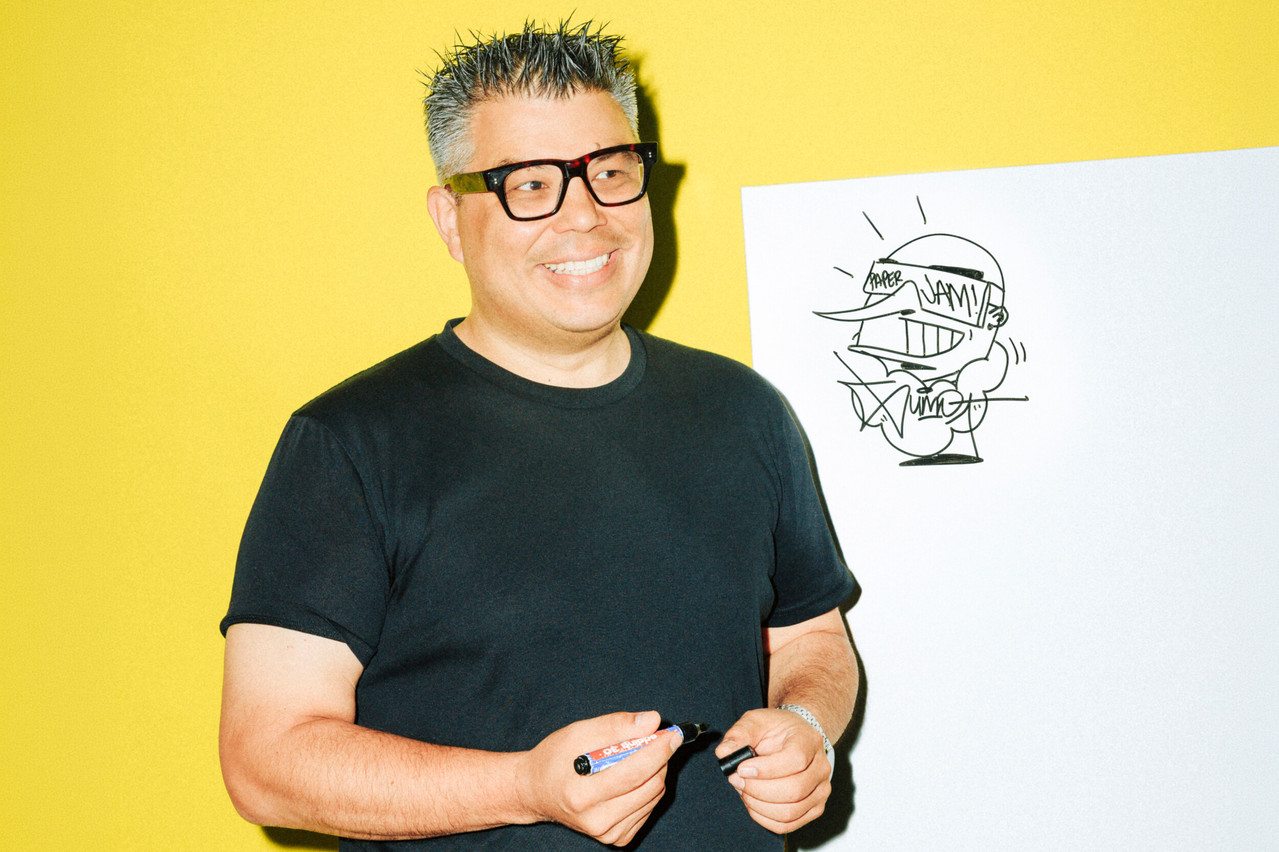
I was looking for a figure that was more easily recognisable and distinctive enough to become my signature style. After several attempts, I drew a very simple shape, to which I added a pointed nose and a mouth full of teeth.

What is the theme that links your various paintings?
“Since 2013, my work has centred on time and space. I paint in layers, and each element represents a particular moment. I don’t make sketches and I don’t start with a precise plan: the canvas takes shape gradually, based on what I’m experiencing and what surrounds me. The music I listen to in the studio, conversations, encounters or visual references that have been with me since childhood may all find their way into my paintings. Each canvas thus becomes a sort of diary that I am constantly adding to.
All my paintings are also interconnected in terms of depth. By zooming in on one work, you can enter the next. My aim is one day to bring together all the pieces I have created since 2013 in a digital installation based on infinite zooming.
How did Crazy Baldhead, your iconic character, come about?
“When I was doing graffiti, I was already painting lots of characters. I was looking for a figure that was more easily recognisable and distinctive enough to become my signature. After several attempts, I drew a very simple shape, to which I added a pointed nose and a mouth full of teeth.
I’ve always come back to this character. People started recognising him even before they knew my name. Crazy Baldhead has thus become my trademark and a brand in its own right, even though he doesn’t appear in all my works.
How important are collaborations to your business?
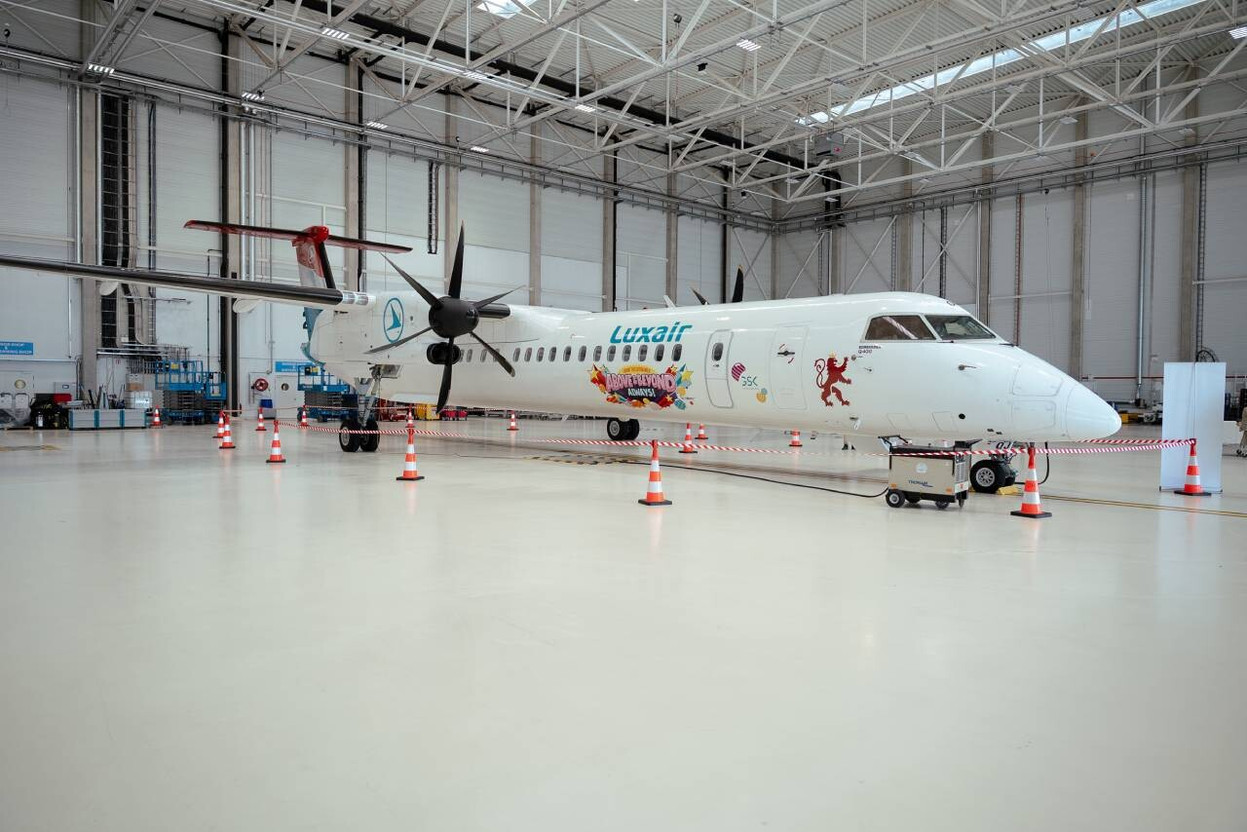
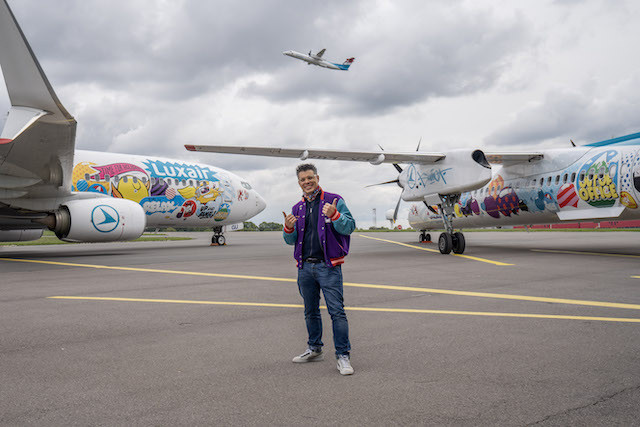
“Since the pandemic, collaborations with companies and brands have become more prominent. In particular, I’ve worked with Luxair and Porsche. These projects allow me to apply my creative vision to other mediums and reach new audiences.
During this time, I also developed a wider range of merchandise. My background as a graphic designer has been a great help, as I can digitise my work and adapt it to different formats. Since 2022, I have also been experimenting with blockchain, NFTs and, more broadly, digital art.
Digital technology allows me to take my idea of connecting the paintings to one another a step further and to create a work that is not merely viewed, but truly experienced.
Why did you choose to work on your own?
“Working on my own allows me to remain flexible and retain my freedom. The downside is that there are only 24 hours in a day and I don’t have the same leverage as a company with a team. So I surround myself with people who have the skills I need from time to time, for example in communications, bookkeeping or carpentry. This allows me to remain independent without having to do everything myself.
I also run Gallery 1:1, in the station district, where I now exhibit only my own work. My studio is now in Esch, in a larger space that allows me to work on more ambitious projects.
Is Luxembourg a favourable market for an independent artist?
“It is here that I have made a name for myself, built my reputation and developed a style that people now recognise. A large proportion of my work is therefore sold in Luxembourg, although I also exhibit and sell abroad.
One of the country’s advantages is its proximity. The distances are short, and it is easier to get in touch with the decision-makers. In a market of this size, word of mouth can also quickly raise a business’s profile.
How would you like to develop your work further?
“I want to continue along the path I have chosen, whilst adapting to new technologies. Digital technology allows me to take my idea of connecting paintings together a step further and to create a work that is not just viewed, but truly experienced. To bring this large-scale project to fruition, I still need to find the right partners.
‘Beyond technique and concept, my art represents, above all, freedom and a zest for life. That is what I seek for myself and what I hope to convey. Positivity, colour and humour can be just as contagious as negativity. So I prefer to share something positive.’
This article was written for the October 2026 issue of Paperjam magazine, published on 16 September. The content is produced exclusively for the magazine. It is published on the site to contribute to Paperjam’s comprehensive archive. Click on this link to subscribe to the magazine.
Is your company a member of the Paperjam Club? You can request a subscription in your name. Please let us know via club@paperjam.lu.