The phenomenon is very familiar with fuel: at the pump, drivers always have the impression that prices are going up very quickly but take weeks to come back down, when the price of a barrel goes down. For food purchases, it's worse, says a Bank of England study quoted in a blog post by the European Central Bank: the idea that prices have risen again when you go to push your trolley into a supermarket permanently anchors the feverishness of consumers, who see it as lasting inflation and immediately start looking at spending to save a little money in case of a hard blow.
This reaction is at the heart of the latest analysis published by the European Central Bank (ECB). Economists Elena Bobeica, Gerrit Koester and Christiane Nickel point out that food prices in the eurozone have risen by almost a third since the end of 2019 (30%), more than the other components of consumption. The shock was brutal after the invasion of Ukraine, which caused a surge in the cost of energy and fertilisers, reinforced by the rise in wages in the food industry and by climatic disruptions that caused the price of raw materials such as olive oil and cocoa to soar. The researchers point out that this rise is exceptional in terms of its scale and persistence, to the point of having a lasting impact on European households' perception of inflation.
In this panorama, Luxembourg has seen food prices rise by 29% since 2019, very close to the eurozone average. Stronger than in France (27%), this increase is nevertheless less marked than in Belgium, where the rise has reached 38%, or in Germany (37%) and remains a long way from the levels seen in the Baltic countries or Hungary, where it exceeds 50%.
With a little caution, the Statec data allow us to situate this phenomenon in the daily lives of Luxembourg households. In 2023, the average household spent 72,324 euros, including 6,892 euros on food and non-alcoholic beverages, or 9.5% of the budget. If we add catering and hotels, the proportion rises to 17.4%. In concrete terms, this basket represented around 5,340 euros in 2019: households are therefore paying almost 1,600 euros more for the same quantity of products, in just four years.
Over one year, the Statec said at the beginning of September, food products rose by 2.71%, higher than the index average (2.42%). Food prices (+0.1%) tended to stagnate in August, but this conceals a number of offsetting price movements at detailed level. Consumers thus had to fork out less in August for cheese (-1.2%), skimmed and semi-skimmed milk (-1.5%) and flour (-1.8%).
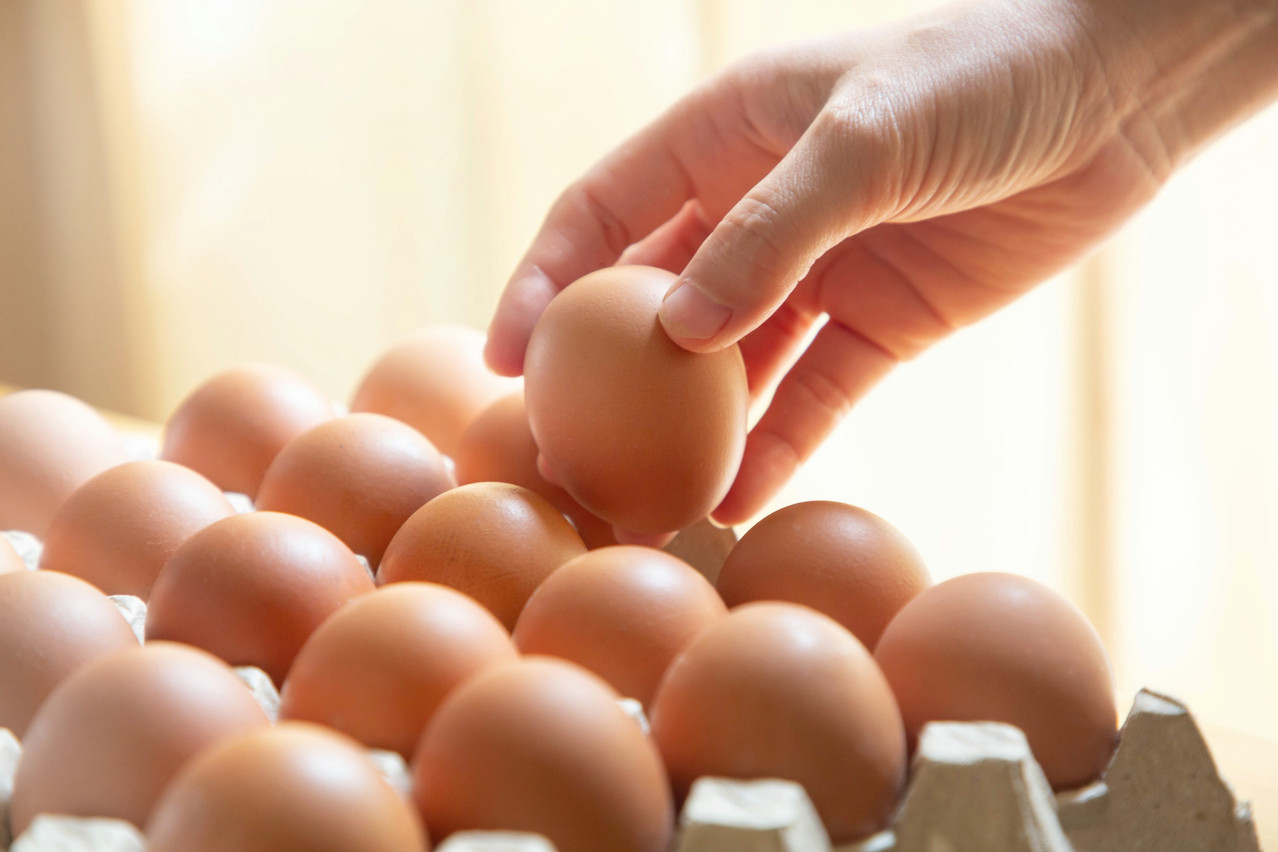
On the other hand, other items on supermarket shelves are seeing their prices rise. This is particularly the case for beef and veal (+2.2%), pasta (+2.8%) and coffee (+2.4%). According to the average prices of thirteen food products surveyed in June by Statec, the biggest increases were for eggs, which rose by 71%, butter, where the price of a 250-gram bar rose by 61%, and white granulated sugar (+55%). Coffee was just off the podium, despite recent rises linked to low production levels. These figures should be treated with caution, as they represent only a very small sample.
The ECB points out that this particular sensitivity to food has far-reaching consequences for monetary policy. As in the case of fuel, price rises are immediately perceived and incorporated into household expectations, whereas price falls go largely unnoticed. Consumers then overestimate future inflation and adapt their behaviour, by reducing consumption or demanding higher wages. This circle can in turn fuel a persistent inflationary dynamic, which the central bank tries to break through its rate policy and communication.