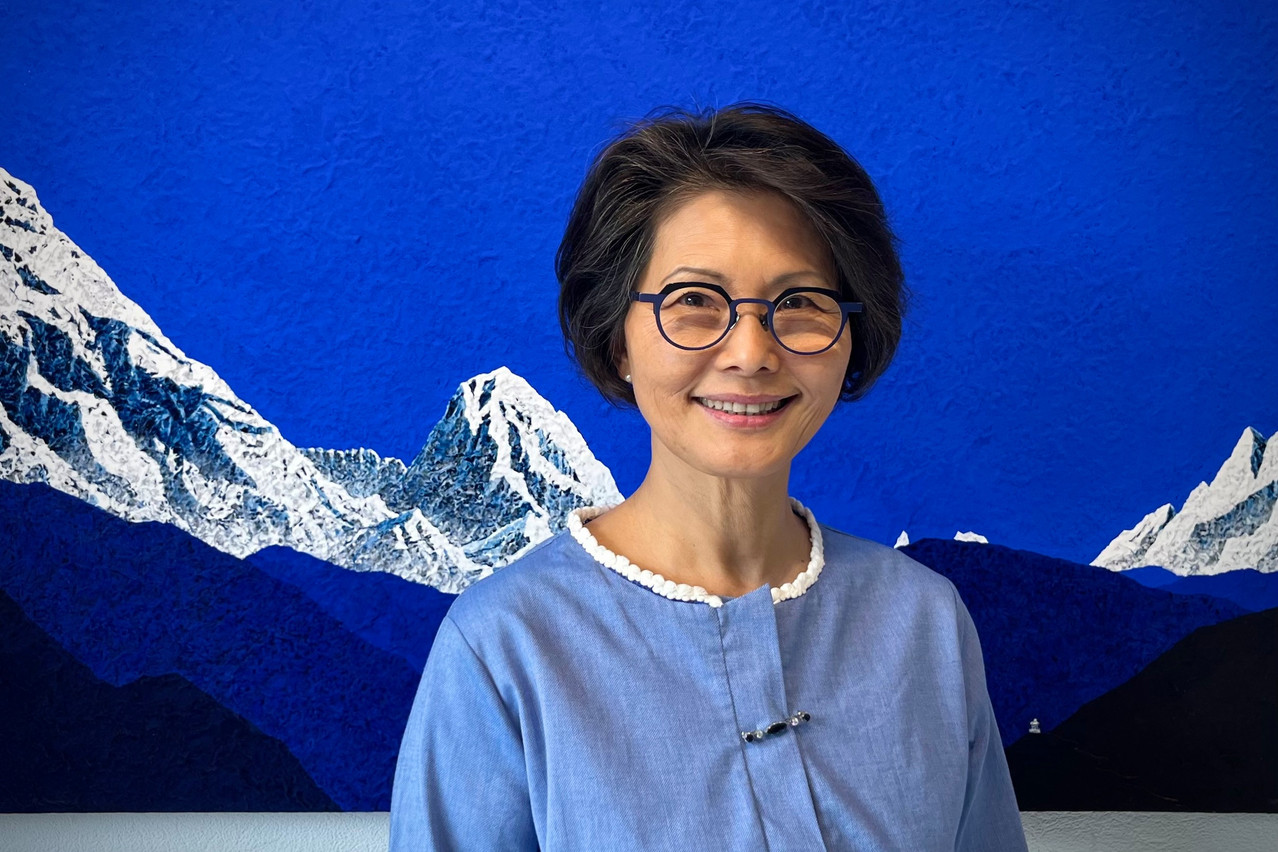
Paperjam: Please, introduce yourself.
Orie Duplay: I am originally from South Korea. I left South Korea in 1987 and arrived to Dallas, Texas. I met my husband there and we moved to France in 1995. And then we arrived in Luxembourg four years after, because he changed his job. He was working in Cannes for a satellite company, but he was recruited by SES Astra.
What did you know about Luxembourg at the time?
I lived in Cannes. I barely spoke French. I did French in high school and at university, but I had no notion of speaking, only grammatical notions. But my husband said: “We’re going to move.” And I said, if I can speak either English or French, no problem. He had proposed Germany and I said no way--I don’t think I can go there! [She laughs.] So he chose Luxembourg.
Why did you start a Korean cultural association?
There were three reasons.
When I arrived in Luxembourg with three children--later on they went to French primary school--there was almost nothing here about Korea, but I knew that there were a lot of adopted Korean children in Luxembourg, over 800.
And there was also the Korean war veterans’ club. There were 85 Luxembourgish soldiers who had fought in the Korean War and they had a strong affection for and relationship with Korea at the time.
And finally my daughter, the youngest one, came home one day crying. She said: “People think I’m Japanese, people think I’m Chinese!” And I said, why didn’t you tell them that you’re Korean-French? “I did, but they said… ‘What is Korea?’” So children didn’t even know that Korea existed.
So I decided to do something for Korea. I created this association to promote Korean culture in Luxembourg. We were officially registered in 2008.
What kind of events do you organise?
Every year we establish big performing arts events. Usually the acts came directly to the Belgian embassy and then I invite them here to Luxembourg, because we have no financial resources to invite artists directly from Korea. So we depend on the embassy in Brussels. Nowadays we have one performing arts event a year.
But our next event, in October, will be a demonstration of Korean temple food.
We also organise a stand at the International Bazaar. We’ve been active there since 2008 and probably we were doing it before Friends of Korea was created.
That’s the one in Luxexpo?
Yes.
I haven’t been.
You must go! It’s very important for cultural events in Luxembourg. About 65 different countries are participating. The purpose is to collect money to help many different organisations around the world. And we raise lots of money; we work hard. I never made so much food in my life! You know kimchi? Last year we made almost 200 kilos of kimchi. And then we sell every year probably 1,500 or 2,000 dishes at the bazaar. We have a small stand but we work very hard. Most of my volunteers are also foreigners, not Koreans.
That’s a lot of kimchi. Do you do any other activities?
Before the King Sejong Institute Luxembourg was established, we gave Korean language courses. And I give cooking courses. Nowadays I’ve gone back to my roots, to the really authentic Korean cuisine. Food is an essential tool for understanding culture. Cooking is the soul of the people, the soul of the country. It’s so important. I find that a lot of Korean adoptees in Luxembourg--or Belgium--are so connected with the food. I believe that, when they were in their mothers’ bellies, they ate Korean food… so they cannot deny it!
And this cooking course continues, but the language course has been inactive because it was a private course, so it was expensive. People didn’t want to engage… it’s better to go to Sejong for that.
This Sejong institute is rather new to Luxembourg, right?
Yes, it was established here three years ago. We have been trying to work together but we haven’t done an event together yet.
Do you know how many Koreans are living in Luxembourg?
Back in 2008, only about 100. Today I think it’s about 300.
And how many members do you have?
In the beginning, we had 10 in the organising committee and about 70 paying members. Now we are a little reduced, probably about 30 since the covid-19 pandemic.
Mostly Korean members, or…?
No, no! [She laughs.] There are no Korean members. It’s purely focussing on foreigners who want to learn about Korean culture. That’s the purpose. It’s less important for Korean people to become members… Koreans aren’t as interested in Korean culture!
What about this art gallery we’re sitting in. Is that part of Friends of Korea?
No… well, it was one of my projects from Friends of Korea. We were doing events for performing arts--music and dance and other things--but the visual arts were missing for me. I went to many galleries and museums to introduce them to Korean painters and artists but I had no success. Then in 2013 I got a proposal from a German artist who said: “Can you take me to Korea to organise my exhibition?” So, I did, and met a lot of galleries. And in 2014 I was thinking, I absolutely have to find a place to show Korean artists in Luxembourg.
The idea was originally for Friends of Korea, but I didn’t have a space. So in 2015 I decided to open a gallery. In the beginning my idea was just to promote Korean artists. And my friends said: “Your idea isn’t very good! It won’t go far if you don’t make money.” And they were absolutely right. So it became my gallery, my business. We opened in 2016 and every year we’re doing better and better.
You have an artistic background, it seems.
When I was young, I wanted to become an opera singer. But I was from the countryside. My parents were musical, they loved music, but I’m the first child of six children--five girls and one boy--and my father said: “If you don’t do something more intelligent than singing, you will not survive in this society!”
So three of us did English literature because my father’s desire, at the minimum, was that we girls become either English professors or at least secretaries. Singers, entertainers were not really respectable in society. But I was singing all the time. I had a beautiful voice and I was always asked to sing. I did it behind my parents’ backs. I played the piano… we [my sisters and I] stayed late in school to play.
But, without any support from my parents, I failed to enter music school. I wasn’t good enough and also not financially. I hadn’t had any lessons. So I failed three, four times. But I was brilliant in school and my father said: “It’s strange that you’re not getting into university…”
So I had to confess. Papa, I made a mistake! I thought he was going to [she imitates a slap, laughs].
But he said: “Well, it’s not too late. Do what I tell you to do.”
So I took English literature. I was always interested in different cultures than my own. I loved foreign cultures, Western cultures. I read only Western literature. I was immature at the time… now I’m more attracted to Korean literature too.
And I think the music gene has stayed in your family, right?
Yes… my youngest daughter is now a famous singer/songwriter in France. Her name is Miki Duplay. If you go to Google, you’ll see! She was on France 2 just last night.
Visit the Friends of Korea website.


