"Most people think that the problem of carbon emissions in the building industry is linked to energy consumption, the electricity we use, heating, water, etc. But the issue is the way in which we use it. But the issue is the use of the building," says the man who is both co-chairman of the the National Council for Sustainable Construction (CNCD), but also, among other roles, director-general of the Council for the Economic Development of the Construction Industry (CDEC) and managing director and founder of the Construction Sector Training Institute (IFSB), 
The second largest source of emissions after transport (59.1%), residential and tertiary buildings accounted for 19.7% of Luxembourg's total emissions in 2024, with the aim of reducing them by 46% compared with 2005 by 2030. "We're talking about operational carbon emissions, and then there's grey energy, also known as embodied emissions, which are the emissions produced in constructing the building. From the moment the keys are handed over, the building begins its phase of use and operation. We are no longer talking about embodied emissions, but about operational or operating emissions", explains Bruno Renders.
Operational emissions account for an average of 40% of emissions at European level, with the remaining 60% relating to embodied energy. If we want to reduce the impact of buildings by 55%, we need to take action on both fronts. This reduction involves the 4Rs principle - Rethink, Reduce, Reuse, Recycle - and the use of low-carbon materials. "It turns out that there are materials that enable us to win on both sides, in particular integrated photovoltaics, which we call BIPV (Building Integrated Photovoltaic - photovoltaic panels integrated into the building on the roof, on the facade -, which applies to both new and old buildings).
The benefits of BIPV
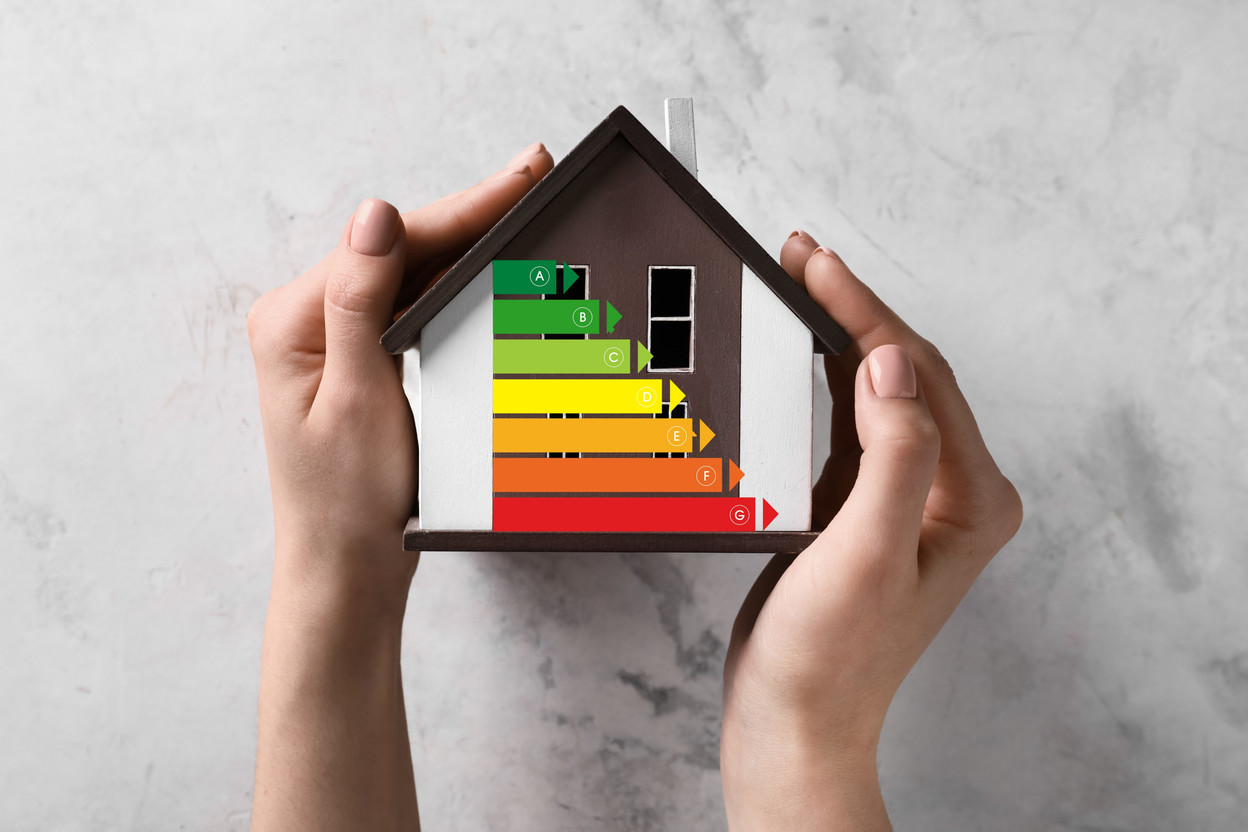
The role of the CNCD is to support these emission reduction targets and to anticipate future regulations (future EPCs), and thus reduce the carbon footprint of buildings. "We have done a lot of work with all the stakeholders in the CNCD to identify, analyse and acquire a certain amount of data to be able to verify the carbon weight of buildings. As a result, we will be moving from a nZEB (Nearly Zero Energy Building) - our AAA-rated building - to a Zero Emissions Building in the future Energiepass. This means that we will retain both the energy efficiency of the current CPE (energy performance certificate) and add an approach to reducing the carbon footprint of our buildings," Bruno Renders continues.
The interest of the embedded emissions theme is to reduce the carbon footprint of buildings right from their construction phase. Using materials with a single function means layering several layers to fulfil different roles. "For example, when we install photovoltaic panels on the roof of an existing building, it's a good operation in terms of self-consumption of energy, production of renewable energy and energy independence, but at the same time we're adding materials to an existing structure. From a carbon point of view, we're adding more materials when we could perhaps do things differently. If you look at the façades, it's the same thing. On the structural envelope, we add external insulation, then a façade coating or cladding and, each time, we add layers of materials, thereby increasing the carbon footprint of the envelope. The idea of BIPV is therefore to replace an existing traditional building material with a material that is close to it, but which, as well as having the same traditional functions, offers an additional function: energy production," supports Bruno Renders.
The idea behind BIPV is to replace an existing traditional building material with a material that is similar to it, but offers an additional function: energy production.

Some countries are more advanced than Luxembourg in this field. In the Netherlands, Germany, Belgium and France, the market is developing rapidly. This speed often depends on regulations, but also on technical culture. The Ministry of the Environment understands the idea of removing carbon-consuming materials and replacing them with materials that do cost carbon, but produce energy - thereby offsetting the extra cost.
Aid is currently more generous than for traditional panels, because the purchase cost of BIPV is higher. "So all those who say that decarbonised materials cost more than others are partly right when you just look at the material. We need to take a more holistic and integrated view of them, so that they can be considered over the entire life cycle of the building. When you look at the way they are used, and what they have to say about the economic life cycle analysis, they are really very useful. The European Union has clearly understood this, since it has subsidised a project called BIPVBoost, which has demonstrated the merits of BIPV and the relevance of its use in the building sector. The real relevance of BIPV is that it means we don't have to use up land to build photovoltaic farms, for example. When you look around you, there are many buildings whose façades are not covered by panels, and that's a shame. We're not going to take them down to put up new ones, but there are solutions when it comes to replacing them."
Making standards more flexible
"Some people think that it is not possible to reduce carbon emissions from the building sector by 55% by 2030. I'm one of those who say that it is perfectly possible, that we just need to get over the hurdle of understanding, resistance to change and the need for flexibility in certain regulatory standards. There are opportunities to do it."
Aware of his political neutrality and the sector's possible demands in terms of employment and training, Bruno Renders nevertheless concedes that "today, a roofer knows how to put photovoltaic panels on a roof, but he doesn't necessarily do the electrical connections, so that's one of the things that needs to change. What I'm also interested in is seeing how we organise the change in skills, for example in the skills training for manual workers, which is the IFSB's core business."
There is a shift in skills from traditional professions to decarbonisation and the green field.

"Over time, we have integrated various requirements, often linked to changes in regulations, such as health and safety in the workplace, low-energy houses, passive houses, etc. We have adapted our professional standards to meet these requirements. We have adapted our job descriptions to incorporate these concepts. We have also incorporated everything to do with the circular economy, waste management and sorting, explaining to companies why they are being asked to do this, the economic value behind it, the cost and profitability for the company. There is a shift in skills from traditional professions towards decarbonisation and the green sector. In fact, we are partners in a European project called Construction Blueprint, which aims to identify the changes, the skills, the new professions and the adaptation of the skills of existing professions."
"This change in skills will also involve breaking down the barriers between professions to better integrate the skills we need across the board. This is also one of the CNCD's strategic resignations in this area." To sum up, decarbonising the construction sector is perfectly possible, but it presupposes a change in mentality, skills and greater flexibility in regulations to allow innovation.