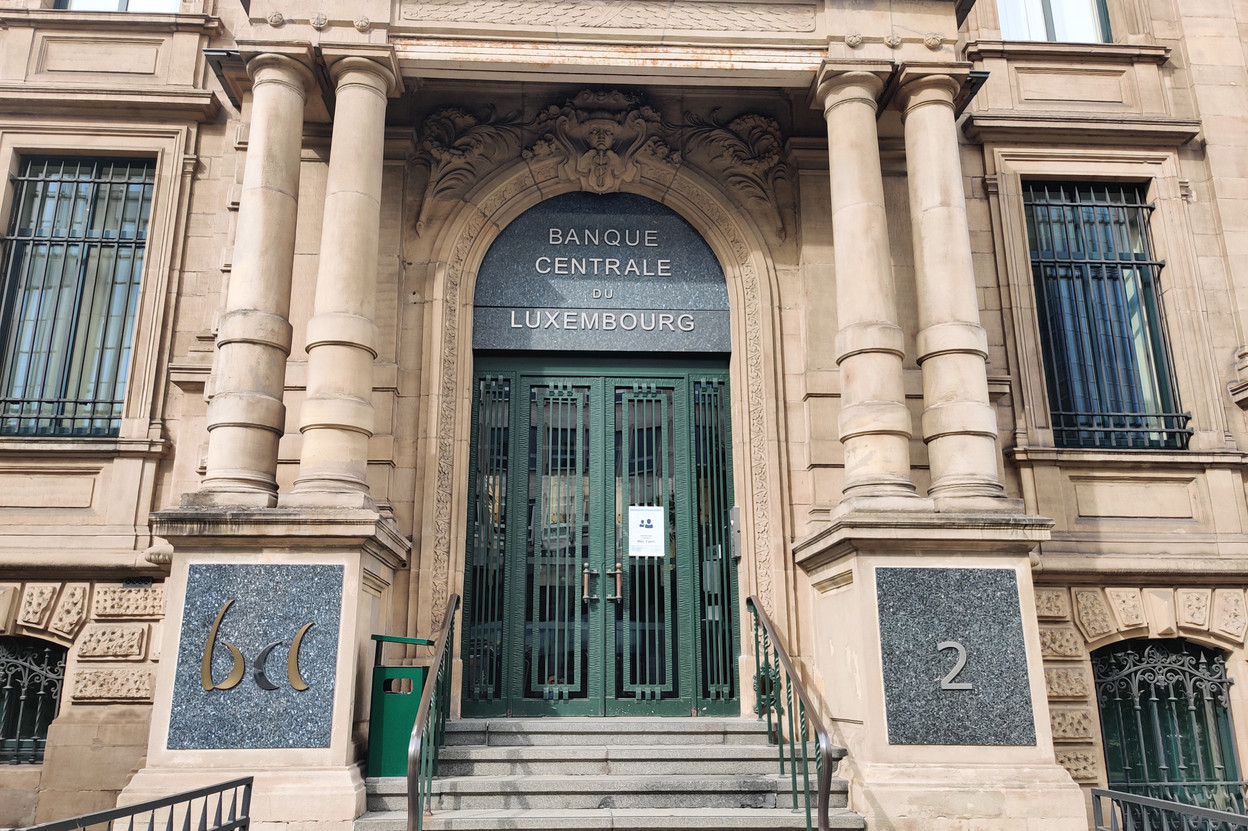
The Luxembourg Central Bank (BCL) reported a neutral net result for 2024, as rising interest rate costs, the normalisation of the Eurosystem’s policy stance and continued reductions in reinvestments weighed on the bank’s financial performance. In its 2024 annual report, published on 31 July 2025, the BCL detailed a €86.5m pre-provision result, which was fully allocated to risk provisions.
The BCL’s total balance sheet contracted by 7.5% in 2024, standing at €261.8bn at year-end, down from €283.2bn in 2023. The report attributed the decline to the ongoing unwinding of the Eurosystem’s monetary policy measures, particularly the maturity of the final tranches under the third series of targeted longer-term refinancing operations (TLTRO III). By end-2024, lending related to TLTROs had fallen by 99.9% to just €1m.
Claims on the Eurosystem--primarily reflecting Luxembourg’s net position in the Target2 payment system--declined by 7.1% to €239.3bn. Holdings of monetary policy-related securities stood at €11.13bn, comprising €4.80bn under the third covered bond purchase programme (CBPP3), €4.77bn under the public sector purchase programme (PSPP) and €1.56bn under the pandemic emergency purchase programme (Pepp).
Separately, the BCL’s own euro-denominated securities portfolios, excluding pension fund assets, rose sharply from €2.32bn to €4.18bn. Claims on the International Monetary Fund edged up to €2.46bn.
On the liability side, the value of euro banknotes attributed to the BCL increased to €5.32bn from €4.71bn, consistent with the bank’s 0.3350% share in the Eurosystem’s allocation. Monetary policy-related liabilities to euro area credit institutions declined by 13%, falling from €167.95bn to €146.89bn. Pension-related liabilities rose to €704m, up from €652m in 2023, reflecting actuarial adjustments and accrued entitlements.
Net interest income fell to €883m in 2024, down from €1.00bn the previous year. The BCL noted that a large share of this income remained subject to redistribution within the Eurosystem under existing monetary income pooling arrangements. Luxembourg transferred €727m to the Eurosystem in 2024, slightly below the €869m remitted in 2023.
Despite compressed interest margins, the bank recorded a marked increase in profits from financial operations, which rose to €35.1m from just €0.2m the year before. The improvement reflected more favourable market conditions towards year-end. Impairments on financial assets and currency positions dropped to €0.2m, from €2.4m previously
Operating expenses, excluding pension contributions, were stable at €108.2m. Staff costs rose marginally to €69.0m, compared to €67.8m in 2023.
Pension funding contributions fell sharply to €9.9m in 2024, from €58.8m in 2023. The decline stemmed from favourable financial market conditions, which removed the need for a top-up actuarial adjustment. The previous year’s total had included an exceptional €49.4m contribution to maintain the funded status of the bank’s statutory pension scheme--a model unique in Luxembourg, as it operates without any state contributions.
The BCL continued to expand its workforce to meet growing demands at both national and European levels. Headcount rose slightly from 461 to 463 in 2024, although several vacancies remained unfilled. The bank acknowledged ongoing challenges in replacing retiring staff and ensuring recruitment kept pace with its increasingly technical and complex mandate.
BCL governor 
Inflation expectations remained anchored, and by end-2024 most measures of underlying inflation pointed to stabilisation near the ECB’s 2% target. The disinflation process remained on track in 2025, with Eurosystem projections in June forecasting average headline inflation of 2.0% in 2025, 1.6% in 2026 and 2.0% in 2027. Real GDP growth in the euro area was projected at 0.9% in 2025, with gradual improvement to 1.3% by 2027. The report noted persistent uncertainty, particularly related to trade policy, as a key downside risk.
The governor also reaffirmed the BCL’s commitment to its participation in the Eurosystem-wide digital euro initiative, now in its preparation phase. This includes designing the technical infrastructure and finalising the rulebook. No decision on issuance will be made before relevant EU legislation is in place.