As European cities grapple with driver shortages and gridlock, a quiet revolution is taking shape on the continent’s roads. Mobility companies are exploring a pragmatic route towards autonomous transport: commercial fleets designed to support everyday travel.
A Luxembourg testing programme involving Bolt, autonomous driving technology company Pony.ai and carmaker Stellantis offers an early example of that approach.
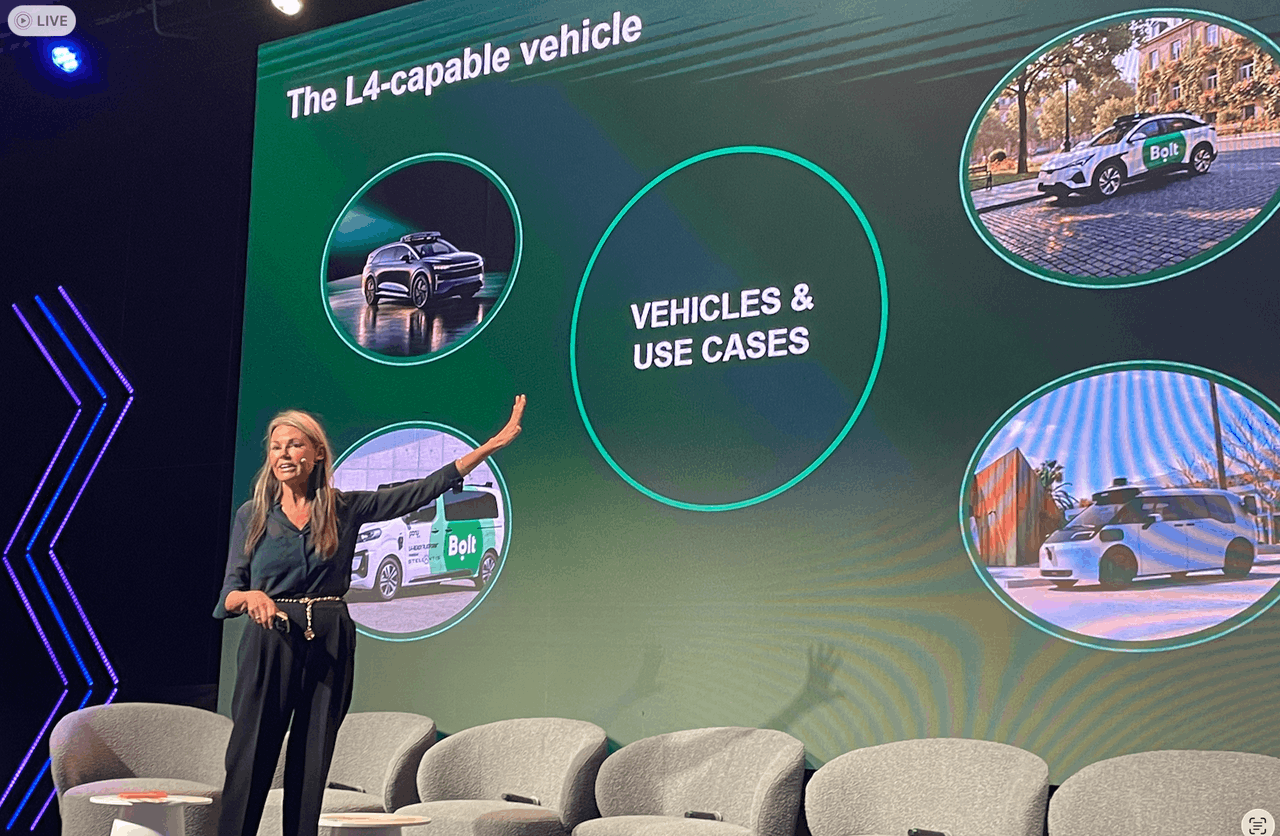
Speaking at Luxembourg Venture Days on 14 October 2026, Charlotte Eisner, head of commercialisation and corporate partnerships at Bolt, answered “yes and no” when assessing whether Europe lags behind in autonomous mobility. She argued that Europe’s automotive manufacturing expertise and safety standards provide a solid foundation for securing a share of a global market worth several trillion euros.
The race for Europe's driverless future
Eisner described Europe as the world’s second most attractive market for autonomous mobility. She contrasted China’s integrated vehicle production with the costly retrofitting used by some US fleets, arguing that Europe has an opportunity to develop purpose-built vehicles costing around €50,000.
Meeting European safety documentation and type-approval requirements remains a challenge for manufacturers. Eisner nevertheless sees those requirements as an opportunity for European operators able to demonstrate compliance.
Bridging software and car manufacturing
A key structural challenge lies in aligning traditional carmakers with fast-moving software developers. Operators like Bolt bridge this gap by integrating software into vehicles while ensuring compliance with European homologation.
Unlike US litigation risks, Europe's framework provides clear liability structures once type approval is secured. End-to-end AI models are replacing rule-based mapping, reducing deployment setup times from nine months to one month.
An urban business opportunity
Driver shortages and an ageing population strengthen the case for exploring new transport services. Eisner argued that autonomous fleets could complement public transport and help people who struggle to reach everyday services or maintain social connections.
Bolt sees a €50 billion opportunity in supporting public transport networks and providing subscription services to residential developers, office landlords and care-home operators, according to Eisner.
She suggested these services could offer property owners an alternative to providing additional parking spaces.
“These vehicles should be made for corporate ownership and for fleet management companies,” she said.
Fleet ownership and recycling
Under the model Eisner described, autonomous vehicles would be owned and managed as commercial fleets. Designed to cover 650,000 km over five years, they would then be recycled rather than sold into a second-hand market.
“There will not be any residual value for the vehicle,” she said.
Eisner put the remote assistance target at one supervisor for every 30 vehicles, making efficient fleet supervision a key part of the proposed business model.
The Luxembourg testing programme is an early step towards Bolt’s stated ambition of having 100,000 autonomous vehicles available on its platform by 2035. Moving from trials to that scale will depend on demonstrating safety, securing approvals and making the economics work.