You’ve spent nearly 20 years in the financial sector. Why did you decide to change career?

You set up Effective Outcomes in 2024. What was your original plan?
“Initially, Effective Outcomes focused primarily on coaching executives and professionals. The idea was to support them in their personal development, decision-making and approach to professional challenges. But as I reflected on this, I realised that traditional coaching approaches often lacked one essential dimension: the body.
There is a great deal of talk about leadership, skills and stress management, but far less about our physical ability to cope with these demands over the long term.
How did you come to place movement at the heart of your approach?
“Just look at the way we work today. Most managers and professionals spend a large part of their day sitting down, in front of a screen or in meetings. They have significant responsibilities, busy schedules and are constantly having to make decisions.
On top of that, there’s family life and personal commitments. Gradually, physical activity takes a back seat. Yet our physical condition directly affects our energy levels, our concentration and our ability to think clearly. I therefore wanted to incorporate this aspect into my coaching.
You argue that professional performance begins with physical fitness. Why is that?
‘Because we tend to completely separate the body from the mind. In the workplace, when someone lacks concentration or feels they are not performing as well, we often look for solutions in the way work is organised, time management or skills development. These factors are important, but we also need to consider what is happening on a physical level.
Exercise can help improve our energy levels, concentration and general well-being. It is not about turning all managers into athletes, but about showing them that their bodies play a part in their ability to perform.
Was that the thinking behind the development of Baseline?
“Yes. Baseline is a 12-week programme that combines physical activity, coaching and nutritional support. The aim is to help participants improve their fitness and establish habits they can maintain beyond the programme. I wanted to offer something structured, which isn’t limited to just a few gym sessions or one-off advice. The idea is to work on several aspects at the same time to achieve lasting change.
Who is this programme aimed at?
“Mainly professionals with demanding schedules who have gradually let their fitness slip. These are often people who understand the importance of physical activity but find it difficult to make room for it in their daily lives. My aim is to show them that it is possible to reintroduce exercise without necessarily turning their whole routine upside down.
You also work directly with businesses. How do these workshops work?
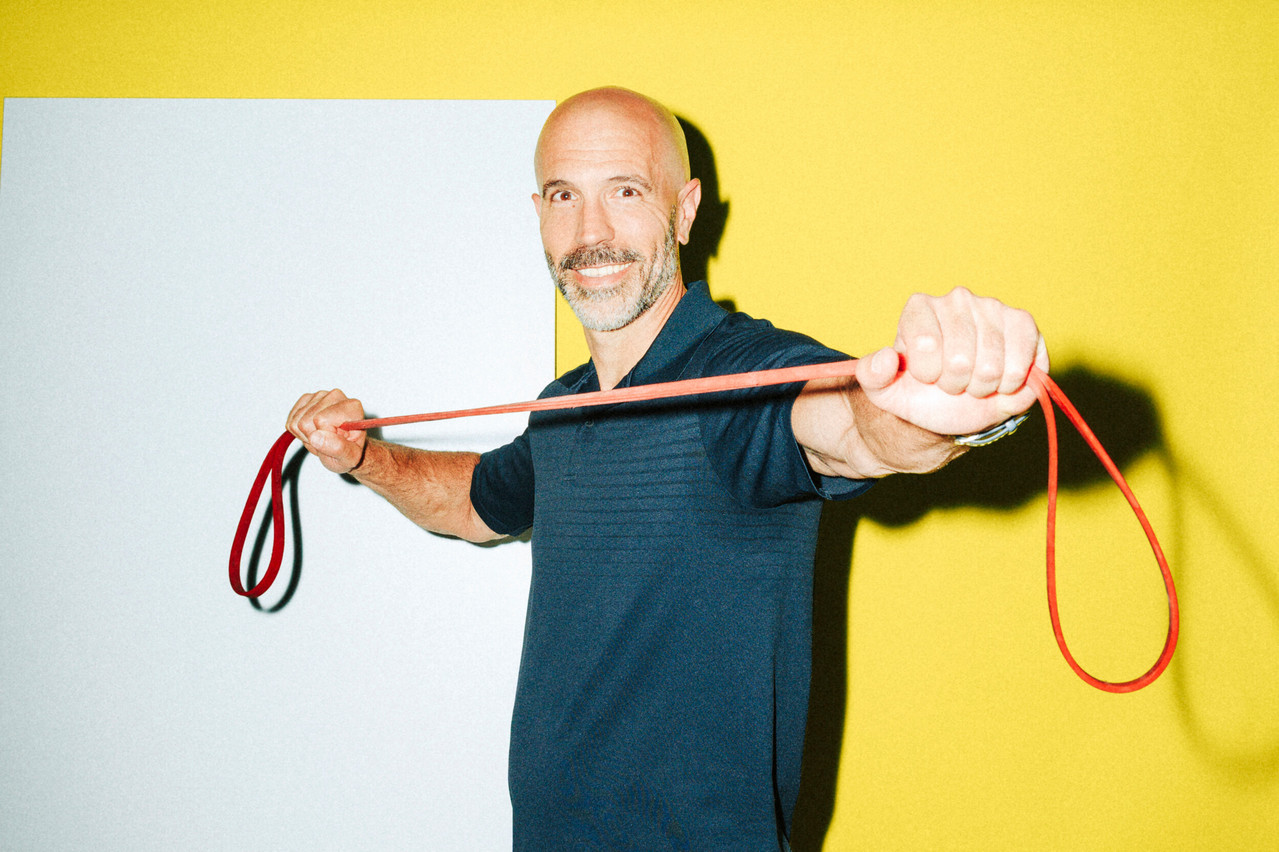
“I run group workshops that combine movement with reflection on professional issues. The idea may seem surprising at first, because participants usually expect a traditional training course or coaching session. But I suggest they start by moving around. A few minutes of physical activity helps break away from the usual meeting routine and creates a different dynamic. We then work on topics such as collaboration, concentration and decision-making.
Why start a professional workshop with physical exercise?
“Because it immediately changes the group dynamic. In a traditional meeting, everyone arrives with their own concerns, their mobile phones and the matters they need to deal with afterwards. It isn’t always easy to hold everyone’s attention. Physical activity provides a break from the routine. Participants break out of their routine and then approach the discussion with a different mindset. It’s not about athletic performance. What interests me is the effect that this physical activity can have on the quality of interactions.
How are managers responding to this approach?
“It can come as a surprise at first, particularly because it’s not what you’d traditionally expect from a professional coach. But that’s also what makes the experience so interesting. When participants experience for themselves the link between physical activity and concentration, the message becomes much more tangible than a mere theoretical discussion. My approach is based precisely on this idea: providing an experience rather than simply explaining a concept.
Does your experience in finance help you to understand your clients’ needs?
“Yes, very much so. I spent nearly 20 years in that environment. I’m familiar with the professional demands, the responsibilities, the pressure and the never-ending days. I also know that it can sometimes be difficult to find time for yourself when you have to balance a demanding career with your personal life. This experience enables me to offer support that takes into account the day-to-day realities of working professionals. I’m not trying to impose an unrealistic lifestyle on them, but to identify changes they can actually incorporate into their lives.
What was the most difficult part of your transition from being an employee to becoming an entrepreneur?
“When you set up your own business, you have to learn to manage far more than just your area of expertise. It’s not enough simply to have an idea or a method you believe in. You also have to promote it, find customers, put together a business proposition and develop a financially viable business. It’s a different kind of responsibility. But that’s also what makes entrepreneurship so appealing: you have the freedom to develop a project that aligns with your convictions.
Your business has already evolved since it was set up. How do you envisage the future?
“I would like to continue developing this approach, which combines movement, coaching and professional performance. Baseline is an important part of this process, but working with businesses also offers interesting opportunities. My aim is to raise awareness within organisations of the role that physical fitness can play in individual and collective performance.
What message would you like to convey to managers who feel they don’t have time to exercise?
“You don’t necessarily have to wait until you have more time to start getting active. Physical activity shouldn’t be seen solely as something we do after work, once all our other commitments are out of the way. It can also be part of the way we work and of looking after our ability to perform at our best.
We have invested heavily in tools, technologies and management methods. But we sometimes forget the most fundamental tool at our disposal: our own bodies. That is precisely what I want to bring back to the forefront with Effective Outcomes.”
This article was written for the October 2026 issue of Paperjam magazine, published on 16 September. The content is produced exclusively for the magazine. It is published on the site to contribute to Paperjam’s comprehensive archive. Click on this link to subscribe to the magazine.
Is your company a member of the Paperjam Club? You can request a subscription in your name. Please let us know via club@paperjam.lu.