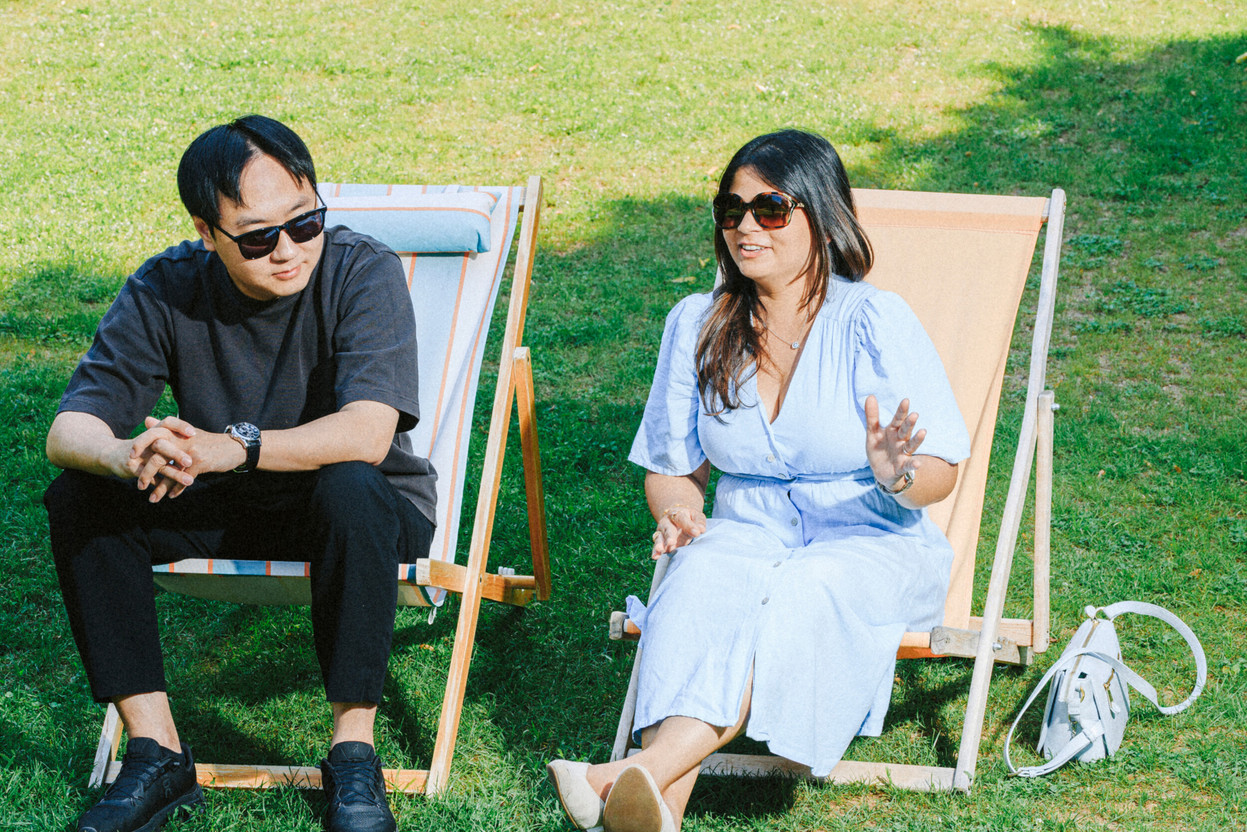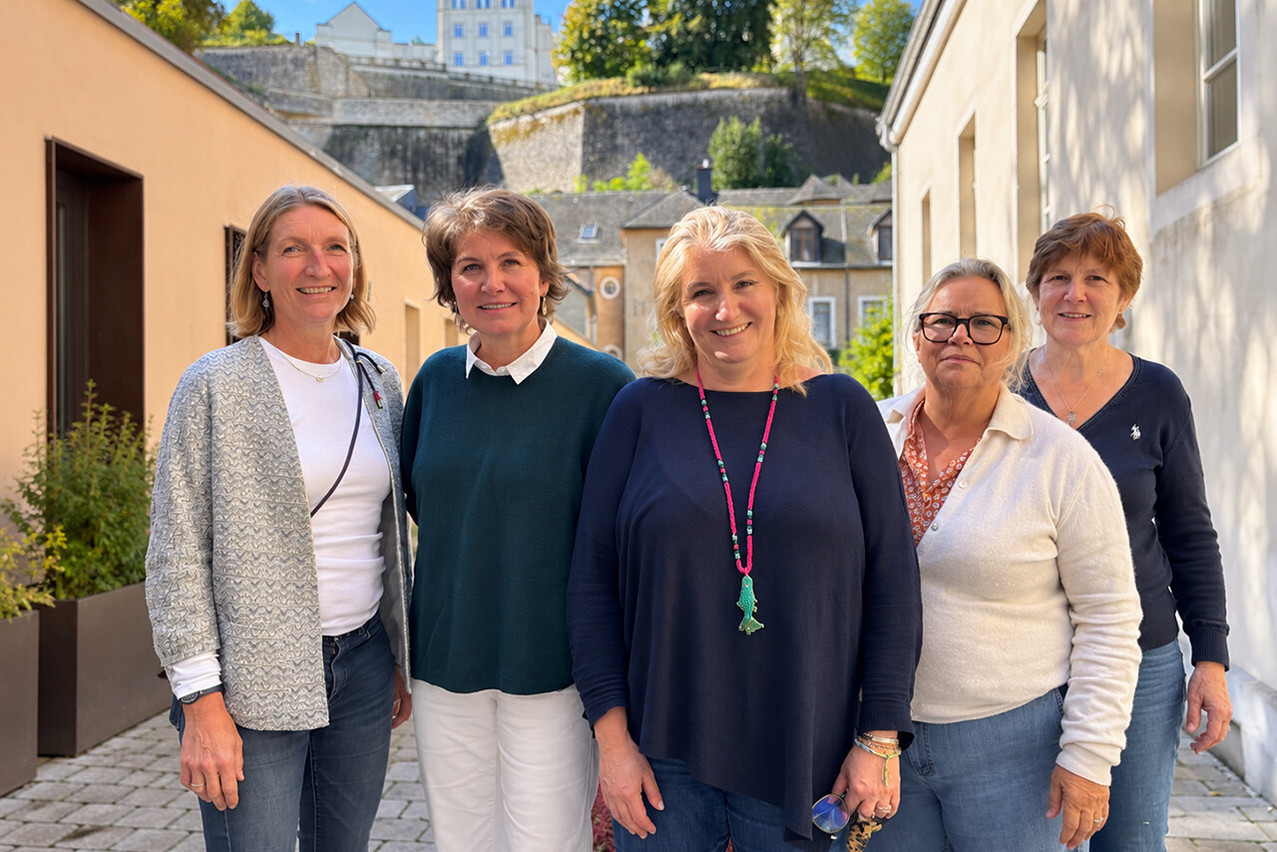
A bit of information, a chat, a coffee: at Luxembourg Accueil, you don’t need to be signed up for an activity to have a reason to come along. In the Grund, at 10 Bisserwee, Alexandra Renault welcomes us to this house where people come to find their bearings, but also for some company. Newcomers mingle here with those who have known the country for a long time and who continue to meet new people here.
The association will celebrate its 50th anniversary in March 2027. This Wednesday 16 September, it is organising its traditional ‘Grand Café de rentrée’ to mark the start of the new season, from 10 a.m. to 3 p.m., to present the activities for the coming season. Open to non-members as well, the event brings together organisers, regulars and newcomers. And the first encounters sometimes begin even before people have signed up. Alexandra Renault recounts, with a smile, how people waiting together in the queue strike up a conversation, then meet up for a coffee the following week. The start of a friendship even before the first class.
For someone who isn’t familiar with Luxembourg Accueil, what is its purpose today?
Alexandra Renault. – “First and foremost, it’s a place where newcomers can meet people who have been living here [in the Grand Duchy] for some time, as well as Luxembourgers. Some get in touch with us six months before they arrive; others pop in once they’ve settled in. They are often looking for information, but above all they want to understand how Luxembourg works. These days, information is easy to find. What’s harder is knowing who to turn to, how to register or how things actually work in practice.
Then there are the activities and events – around a hundred throughout the year – which create opportunities to meet up. The activity brings people together, and the meeting does the rest: it really is the human connection that counts.
We are still hearing from people who arrived yesterday that they have some of the same needs as 50 years ago.

What need did the organisation originally set out to address?
“It was set up in the late 1970s, at a time when many international families were arriving in Luxembourg. Some women who had come with their partners were not necessarily able to work and found themselves feeling quite isolated in a country where it was also more difficult to find things to do and meet people. At the time, Luxembourg Accueil was very much a support and mutual-aid group for women.
The situation has changed enormously. We’ve moved on from focusing on women to focusing on families; we now offer activities in the evenings or at weekends, and more and more men are coming along too. But what strikes me is that we still hear some of the same needs from people who arrived just yesterday as we did 50 years ago.
So, exactly what has changed in terms of the needs of new arrivals?
“Access to information – a great deal. These days, almost everything can be found online. Our role, therefore, is less about providing raw information and more about filtering it and helping people to understand how the country works.
On the other hand, social ties have become more fragile. Covid has played a part in this, as has the role of digital technology in our lives. Even people who work in a highly international environment can remain in their own bubble, or solely within their linguistic community. It is possible to live in Luxembourg amongst several small communities that never interact with one another. Here, the idea is precisely to bring together people who would probably never have met otherwise.
You say, incidentally, that you don’t really like the word ‘integration’. Why is that?
“Because it implies that there are people who are already integrated and others who still have to pass some sort of test. I don’t think that’s how things are in Luxembourg. I prefer the idea of ‘living together’. For me, Luxembourg is about building a community together: everyone arrives as they are and contributes something. It’s a bit like a potluck dinner. This multicultural richness is an opportunity, provided we really make the most of it.
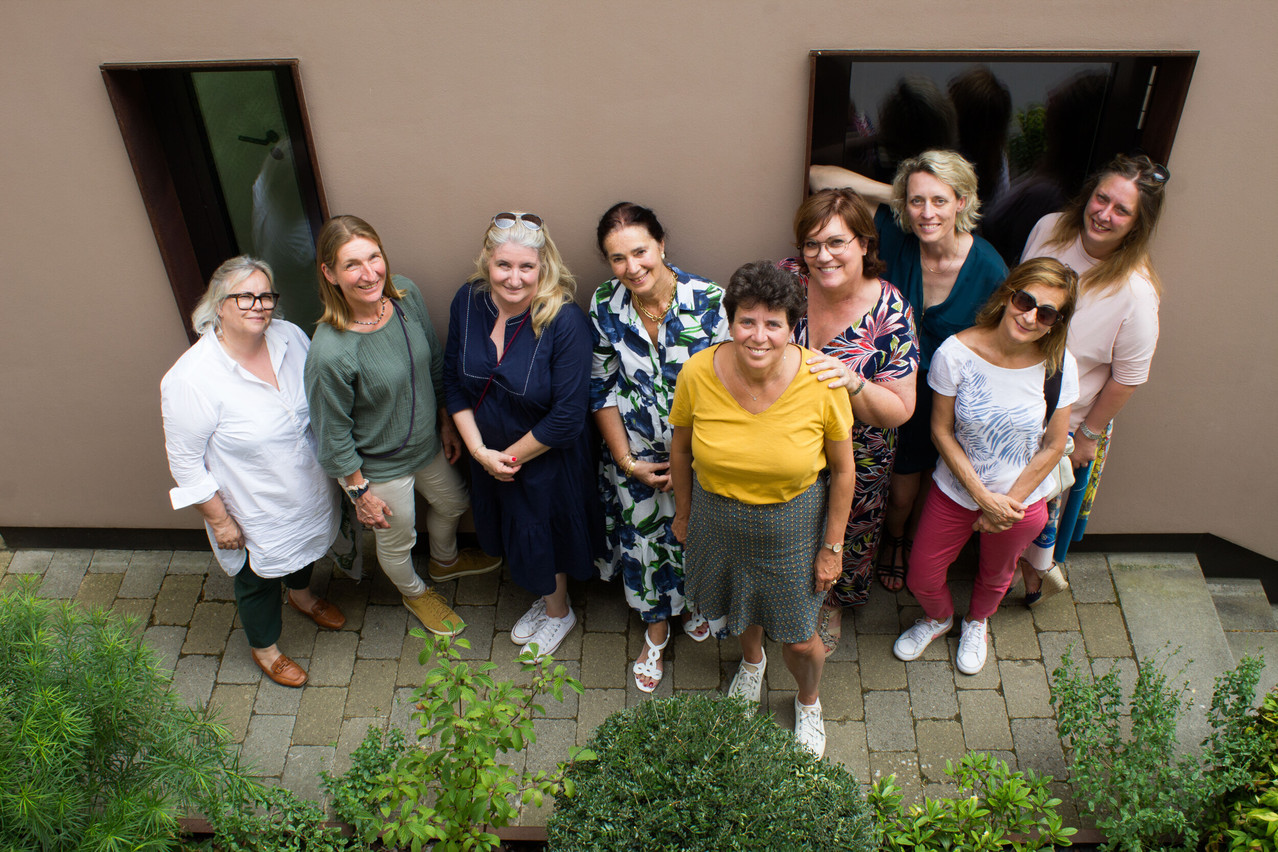
The 11-member committee of Luxembourg Accueil supports the development of the association and its activities. (Photo: Marie Hottois/Luxembourg Accueil)
However, Facebook, WhatsApp, Meetup and InterNations groups already enable expats to meet up. What sets you apart?
“They’re doing interesting work and we’re not in competition with them. But they’re just tools. We, on the other hand, are a physical space, with a genuine and ongoing connection between people.
The activity is there to complement the get-together. What matters are the conversations, the laughter, the advice we share and, sometimes, the support we can find. When you’re an expat, your family is far away and you sometimes go through difficult times. Here, too, you can talk, share advice and find support. In a way, it’s quite funny because we invented the ‘third place’ before the concept of the ‘third place’ even existed.
We also try to keep groups to no more than 30 people. In a large group, you can feel more isolated than in a small one. In a small group, there will always come a time when you’ll have to speak.
Our mantra is: ‘I come to be welcomed and, in turn, to welcome others.’

Given that membership fees are deliberately kept low, how does the association manage financially?
“The first thing that springs to mind is volunteering. We have a committee of 11 people, around 20 volunteers who handle the organisation, and around 60 activity leaders who run the activities. There is sometimes some overlap between these different roles, as some volunteers also act as activity leaders.
Many of our activities are completely free because the organisers choose to give their time and pass on their knowledge to others. For me, volunteering is truly our core value, our DNA and our backbone. I’m always impressed by the generosity of people who have something to offer and who choose to do so on a voluntary basis.
Some activities incur a charge when they generate costs. For pottery, for example, we need materials and a kiln. For an outing, everyone pays for what they consume. We stick to a break-even approach: we do not need to make a profit. Membership fees also help to cover running costs, and we receive support from the City of Luxembourg, notably through the provision of premises and assistance with communications.
It is a small organisation that is relatively inexpensive to run because it relies heavily on volunteers [for the 2026–2027 season, the membership fee is €28 per year for an individual and €48 for a couple. Membership is required to sign up for activities, editor’s note].
How do you manage to keep doing this voluntary work?
“It happens quite naturally. Our mantra is: ‘I come to be welcomed and to welcome others in turn.’ Someone arrives, gets involved, and then starts suggesting an idea: a photography course, some qigong, or a get-together on a topic that interests them. We work together to see how we can make it happen. And often, that same person ends up offering their help or a particular skill.
That is also why the association evolves alongside its members. We may come up with an idea on the committee, but the needs largely arise from the community itself.
I felt as though I was right at the heart of the very best that Luxembourg’s multiculturalism had to offer.
You yourself have followed this path, from member to chairwoman. How did you come to head Luxembourg Accueil?
“At first, I was just a member. In the first year, I signed up for everything, just like everyone else. Then I started choosing the activities that really suited me. In particular, I used to go to a sewing class that I really enjoyed because it was extremely international. The teacher was Spanish; we spoke Italian and English, and sometimes we’d translate for someone… I felt as though I was right at the heart of the very best that Luxembourg’s multiculturalism had to offer.
When the lecturer went back to Spain, we were asked who could replace her. She put my name forward. I’d never led a class before, but I thought to myself: ‘Let’s give it a go.’ After that, things just fell into place gradually, much as they always do. I became more and more involved, and then, when the chairperson wanted to step down, I agreed to take over. I’ve been chairperson for four years now.
Who makes up this community today?
“All ages and a wide range of backgrounds. Our oldest member is around 87 and still takes part in the visits, whilst we also have very young children. There are families, people living on their own, long-term residents and others who will only be staying for two or three years.
In a typical year, we see around 70 newcomers arrive in September and about 30 in January. Some stay for a long time; others come mainly when they are first settling in, build their social circle, and then move on, sometimes only to return at another stage in their lives.
If these people are unable to form relationships outside of work, they […] leave sooner.

Which audience are you still finding it difficult to reach today?
“Single people who come to work in large companies. They can easily remain within their professional circle and suffer as a result. For them, Luxembourg can be more challenging, because they do not necessarily have family or their children’s school as their first points of attachment.
I think there’s definitely scope to develop this area further. Historically, the charity has shifted its focus from women to families; single people will probably become a bigger part of our remit in the future. This is also an issue for Luxembourg: if these people are unable to forge connections outside of work, they sometimes don’t really give the country a fair chance and leave sooner than they might otherwise.
Luxembourg Accueil is also a member of FIAFE (the International Federation of French and Francophone Expatriate Welcome Organisations). What does this network offer you?
“We’re a bit of an exception within FIAFE because many [host organisations] are primarily [French] or French-speaking, whereas we’re decidedly international. In Luxembourg, it would have been unthinkable to operate any other way.
As long as there are people arriving in Luxembourg who need to meet other people, our mission will remain essential.

The network provides us with training, tried-and-tested processes and, above all, plenty of opportunities to share experiences. Other teams face the same problems as us and have sometimes found completely different solutions. It’s very inspiring. We are also one of the few centres in the network to have a proper building.
As the association approaches its 50th anniversary, what would you most like to preserve?
“May this place endure and continue to evolve. We naturally focus our attention on those who are arriving. In a way, it is they who shape Luxembourg Accueil.
The team is very committed, we have lots of ideas, but the organisation will continue to evolve as new members join. And as long as there are people arriving in Luxembourg who need to meet others, our mission will remain necessary.”