How can a European supervisory authority be established in the age of artificial intelligence?
Nicolas Vasse, Executive Director of the European Authority for Combating Money Laundering and Terrorist Financing (Amla), has been grappling with this issue for over a year. And his experience shows that, behind the stated technological ambitions, the operational reality is far more complex.
With fewer than 25 staff members when it was first established, Amla now has over 200 employees and aims to reach a workforce of 400 by the end of 2027. In 2028, it will begin directly supervising a selection of European financial groups in the fight against money laundering.
This growing influence presents a rare opportunity: that of building a supervisory authority by incorporating artificial intelligence right from the design stage, without having to contend with decades of existing IT systems.
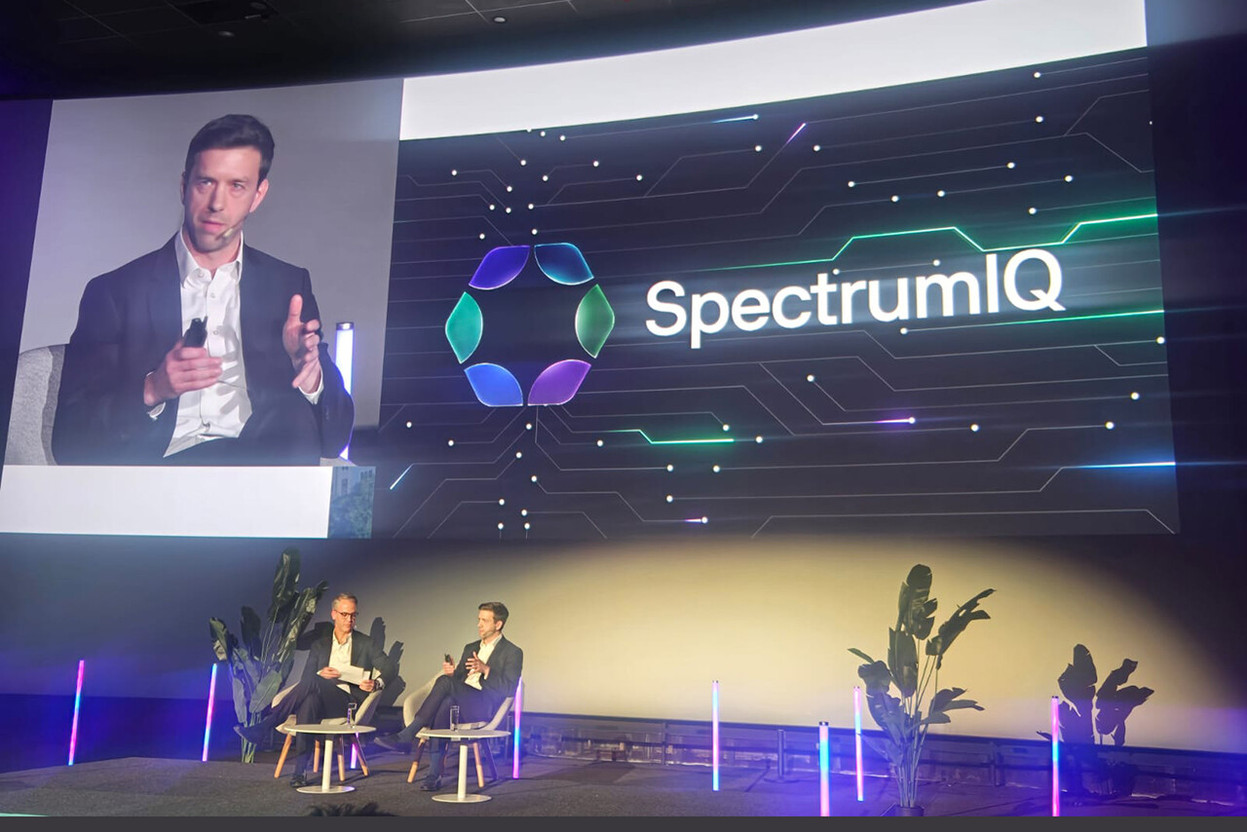
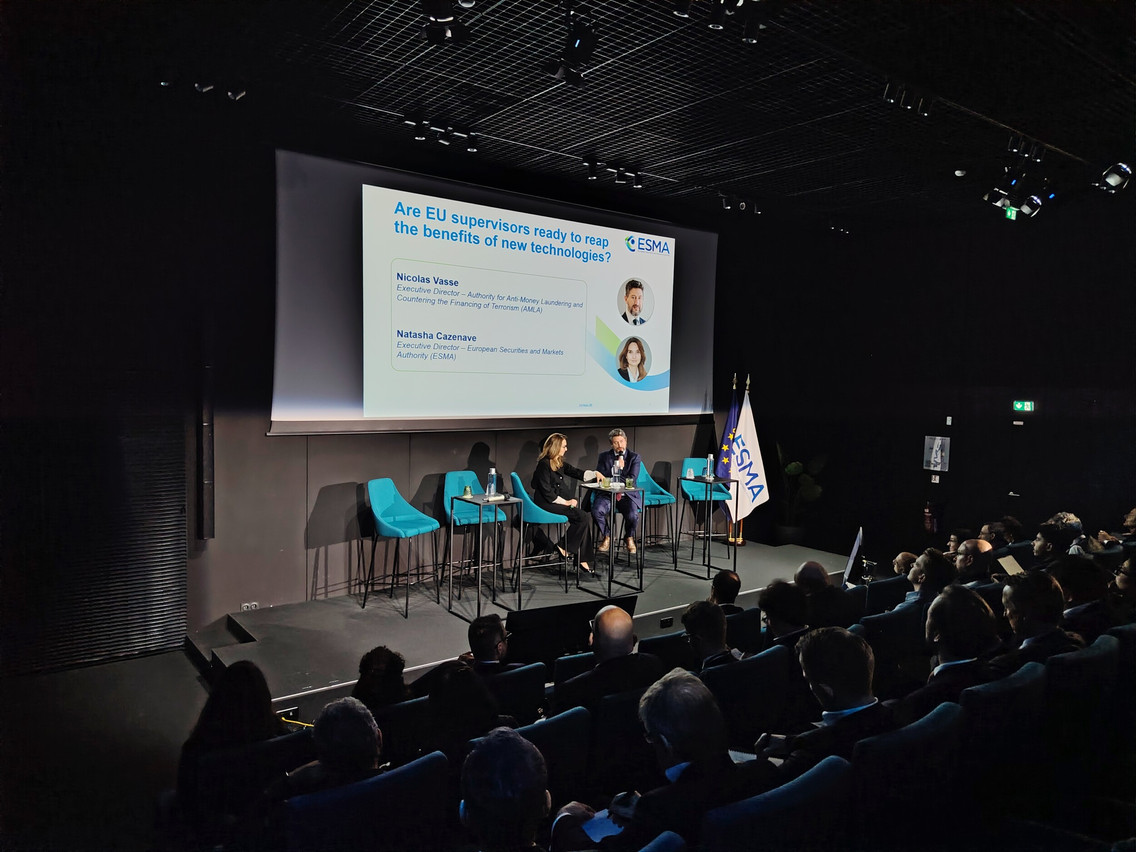
“We were told that we had to be the first European agency based on AI,” said Nicolas Vasse at the second Esma Data Day. “Our ambition is to have AI everywhere.” However, the executive director admits that he underestimated the time needed to lay the foundations for this ambition.
Before AI, you need data
When it was first set up, Amla had only a few laptops provided by the European Commission. Since then, the authority has had to build its own cloud infrastructure, data platform and artificial intelligence capabilities, whilst defining its future supervisory processes.
Three interdependent areas of work, according to Nicolas Vasse, who points out that an algorithm can only add value if the organisation knows exactly what it expects from it. “Laying the foundations is taking longer than I had anticipated,” he admits. The challenge is all the greater given that data collection requires agreement with Member States on common standards, definitions and methods of transmission.
This is a challenge with which Nicolas Vasse is very familiar, having been involved in setting up the European Securities and Markets Authority (Esma). He recalls, in particular, the first European exchanges of transaction data under MiFID in 2006. At the time, the reporting form comprised just 36 fields. However, differences in data quality and definitions between Member States were already posing a major obstacle.
Twenty years on, volumes have increased considerably, but the issue of harmonising them remains.
Declare once, use many times
The proliferation of reporting requirements is precisely one of the issues on which the European authorities now wish to make progress together. Unlike at the time of Esma’s creation, Amla is being introduced into an environment where several institutions, including the European Central Bank (ECB), the European Banking Authority (EBA) and Esma, already have access to large amounts of financial data.
For Nicolas Vasse, the challenge is therefore to avoid recreating data collection channels when the information already exists elsewhere. The principle of ‘report once, use multiple times’ — reporting once to enable multiple uses — could, in the long term, ease some of the constraints placed on financial institutions.
However, the authorities still need to be on the same page. At present, they do not yet have a single data dictionary to ensure that the same piece of information is defined in exactly the same way by all supervisory authorities. Joint efforts are under way to remedy this situation.
For a cross-border financial centre such as Luxembourg, where market participants are subject to a wide range of regulatory requirements, this convergence could serve as a means of simplification. However, at this stage, it remains a work in progress rather than an operational reality.
Towards a more pooled approach to European supervision
Natasha Cazenave wants to go beyond simply sharing information between authorities. Esma has already set up a network dedicated to supervisory technologies, or SupTech, enabling regulators to share their experiences and IT developments. From handling complaints and detecting market abuse to gathering information contained in prospectuses: the range of applications is growing.
The next step would be to develop Esma’s data platform into a genuine shared working environment, in which supervisors could directly upload their data, develop their tools and collaborate. The aim would be to prevent each national authority from duplicating work that has already been carried out elsewhere.
“If, collectively, we identify something that can really make a difference, let’s do it together right from the start,” argued Natasha Cazenave. This pooling of resources would also enable authorities with fewer resources or less technological maturity to benefit from the investments made by their counterparts.
A development that could gradually change supervisory practices across the 27 Member States.
Automate without delegating decision-making
However, the integration of artificial intelligence does not mean the end of human judgement. Drawing on his experience in the private sector, Nicolas Vasse illustrated how certain banking compliance processes can be completely rethought.
In a process comprising around twenty steps, 14 could, for example, be handled by artificial intelligence, whilst the remaining six would remain in the hands of staff responsible for making key decisions or guiding the next steps. It is with this in mind that the Amla is currently considering its future supervisory processes, although these will first need to be tested manually before being automated.
Natasha Cazenave shares this view. For the Executive Director of Esma, the adoption of artificial intelligence cannot be reduced to a mere IT project. “It is a complete transformation of the organisation,” she insists. Skills, training, governance, tools and working methods must all evolve simultaneously.
Esma has therefore given its staff access to artificial intelligence tools so that they can experiment and identify the most relevant uses, whilst establishing internal rules designed, in particular, to protect the confidentiality of information.
The dilemma of European sovereignty
The other major challenge highlighted by Nicolas Vasse concerns technological sovereignty. This is an issue which, in his view, was given far less prominence when Esma was established around ten years ago. For an authority responsible for handling sensitive information relating to money laundering and terrorist financing, the choice of technological infrastructure takes on a particularly strategic dimension.
Whilst sovereign cloud services are expanding rapidly, innovation in the field of artificial intelligence remains largely driven by players based outside the European Union. “How can we gain access to the most innovative technologies and the latest advances in AI, whilst maintaining our sovereignty?” asks Nicolas Vasse.
The Executive Director regards strengthening European sovereignty as a political imperative, but acknowledges the difficulty of putting this into practice. Supervisors must therefore strike a balance between technological performance, security, data protection and control over their infrastructure.
Don’t let the markets leave you behind
This transformation is all the more urgent given that financial institutions themselves are accelerating their adoption of artificial intelligence. Natasha Cazenave observes that initial applications, which have mainly focused on productivity gains and back-office functions, are gradually extending to activities that are more central to businesses.
This development means that supervisors must understand not only the new risks to which institutions are exposed, but also how their business models are changing. “We cannot carry on operating as we always have,” she emphasises.
Beyond artificial intelligence, the two executives also discussed distributed ledger technologies (DLT), which have the potential to transform the way financial markets operate and, consequently, the way regulatory data is collected and used. Nicolas Vasse believes that this technology remains largely under-utilised, particularly because its adoption requires a rethink of business models, processes and relationships between partners.
In the face of these changes, the executive director of Amla now prefers to compare artificial intelligence projects to research and development programmes rather than to traditional IT projects. Models evolve, results are not always predictable, and a solution that is relevant today could quickly become obsolete. “AI changes everything, but there is no clear-cut formula for making it work,” he concludes.
For European regulators, the challenge is therefore no longer simply to oversee financial innovation. It also involves learning to innovate themselves, in an environment where they have no control over either the pace or all the developments.