Gilbert Fridgen is a professor at the University of Luxembourg’s SnT centre and a principal investigator of the FlexBeAn project. He supplied the IEA figures after the interview.
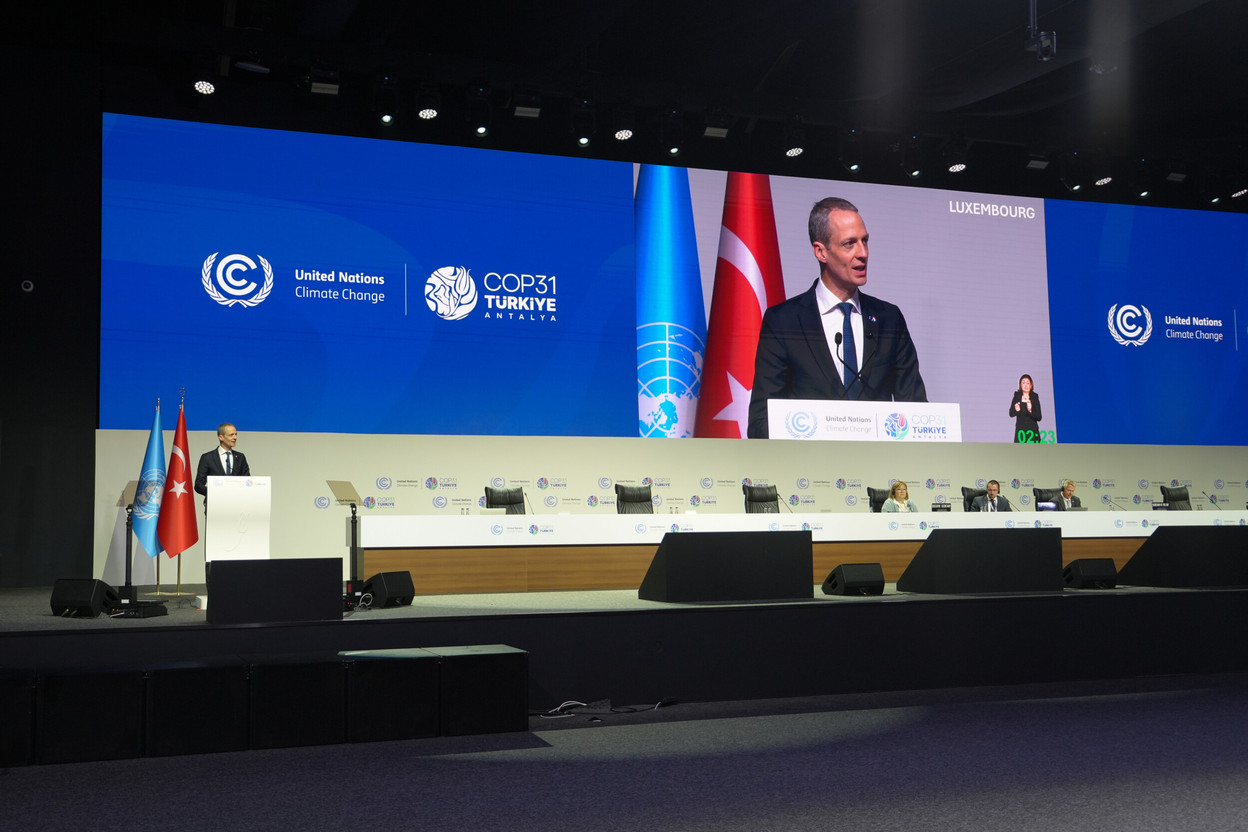
The COP31 presidency wants electricity to meet 35% of global final energy demand by 2035. Is faster electrification achievable for Luxembourg?

Nine years gives us time, but switching will depend on what makes financial sense to people. Insulating a building and replacing its heating system take longer than buying a car. Still, over the lifetime of the investment, I think both heat pumps and electric vehicles have reached a point where the change can make economic sense.
Where does Luxembourg stand today?
“The IEA’s 2026 Luxembourg review puts the country’s industrial electrification rate at 49%, above the IEA average of 33%. Buildings are at 28%, compared with an IEA average of 45%. That shows where one of the larger challenges lies.
Electric vehicles made up 12% of Luxembourg’s passenger car fleet in 2025, including 8.5% that were fully electric. Their number increased sixfold between 2020 and 2025. The 35% discussed at COP31 is a global target, rather than a target set specifically for Luxembourg, but I think faster electrification is realistic.
FlexBeAn examined the potential in Luxembourg’s households and industry, the obstacles to using it and the costs involved.

Your FlexBeAn project looked at “flexibility”. What does that mean?
“Wind and solar power produce electricity when the weather allows. Traditionally, the system adjusted power generation to meet demand. We can still use gas-fired plants when needed, or store electricity in batteries. Another option is to shift some consumption to the times when electricity is available.
That is demand-side flexibility. FlexBeAn examined the potential in Luxembourg’s households and industry, the obstacles to using it and the costs involved. We worked with Creos and List. List brought more expertise on households and technical questions; our research group at the University of Luxembourg’s SnT centre focused more on industrial and economic questions. We collaborated across the project.
What did you find when you spoke to industrial companies?
“There is potential, but companies may need to invest or change parts of their production processes to make use of it. Some were open to exploring that because they understand where the energy system is heading. Others asked why they could not simply receive electricity in the way they always have.
A company may still be able to obtain a steady supply, but providing it as renewable generation grows can be costly. It might be cheaper for that company to consider where its own operations can adapt. We cannot name the companies involved in our work: details about when they could shift production may be useful to competitors.
What is holding companies back from investing?
“Companies have other pressures, and a large investment is difficult to justify when they are uncertain about future policy or whether it will pay off. That uncertainty is a real obstacle.
At the same time, the energy system is changing. Renewable generation is growing, and electricity prices can be volatile. Companies need to take those changes into account when making investment decisions. Flexibility has potential, but it has to make economic sense for the businesses providing it.
There is potential, but companies may need to invest or change parts of their production processes to make use of it.

Should the government help companies make the transition?
“This is a political opinion rather than a finding of our research. I think there can be a case for intervention if a failure to adapt across industry would impose wider costs on the country, including lost jobs. A company might also decide to move activity out of Luxembourg instead of investing here.
The government may need to ease the effects of that transition. But I would see support as a bridge for a few years, not as permanent subsidies. Companies also have responsibility for their own decisions.
Can Luxembourg’s grid cope with more electric cars and heat pumps?
“The grid will need reinforcement, and that investment accounts for a significant part of the cost of electrification. But upgrading it as demand changes is part of the normal planning process. If you know what it will need to handle, you can plan ahead.
How we use the grid matters just as much. Not every electric vehicle has to charge at the same time, and not every heat pump has to run at the same time. If everyone plugs in a car on arriving home and charges it at full power, that creates a peak. Many drivers only need their car to be charged by the next morning.
Not every electric vehicle has to charge at the same time.

How do you persuade households to shift their electricity use?
“There are already incentives. Creos has grid tariffs that vary depending on when electricity is used, while electricity retailers can offer prices that change during the day. In principle, technology can charge a car when those combined costs are lowest.
That is possible today, although it has not been widely adopted. If the system needs more flexibility, operators can offer tariffs and products that make it easier for households to participate. It need not mean telling everyone exactly when they are allowed to charge.
Could electric cars eventually act as batteries for the grid?
“They can already help balance it simply by charging at the right times. Sending electricity back from a car battery to the grid is a further step, known as vehicle-to-grid technology. It could help when electricity is in short supply.
Some drivers may not want to do that, and it would be optional. The question is whether incentives, such as cheaper tariffs, make it worthwhile for them. The simpler opportunity comes first: letting people plug in when they get home, while ensuring their cars do not all charge at full power at once.”*
* Note - In a parliamentary reply dated 23 November 2026, Energy Minister