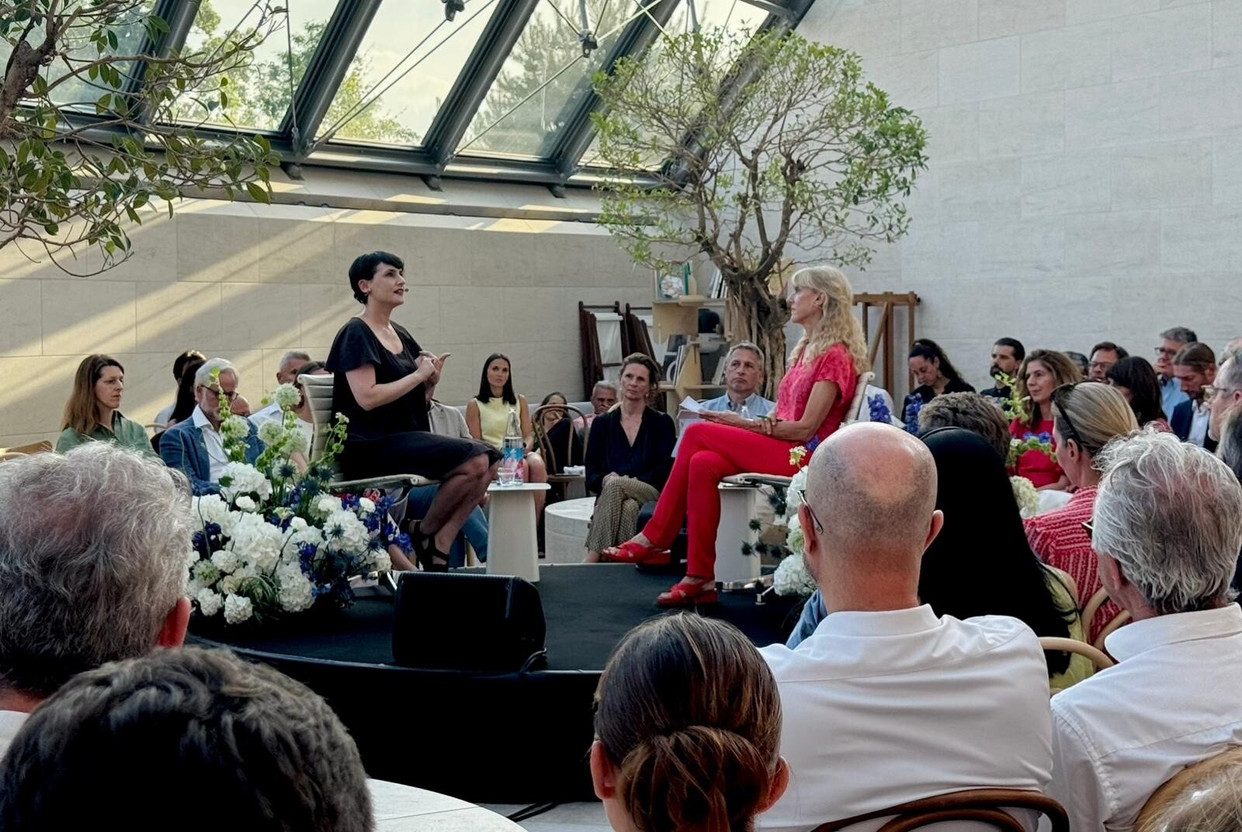
Today, Luxembourg celebrates “50 Years of Press Aid in Luxembourg” with an afternoon of talks and panel discussions under the theme “Safeguarding Pluralism: 50 Years of Commitment – and What Comes Next?”
It is an anniversary worth celebrating. And, perhaps more importantly, an opportunity to recognise how far we have come.
Social media addiction, fake news, disinformation, the influence of dominant digital platforms on public opinion and elections — these issues have moved from specialist debates into mainstream political awareness.
Yet one fundamental dimension of this transformation receives far less attention: the disruption of the economic model that finances professional journalism.
These developments are deeply interconnected. The weakening of independent media, the growing dominance of digital platforms and the rise of populism and far-right politics are not separate phenomena. They can reinforce one another.
And this raises a fundamental question: how can democracy remain healthy if the journalism on which it depends is no longer economically sustainable?
The political courage to challenge the status quo
Luxembourg has a long tradition of supporting press pluralism. The press aid scheme established in 1976 was designed for a very different media landscape, one dominated by printed newspapers.
By the mid-2010s, it had become increasingly clear that the system needed fundamental reform. The legislation favoured established print publications over digital news media, even as audiences, advertising revenues and the economics of journalism were rapidly changing.
Reforming the system was politically sensitive.
Traditional publishers had benefited from the existing framework for decades. Many were reluctant to see it changed, particularly if reform meant opening public support to new competitors that had previously been excluded.
Yet Xavier Bettel, then Prime Minister and Minister responsible for Media, had the political courage to challenge the status quo.
The reform adopted in 2021 represented a genuine paradigm shift.
First, public support would no longer primarily reward the volume of printed content produced. Instead, it would be linked to investment in professional journalism, notably the number of professional journalists employed by publishers.
The underlying principle was both simple and powerful: it is not for the government to judge the quality of journalism. Its responsibility is to create conditions that encourage publishers to invest in professional newsrooms.
Second, the reform opened public support to media categories previously excluded or disadvantaged, including digital-native publications, free daily newspapers and monthly magazines.
This was more than a technical adjustment. It recognised that journalism should be supported for the democratic function it performs, rather than for the format in which it is distributed.
Looking back at Xavier Bettel's decade as Prime Minister, I consider this one of his most courageous political decisions.
He challenged established interests, accepted resistance and defended a reform whose benefits would extend beyond the traditional beneficiaries of public support.
He deserves recognition for having initiated a reform that was necessary, but far from politically convenient.
Luc Frieden and Elisabeth Margue: turning principles into progress
Political courage is essential to initiating change. But reform also requires continuity, professionalism and the willingness to listen.
This is why I particularly welcome the approach taken by Prime Minister Luc Frieden and Minister Delegate for Media Elisabeth Margue.
Rather than treating the 2021 legislation as the final word, the current government has continued to modernise the framework, taking into account the recommendations of the Luxembourg Press Council.
One of the Council's central recommendations was to establish technological neutrality: professional journalism should be supported independently of its distribution channel or publication format.
The reform adopted in July 2026 represents a significant step towards that objective.
The government abolished the different subsidy ceilings that had previously applied to different types of publications.
Under the earlier framework, a daily newspaper could benefit from a substantially higher ceiling than a weekly publication, a monthly magazine or a digital-only news outlet.
These distinctions have now been removed.
The principle is clear: a professional newsroom should not receive less recognition simply because its journalism is published monthly rather than daily, digitally rather than in print, or distributed free of charge rather than through paid circulation.
The reform also introduced other improvements, including the indexation of aid amounts and additional support for smaller and innovative journalistic projects.
These changes matter.
They demonstrate that the government has listened to the sector, understood the evolution of media economics and translated recommendations into legislative action.
I particularly appreciate the professionalism with which Luc Frieden and Elisabeth Margue have approached this complex issue.
Xavier Bettel had the courage to initiate a fundamental change. Luc Frieden and Elisabeth Margue have shown the commitment and professionalism to take it further.
In a political environment where continuity across governments cannot always be taken for granted, this deserves recognition.
The bigger challenge: the economics of independent journalism
The importance of these reforms becomes even clearer when we consider what is happening beyond Luxembourg.
Dominant digital platforms have fundamentally transformed the relationship between publishers, audiences and advertisers.
They control much of the infrastructure through which information is discovered, distributed and monetised.
Through self-preferencing practices, algorithmic distribution, the use of publishers' content and increasingly sophisticated advertising technologies, they have captured a substantial share of the economic value that once supported professional media.
Social media platforms have developed business models designed to maximise attention and engagement, frequently rewarding emotional, polarising or sensational content.
The result is a troubling paradox.
Professional journalism bears the cost of producing reliable information, while platforms increasingly control access to audiences and the monetisation of attention.
Artificial intelligence is adding another layer of disruption. AI-powered services can increasingly provide answers directly to users, sometimes drawing on publishers' journalism without generating the traffic or remuneration needed to finance its production.
These are not simply commercial challenges for media companies.
They are challenges for society.
When independent journalism weakens, the public sphere becomes more vulnerable to manipulation, disinformation and political extremism.
A democracy without a free and independent press is difficult to imagine. A free and independent press without a viable economic model is equally difficult to sustain.
Why I created the Mike Koedinger Foundation
This conviction is also what led me to establish the Mike Koedinger Foundation earlier this year.
After more than three decades as a media entrepreneur, I wanted to contribute beyond the development of my own company.
The Foundation's mission is to safeguard independent media and strengthen democracy in an age of populism, disinformation and platform dominance.
Its first major initiative, CTRL — A Visual Dictionary: How Media, AI and Platforms Shape Democracy, will be released in January 2027.
Through the book, educational materials, conferences and workshops, we want to help citizens, particularly younger generations, understand the mechanisms shaping today's information environment.
How do algorithms influence what we see? How do platforms make money from our attention? How does artificial intelligence transform the production and consumption of information? How can we recognise manipulation and disinformation?
These are no longer questions for technology experts alone. They are questions of citizenship.
Understanding the digital society has become a prerequisite for defending democracy.
And democracy is the foundation of our freedom, peace and prosperity. We should never take it for granted.
Publishers must transform. Governments must create the conditions.
Let me be clear: public support cannot replace entrepreneurial responsibility.
Media companies must confront the challenges facing their industry. They need to innovate, invest in quality journalism, embrace technology, develop direct relationships with their audiences and diversify their revenues.
They must build sustainable business models, whether through advertising, subscriptions, memberships, events, professional services or other sources of income.
At Paperjam, this transformation is central to our own strategy.
But even the most innovative publisher cannot solve structural market imbalances alone.
Governments have a responsibility to create a fair environment in which independent journalism can survive and prosper.
That requires two complementary approaches.
The first is continued, effective public support for professional journalism, designed to strengthen editorial independence, diversity and pluralism.
The second is the willingness to confront the economic and competitive power of dominant digital platforms.
This means enforcing competition rules, addressing unfair self-preferencing, ensuring transparency and accountability, and defending publishers' rights when their content is used and monetised, including by AI companies.
Europe has developed important regulatory instruments. What matters now is their effective implementation and enforcement.
Supporting journalism with one hand while allowing dominant platforms to undermine its economic foundations with the other is not a sustainable public policy.
Both challenges must be addressed together.
Fifty years of commitment. And reasons to celebrate.
Fifty years ago, Luxembourg made an important choice: recognising that an independent, pluralistic press is essential to democracy and deserves public support.
That commitment has endured through profound changes in our society, our economy and the media landscape.
In 2021, Xavier Bettel had the courage to fundamentally modernise a system that had become outdated.
In 2026, Luc Frieden and Elisabeth Margue demonstrated that reform can continue across governments, with professionalism, dialogue and a willingness to act on the recommendations of the Press Council.
Together, these reforms have made Luxembourg's press aid framework more inclusive, more equitable and better adapted to the realities of contemporary journalism.
Is everything perfect? Certainly not.
There are still questions about how public support should evolve as journalism increasingly moves across platforms and formats.
And the much bigger challenge of ensuring fair competition with dominant digital platforms remains unresolved.
These issues deserve continued attention, ambition and political courage.
But today should not be about compiling a list of everything that remains to be done.
Today is a day to recognise progress. To acknowledge political courage. To appreciate constructive dialogue between government and the media sector. And to celebrate Luxembourg's long-standing commitment to independent journalism and pluralism.
At a time when press freedom is under pressure in many parts of the world, we should not underestimate the importance of this achievement.
So, thank you to Xavier Bettel for having the courage to initiate change. Thank you to Luc Frieden and Elisabeth Margue for continuing that work with professionalism and determination. And thank you to all those — journalists, publishers, representatives of the Press Council, policymakers and public servants — who have contributed to making these reforms possible.
Fifty years of press aid is not simply a celebration of public subsidies. It is a celebration of a democratic choice: that independent journalism matters, that pluralism is worth protecting and that public policy must evolve to preserve both.
There will always be more work to do.
But today, let's celebrate how far we have come.
---
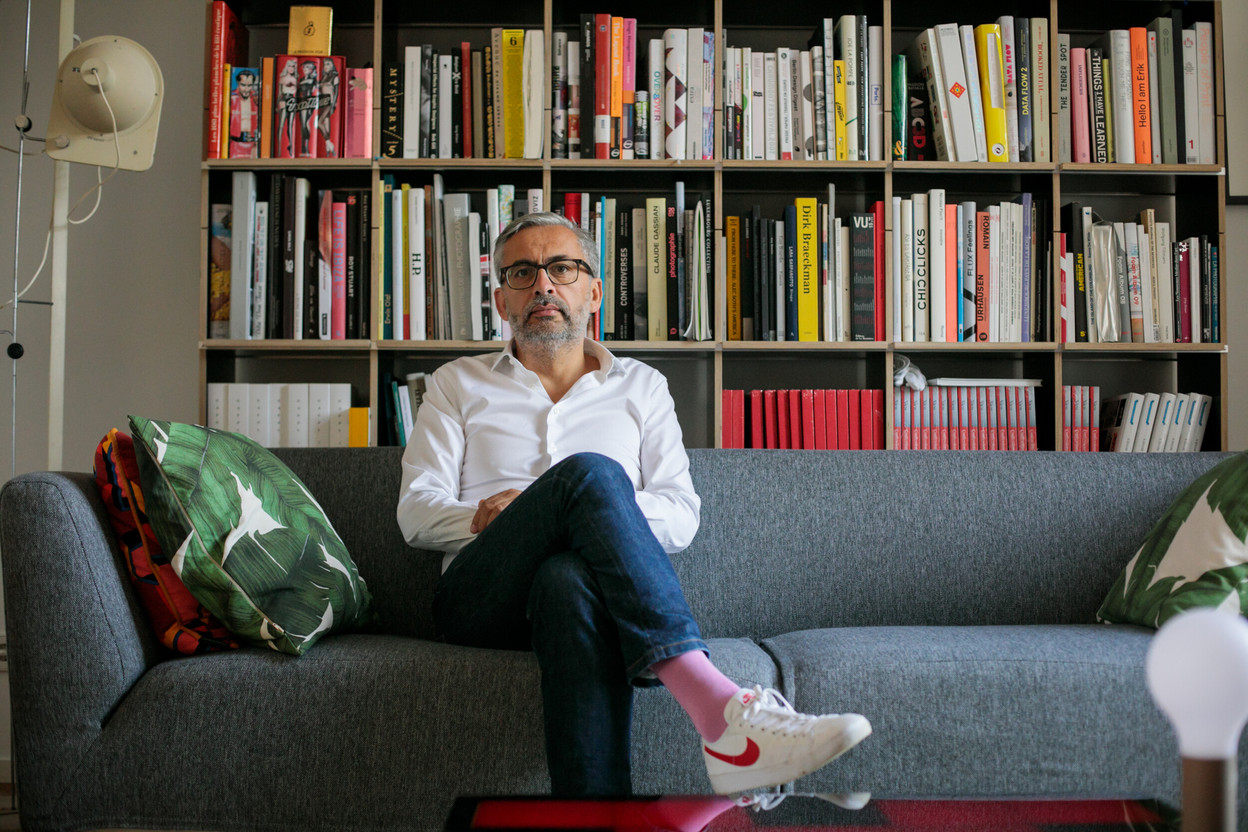
Mike Koedinger Founder, Paperjam S.A. President, European Magazine Media Association (EMMA) Founder and Chairman, Mike Koedinger Foundation