When Friar Luca Pacioli published the first printed description of double-entry bookkeeping in Venice in 1494, he documented a system that would underpin commerce for centuries.
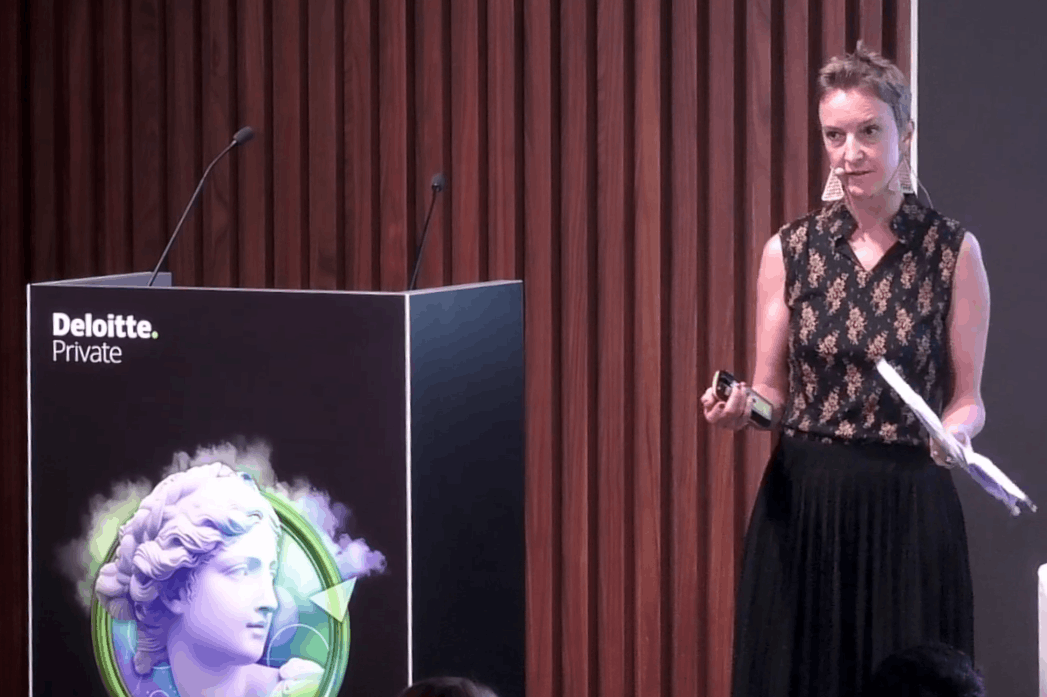
“Venice may be the spiritual home of Deloitte,” joked Tiphaine de Mombynes, director of the Metis Fund – Arts & Development at the French Development Agency (AFD) and lead of the Finance in Common Coalition for Sustainable Development through Culture and Arts.
Speaking at the Deloitte Private Art & Finance Conference in Venice, which was also livestreamed on 27 October 2026, de Mombynes argued that finance must account for culture’s contribution to human development alongside its economic returns.
Nurturing individual and community resilience
The foundations of human development include emotional resilience, mental health and the shared memory of individuals and communities. Cultural expression, de Mombynes stressed, should not be treated as a secondary luxury.
Artistic engagement can support health and well-being. A 2019 World Health Organization review drawing on more than 3,000 studies found evidence that the arts can contribute to the prevention of ill health, the promotion of health and the management and treatment of illness across the lifespan.
Creative projects can also support social cohesion and reconciliation. Post-conflict theatre in Bosnia and memorial initiatives in Rwanda illustrate how culture can help communities process trauma, preserve collective memory and rebuild relationships.
Culture is an asset class waiting to be understood
These benefits are difficult to capture in conventional financial statements, but they can strengthen vulnerable societies and help them hold together.
The economic weight of culture
Culture also makes a substantial contribution to the global economy. Cultural and creative industries generate approximately $2.3trn in annual revenue and contribute an estimated 3.1% of global GDP. They support millions of jobs worldwide, while creative services accounted for 19% of global services exports in 2022.
“This is not a niche. This is an asset class waiting to be understood,” said de Mombynes.
The figures demonstrate the sector’s scale, but mobilising investment requires institutions capable of taking a long-term view.
The Finance in Common network, established in 2020, brings together more than 540 public development banks and other stakeholders. Its members managed $23trn in assets in 2024 and collectively accounted for about 10% of global investment flows.
These institutions have the scale to embed culture more firmly in development policy and finance.
“They combine public mandates, long-term horizons and access to financial markets,” said de Mombynes.
Bridging the divide in institutional finance
Despite this potential, institutional engagement remains uneven.
A study of nearly 50 public development banks found that 63% supported cultural and creative industries and 46% funded heritage conservation. Support fell to 37% for artistic creation and 12% for cultural policy engagement (see chart 1).
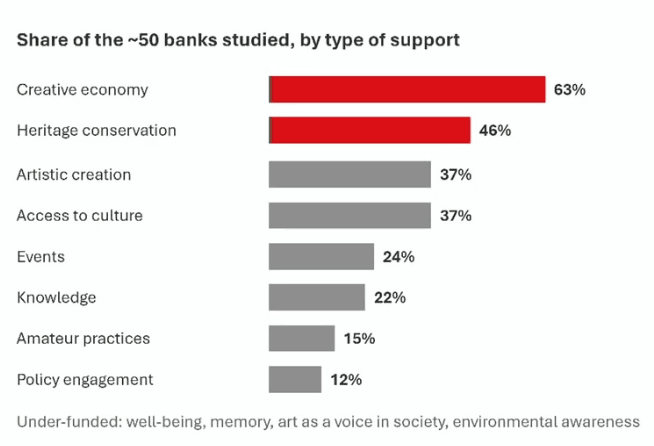
Chart 1: Share of the ~50 banks studied, by type of support Deloitte
The findings suggest that banks are more comfortable financing infrastructure and established industries than projects centred on well-being, artistic creation and community memory.
A further obstacle is the gap between the languages of finance and culture. Bankers and artists often work with different measures of value, risk and success, leaving smaller creative organisations and collectives struggling to secure capital. As noted by the British Council, culture remains “a missing pillar of society” and financial decision-making.
Unlocking public and private collaboration
Bridging these divides will require hybrid models that combine the stability of public institutions with the speed and flexibility of private philanthropy, de Mombynes argued.
The Metis Fund, established in 2021 and hosted by AFD, offers one such model. It finances initiatives that bring together artists, development practitioners and local communities to address challenges connected with areas such as health, education, peace and the environment.
Rather than creating art for communities, the projects involve artists working with local populations through a shared creative process.
Having secured €500,000 in philanthropic funding in 2026, Metis is seeking €5m over three years to expand its programmes. The approach aims to combine philanthropic capital with public development resources, enabling experimental projects to operate within a stable institutional framework.
Adding a third column to double-entry ledgers
De Mombynes concluded by returning to Pacioli and the double-entry bookkeeping system he described in Venice more than five centuries ago.
Double-entry bookkeeping records transactions through corresponding debit and credit entries. It has proved remarkably effective at tracking financial value, but it does not fully capture the human effects of an investment.
De Mombynes proposed adding a metaphorical third column, one concerned with social and cultural value.
This column would ask, "What does this do for people? What does it do for memory, for dignity, for imagination, for the capacity of a society to imagine its own future?”
Such questions cannot replace financial discipline. They can, however, broaden the definition of return.
By writing this third column, investors and development institutions could begin to account for what conventional ledgers overlook: art’s capacity to strengthen people, preserve memory and help societies imagine their future.