According to Morningstar, the European active exchange-traded fund (ETF) market is experiencing unprecedented growth, with total assets nearly tripling over the past two years. In its Europe Active ETF Trends-Full Year 2025 Review research note, the data provider noted that by the end of December 2025, the market reached a valuation of €78.4bn, up from €52.5bn at the close of 2024.
Momentum builds, penetration lags
While growth has been striking in absolute terms, relative penetration tells a different story. Active ETFs remain a relatively niche component of the broader European landscape, accounting for just 2.9% of total assets invested in ETFs in Europe, which is notably lower than the 11% market share held by active ETFs in the United States. In 2025, net flows into these strategies amounted to €22.7bn, representing 6.6% of all ETF flows in the region, down from 7.8% in 2024.
Equity dominance persists—debt strategies rapidly catch up
Equity strategies remain the cornerstone of the market, representing 71% of total assets with a value of €55.9bn. While equity dominated new product launches in 2025 with 64 entries, fixed-income activity accelerated sharply, seeing 49 new launches compared to only 12 in the preceding year.
Fixed-income assets reached €17.6bn by year-end, boosted by inflows of €6.4bn in 2025 alone (see chart 1). This surge in activity is reflected in the record-breaking 139 new active ETF launches in 2025, a massive increase from the previous decade's average of 10 launches per year.
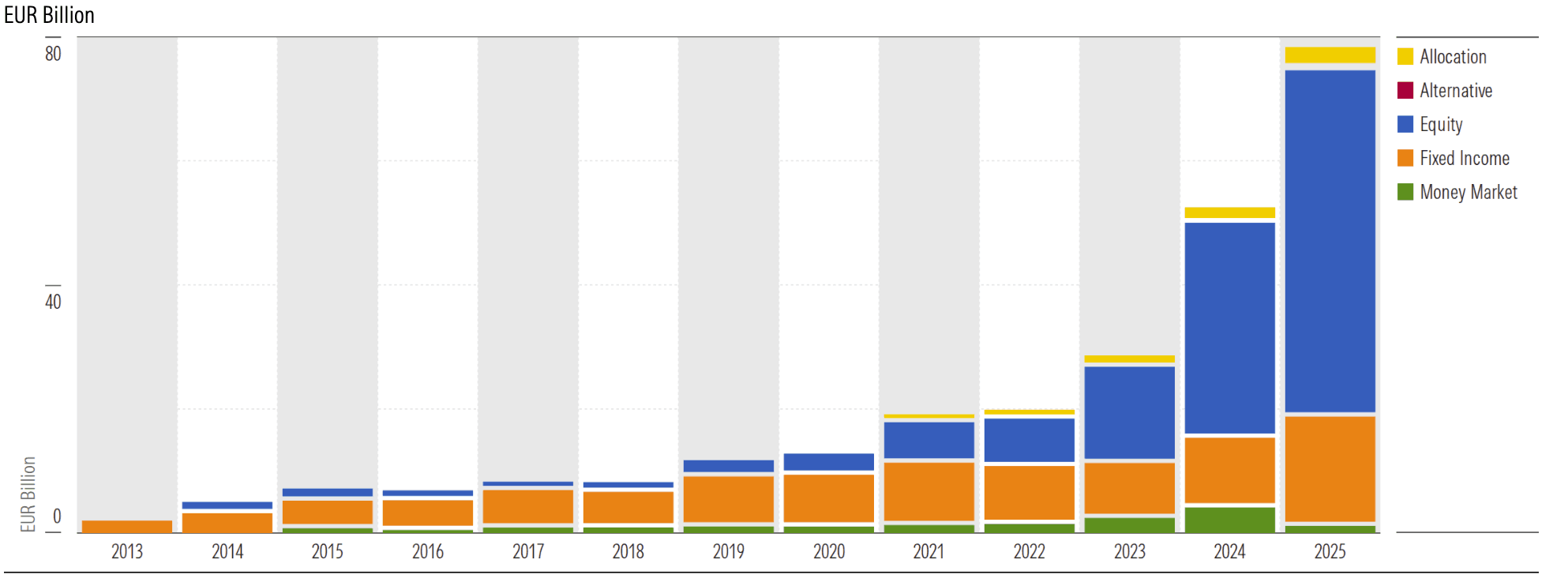
Chart 1: Asset growth in the European active ETF market by major asset class Source: Morningstar Direct. Data as of Dec. 31, 2025.
One clear leader—but challengers are closing in
J.P. Morgan dominates the competitive landscape (see chart 2), which maintains a commanding 47% market share with assets of €36.7bn. Its early commitment to active ETFs has secured market leadership, followed by Fidelity International at 10.4% and Pimco at 6.7%.
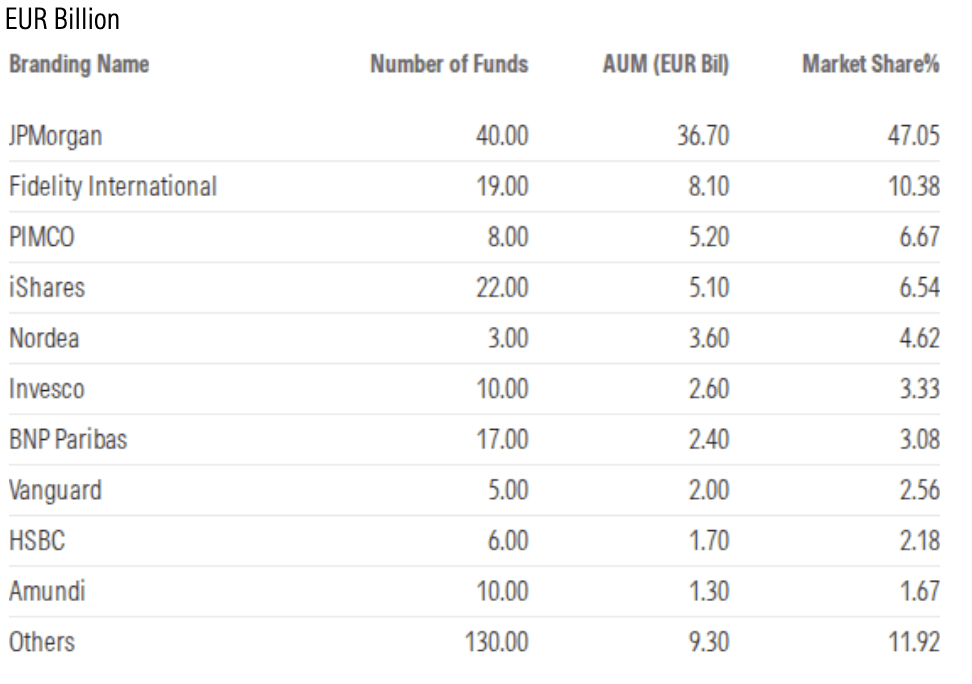
Chart 2: Largest players of active ETFs in Europe Source: Morningstar Direct. Data as of Dec. 31, 2025.
However, the market is becoming increasingly crowded as new entrants (see chart 3), like Goldman Sachs, Fineco, Nordea, HSBC, and M&G, seek to leverage the distribution benefits of the ETF wrapper. These firms, many of which are traditional active managers, are using ETFs to reach a wider investor base while maintaining their active identities.
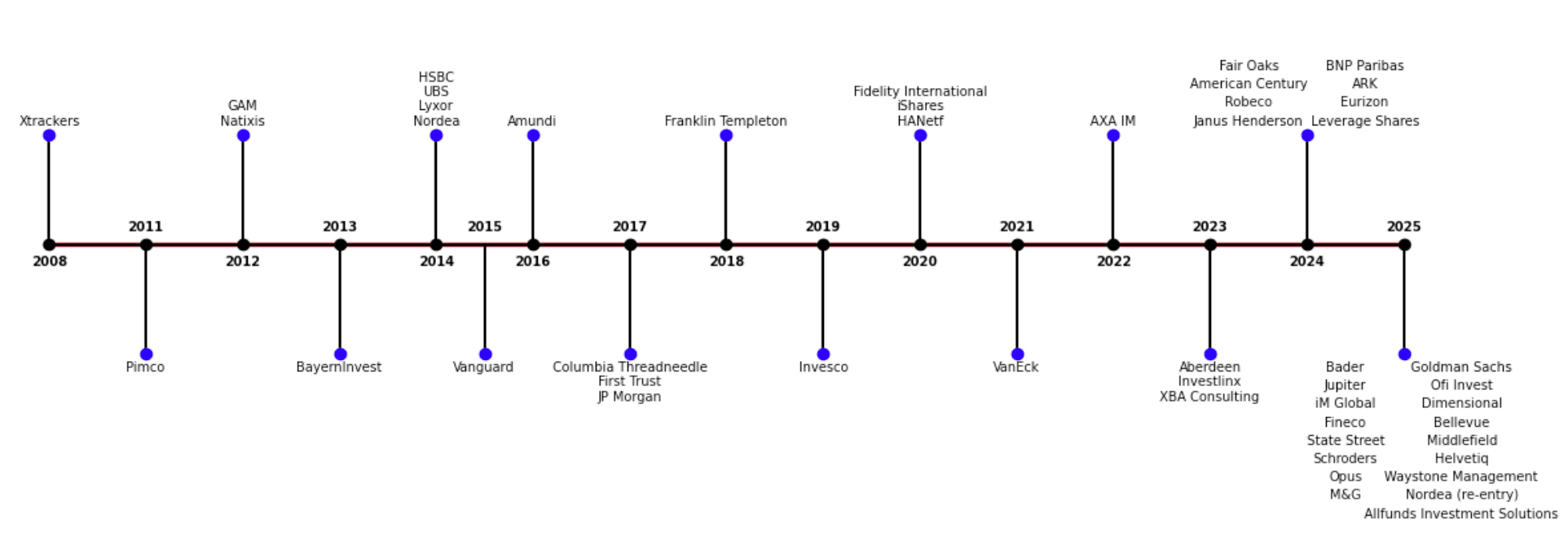
Chart 3: Timeline of European active ETF provider market entry Source: Morningstar Direct
Systematic equity flows surge as discretionary momentum fades
A significant development in 2025, Morningstar argued, was the adoption of its new classification framework, which categorises funds as either “discretionary” or “systematic”. The discretionary style currently prevails, representing 76.8% of total assets (€60.2bn), largely because J.P. Morgan’s primary offerings fall into this category.
Nevertheless, a shift is evident in the flows; systematic equity ETFs attracted €9.1bn in 2025 (see chart 4), compared to just €1.1bn in 2024. Conversely, flows into discretionary equity funds slowed to €4.8bn from €13.5bn the year before. This suggests that investors are increasingly favouring rules-based, transparent models over traditional manager-driven selection for their equity allocations.
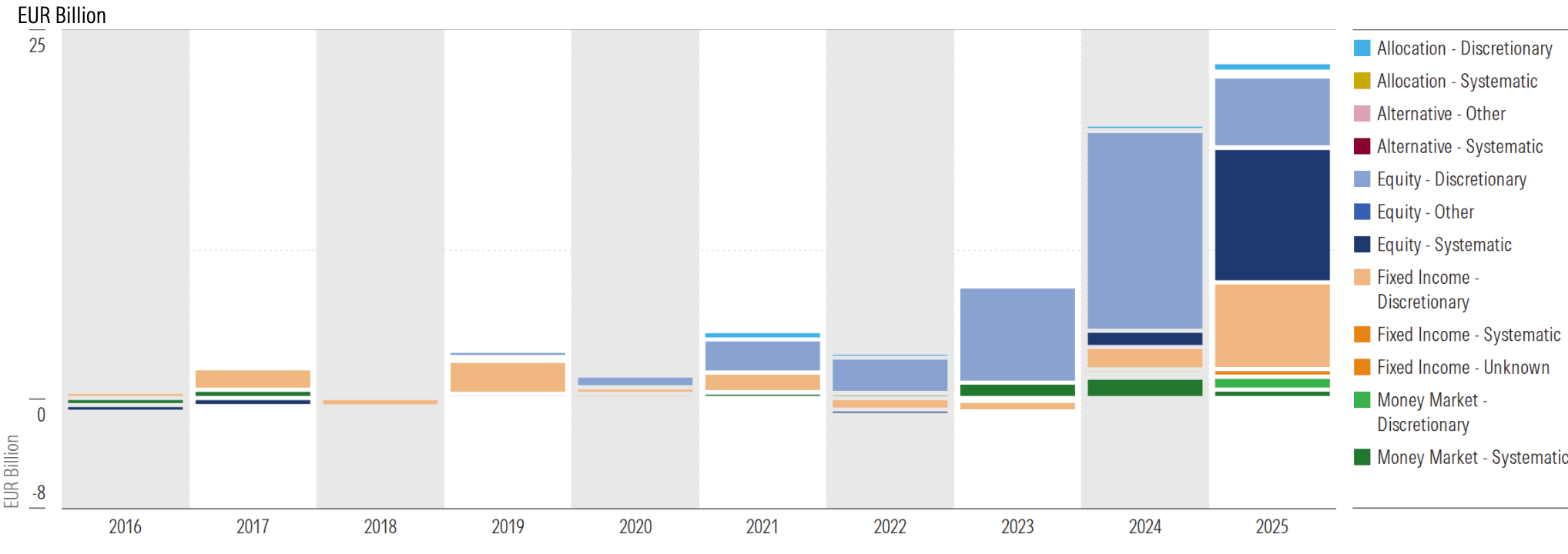
Chart 4: European active ETF market flows by major asset class and investment style Source: Morningstar Direct. Data as of Dec. 31, 2025.
With assets accelerating, product launches surging and investor preferences evolving, Europe’s active ETF market appears to be entering a more competitive and structurally complex phase. Whether it can close the penetration gap with the US will depend on sustained flows, product innovation and fee competitiveness.