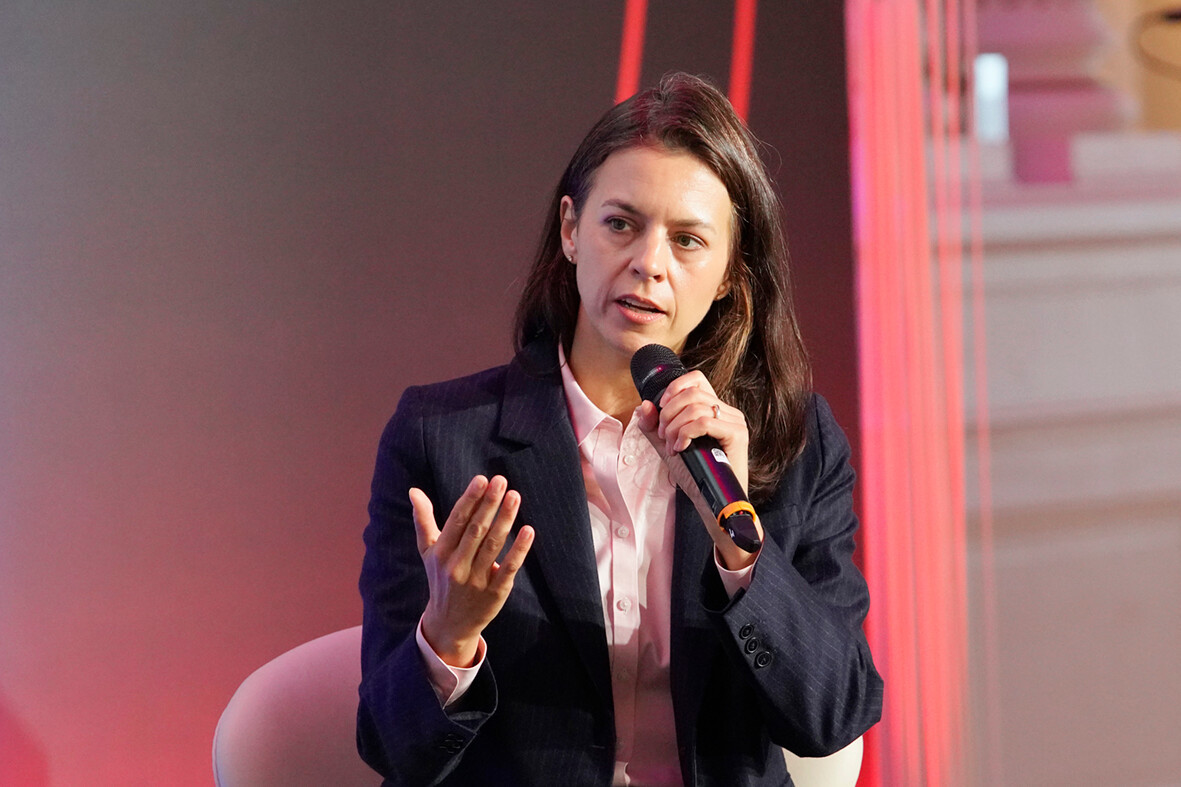
As Western democracies grapple with deepening political divisions, Institut Montaigne’s senior fellow Amy Green discussed the forces reshaping populism across the United States and Europe in a conversation on the sidelines of Indosuez’s Luxembourg Investment Forum, held on 7 October 2026.
From the economic disillusionment undercutting Donald Trump's core promises to the potential emergence of left-wing economic populism ahead of the 2028 US presidential election, this conversation dissects how middle-class erosion, unfulfilled commitments, and systemic frustration are disrupting traditional political alignments on both sides of the Atlantic.
What foundational socio-economic trends are driving current US political fractures, and why is the central promise of Trumpism coming under pressure?
Amy Green. - “The primary political trends in the United States represent a continuation of longstanding socio-economic fractures. Severe economic hardship previously motivated traditional Democratic voting blocs—including African American and Hispanic communities—to shift their support towards Donald Trump.
These voters were willing to accept aggressive political rhetoric, disruptive governing methods, and protectionist tariffs in exchange for tangible relief from high inflation, elevated living costs, and out-of-control immigration at the border.
However, tariffs have failed to lower consumer prices, inflation continues to erode purchasing power, and a widespread perception of job stagnation remains.
Furthermore, grand political announcements—such as proposals for $5,000 checks following the midterm elections—lack structured methodologies, whilst disruptive tactics have failed to produce concrete economic improvements for everyday Americans.
Beyond domestic economics, where else are voters perceiving significant failures in executive performance?
“Voters perceive a broader failure across both international and domestic commitments. Internationally, the administration faces an inability to resolve the war in Ukraine and escalating foreign conflicts, such as in Iran.
Domestically, taxpayer funds are perceived as being misspent on personal vanity projects—such as White House ballroom renovations or work on the Washington Monument basin—without yielding public benefit.
Even on border security, whilst mass deportations have occurred, a majority of the American public considers immigration enforcement tactics to have gone too far, leaving the central pillars of the Trump platform unfulfilled.
What significance do the upcoming midterm elections hold in assessing the presidential record?
“The midterm elections serve as the first national opportunity for American voters to formally deliver a verdict on the presidential record through the complete renewal of the House of Representatives, one-third of the Senate, two-thirds of state governorships, and various local offices.
Whilst Donald Trump remains a potent unifying figure for his core base, he simultaneously represents a major political liability if voters choose to punish unkept economic promises at the ballot box.
How are conservative media outlets and alternative platforms reacting to these political developments?
“Although traditional partisan networks like Fox News remain influential alongside left-leaning outlets like MS Now, the Maga movement relies heavily on an alternative media ecosystem consisting of podcasts, blogs, and independent commentators.
Notably, influential figures within this conservative ecosystem—including podcast host Joe Rogan and former Fox News presenter Tucker Carlson—have begun publicly distancing themselves from Trump.
Unpopular foreign policy escalations, particularly military intervention in Iran, have alienated anti-interventionist populists who supported Trump’s pledge to end foreign wars. These moves have drawn criticism even within core conservative media circles. For these supporters, intervention in Iran is the last straw.
Is populism likely to recede after the midterms, or could it evolve into a new political form ahead of the 2028 presidential election?
“Populism is unlikely to disappear, but its character may evolve from right-wing identity populism into left-wing economic populism.
Right-wing populism traditionally operates on a horizontal axis, scapegoating immigrant or minority groups for economic decline. In contrast, left-wing economic populism operates vertically, attributing societal hardship to extreme socio-economic inequality and the concentration of wealth among those holding over $1bn in assets.
Prominent progressive figures such as Bernie Sanders and Alexandria Ocasio-Cortez, alongside emerging local candidates in states like Michigan and New York, represent a rising political generation focused on wealth redistribution and systemic economic reform.
A centrist Democratic candidate who partners with a progressive populist running mate could present a highly compelling national ticket.

It is too early to predict who will be the Democratic Party’s standard-bearer in the next presidential election. However, this political current will be impossible to ignore.
How might left-wing economic populism appeal to voters who previously supported Trump?
“The American electorate does not align neatly along a linear left-right continuum but rather exhibits horseshoe dynamics where opposing political extremes converge around shared frustrations.
A significant portion of Trump's voter base consists of volatile voters driven by class-based anger and economic precariousness rather than party loyalty.
By framing societal issues through an economic lens rather than ethno-racial identity, progressive economic populists can appeal directly to working-class voters disillusioned by unfulfilled right-wing promises.
Heading into 2028, a centrist Democratic candidate who partners with a progressive populist running mate could present a highly compelling national ticket.
How is the post-Trump Republican leadership battle shaping up?
“The Republican Party is approaching an inevitable generational turnover, stepping away from the long-standing political era defined by figures like Bill Clinton, Joe Biden, and Donald Trump.
Key figures such as JD Vance and Marco Rubio are positioning themselves for an open primary, alongside potential candidates like Donald Trump Jr. or Marjorie Taylor Greene. However, candidate viability hinges heavily on the midterm election outcomes.
JD Vance faces structural vulnerabilities due to his past harsh criticisms of Trump and lower popularity ratings, making it difficult for him to establish an independent ideological stance. If Trumpist candidates experience severe midterm defeats, traditional conservatives advocating fiscal moderation and normative stability may regain influence.
How do these political mechanics compare to developments in European democracies, such as France and Germany?
“Similar populist dynamics are unfolding across Western Europe. In France, both the far-left (La France Insoumise) and the far-right (Rassemblement National) capitalize on public discontent, student blockades, and systemic state dysfunction to reinforce their political narratives.
Support for figures like Marine Le Pen or Jean-Luc Mélenchon is largely driven by a widespread rejection of the existing political system amidst growing national fiscal strains.
What would it take to rebuild a shared national vision and give us the chance to vote for someone out of genuine conviction and optimism? I’m sorry, but I don’t have an answer. The United States faces the same challenge, and it’s fascinating because this question is now arising across many Western democracies.
Across European nations, including Germany with the rise of the Alternative for Germany (AfD), the fundamental driver of populist momentum remains middle-class erosion, growing socio-economic inequality, and the failure of the state to guarantee economic security.”