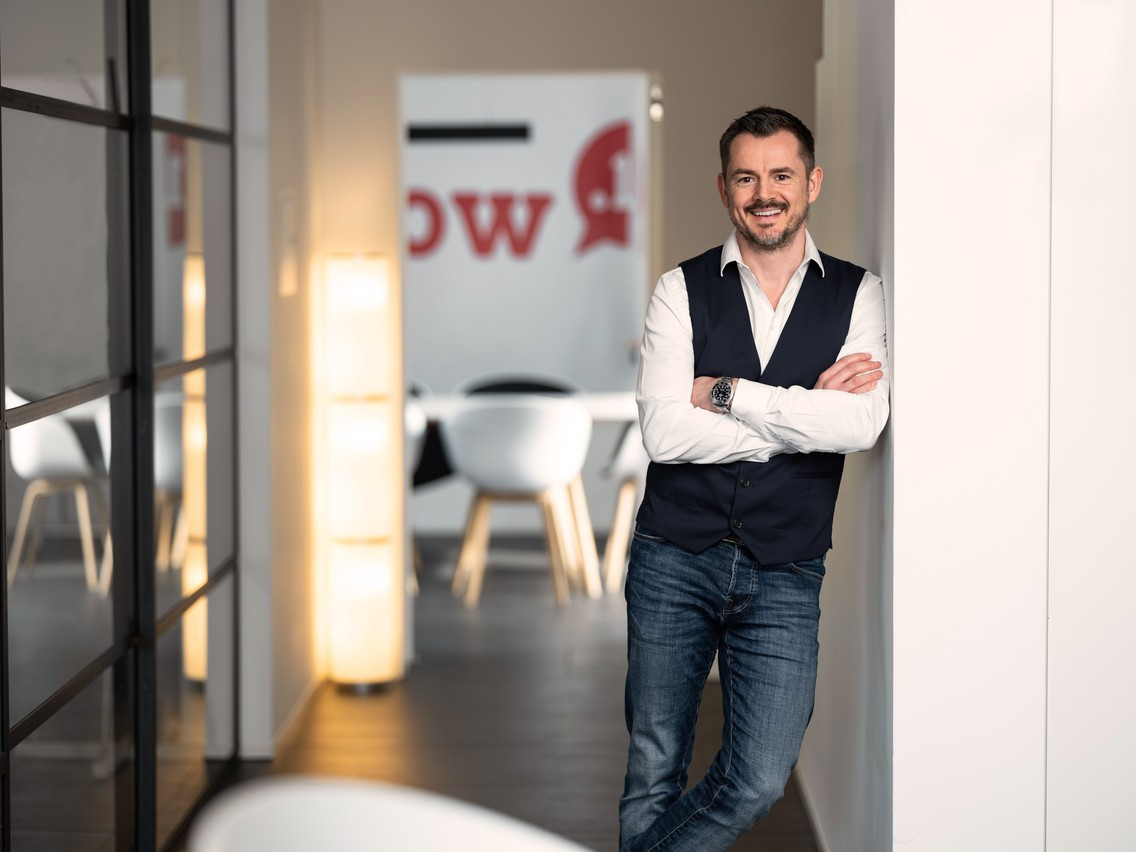
In this series of interviews Delano's sister publication Paperjam picks the brain of CEOs, chairmen and managers to find out how they dealt with the health crisis from a personal perspective.
Two years after the start of the pandemic, what is your most vivid memory?
David Gavroy. - I was skiing here two years ago (the CEO of DG Group answers our questions by phone from the slopes) and we heard on the TV that a virus was going to affect the entire world. We didn't really know what to do. It wasn't as violent as the Twin Towers in New York, but I remember we realised that something terrible was going to happen.
What happened next?
Having to close the company, that's what worried me, it was the unknown. We decided that everyone would go home, a week or two weeks before the lockdown. We never really closed, but we were organised so that if there was a problem, if we had a fire for example, we could be operational in four hours. We teleworked, the graphic designers have computers at home. In stormy weather, you have to lower the sail; some of the staff were off work thanks to government aid, but that only lasted a month and a half. We realised that we weren't paying taxes for nothing, we felt lucky. We didn't know what was going to happen, all our clients were cutting their marketing campaigns. But we put it into perspective by saying to ourselves that it was the same for everyone, so there was no point in stressing.
We made three bets on projects that we wanted to develop for the clients. And all three bets were successful. Otherwise we would have had a financial problem. Thanks to this, we managed to weather the storm well.
This period must have worried some employees. How do you reassure them?
Total transparency. We explained the finances, how things were going, how we were going to manage. We told them that we were afraid, but that we would stick together and get through the crisis as most companies would. We talked about government support. We said we would not stop the business. But there was no sense of anxiety and fear. We have a culture of openness.
Finally, you even took over Yellow.lu increasing the number of companies in your portfolio to four (Noosphere Brand Strategy sàrl, Z6 Creation sàrl, Hello Deco sàrl and Linc SA), and hired staff, now reaching around forty employees.
The Covid climate is anxiety-provoking. I don't ask about covid at all anymore. I don't talk about it, or at least I keep it at a minimum. I'm not a doctor or a politician. In the company, we try to adapt to the rules, but it is not part of our daily routine. We ask to avoid talking about it all day, because there are much more interesting things. We have worked in this frame of mind to remain optimistic and enthusiastic and to cultivate something virtuous.
From there, we took on challenges, had a great year and had the opportunity to buy Yellow.lu. We had a 400km/h year in 2021, with a lot of investments. We have taken the advertising workshop out of the agency. It's a sport, but we're doing everything we can to avoid being in the climate of the pandemic.
Financially, how are you doing?
The three bets we've taken are long-term collaborations. And we have worked a lot on our brand image. We had neglected it a bit and took advantage of this time to review our branding, the employer brand, to attract talent and clients with the same spirit.
How did the communication with your clients go?
Via videoconference. In the large companies we work with, the rules were extremely strict. Most people teleworked. We continued to do our work. I would say that we even had more regular contact, because we had to provide solutions quickly. We started meeting in person a few months ago.
How has your vision evolved as a CEO?
We have put things into perspective. A company is a job, not a life. There are health problems, more serious than a company falling apart, even if it is dramatic. We are lucky to be in a region where people are finding work. No one was at risk of not paying their loans. The pandemic also allowed us to see that we could count on everyone. They were doing their job from home, very well even. We had to reduce the weight we put on on them, because we want them to last.
This story was first published in French on Paperjam. It has been translated and edited for Delano.