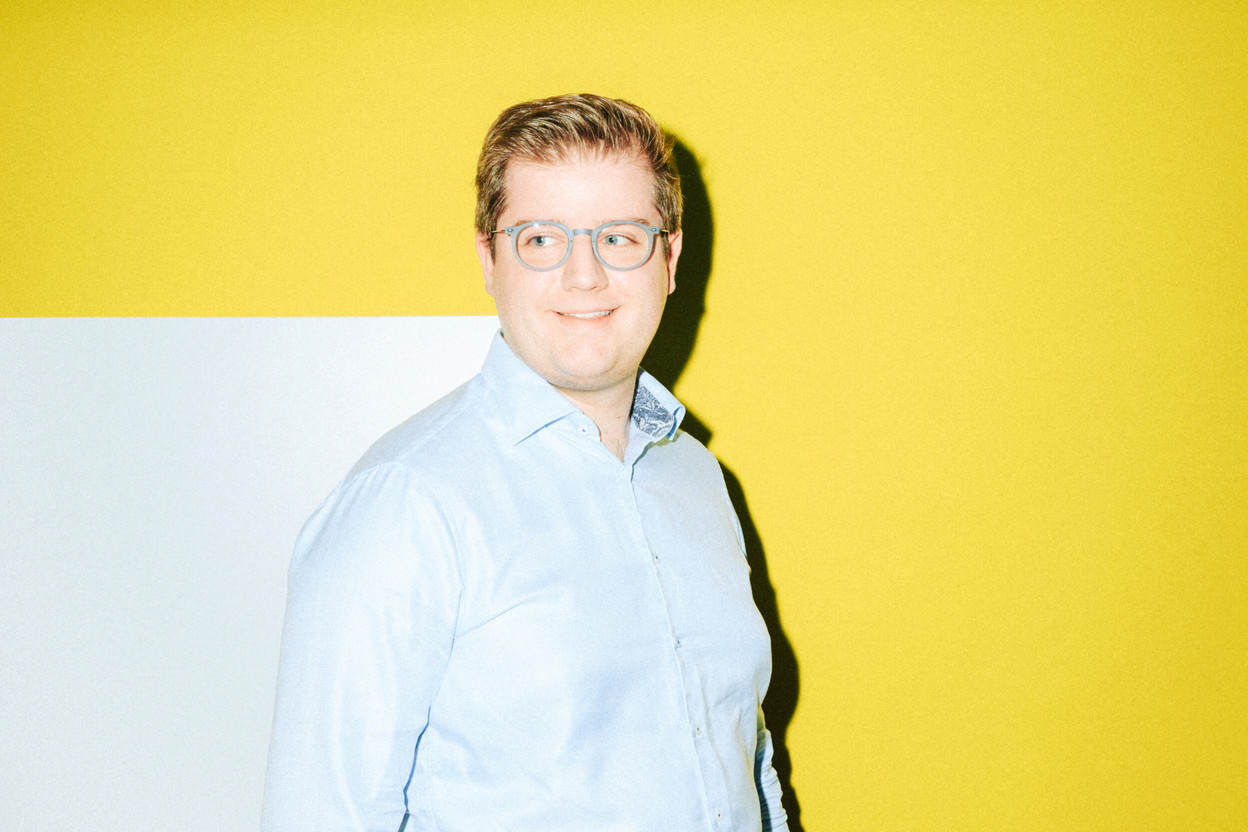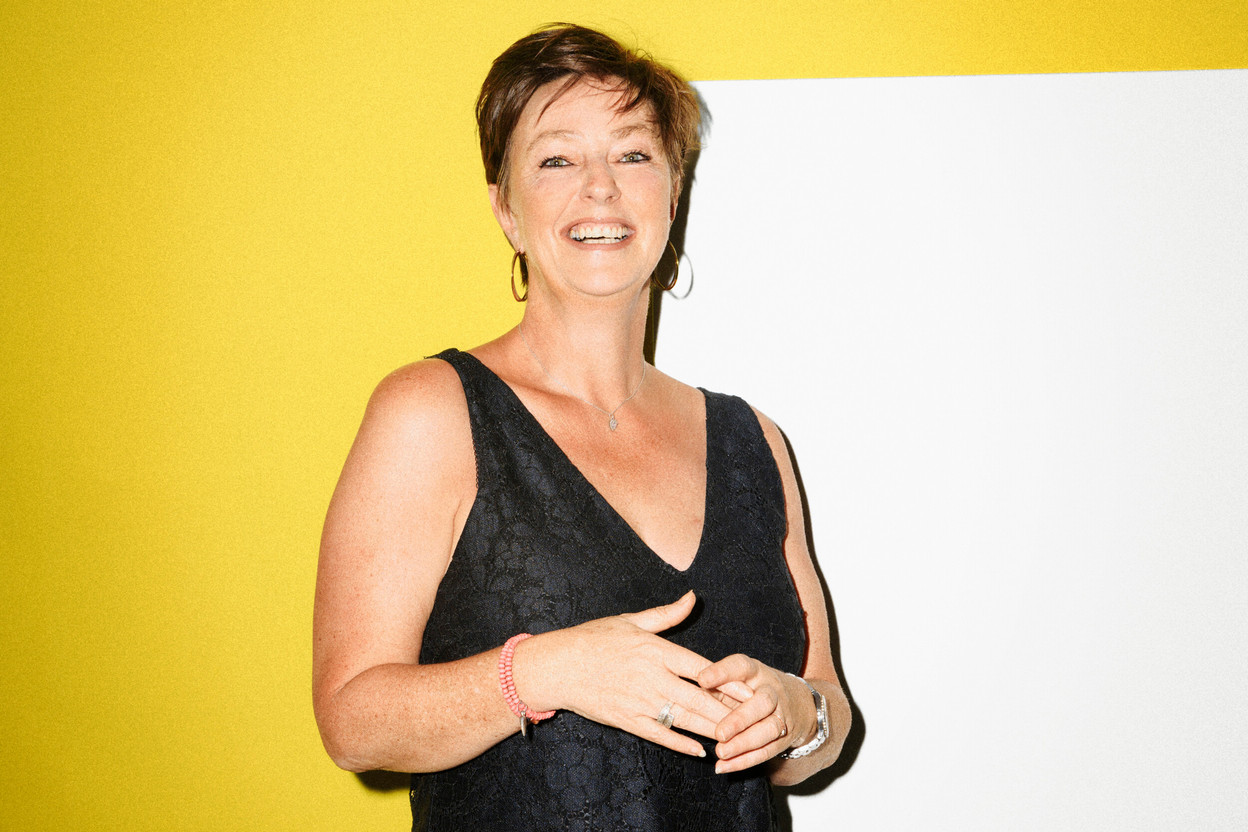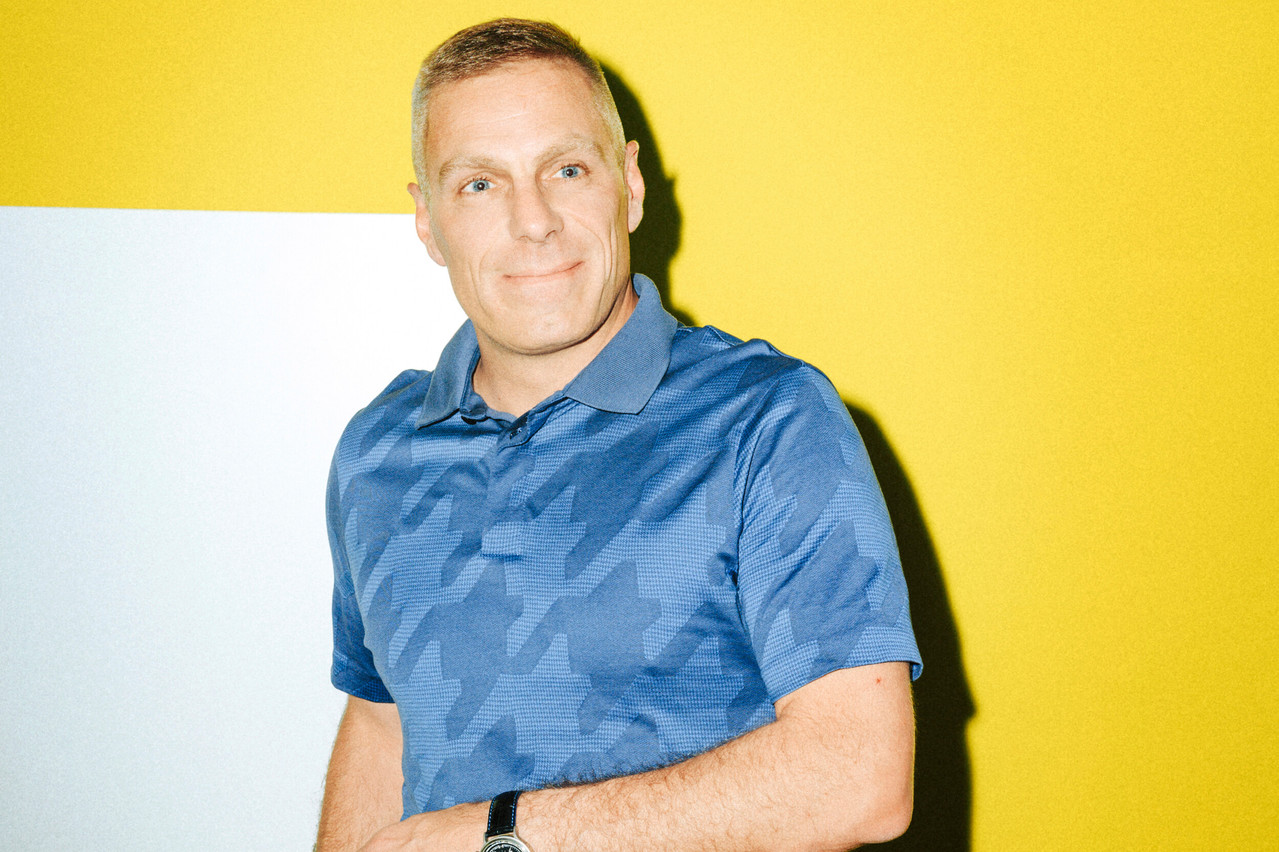
What did you do for a living before you set up your business in November 2023?
Virgile Missios. – “I was a salaried manager at another IT company, where I’d just spent four years. I wanted a change. It’s almost a recurring theme throughout my career: I’ve never really enjoyed finding myself in a repetitive, unstimulating or overly comfortable situation.
Why do you want to get started? For your own sake?
“Exactly: not for myself. Here at Cyclop, we’re truly obsessed with avoiding individualism. Whenever we can avoid highlighting a name or a face, we do so, because we think collectively. That’s also how we operate, both organisationally and in terms of decision-making.
How did you come to know about Luxembourg?
“I’ve been living here for 25 years. I did my end-of-studies work placement here and never left. Luxembourg gave me my big break. When a country welcomes you and gives you that opportunity, I believe that, if you’ve been able to make the most of it, you owe it something in return.
LuxTransfer is undoubtedly the best example of this. We could have used an excellent communications agency. In our view, there was no file transfer solution that was both entirely sovereign and completely secure in terms of cyber security. We preferred to invest heavily in this tool. Firstly, to give back to Luxembourg some of what it has given us. Secondly, to have a technological showcase and gain legitimacy.
The public version of the product is completely free and available to anyone who wishes to use it, in Luxembourg and elsewhere. It is also available in Luxembourgish, as are our website and almost everything we publish. We believe that you cannot present yourself as a Luxembourgish company, champion the country’s digital sovereignty and yet speak only French or English.
How would you describe your business to someone who knows nothing about technology?
“We host data. Imagine that your data is stored on a physical medium: a hard drive, a USB stick or something similar. As soon as we’re talking about larger volumes, we need to use hosting in the true sense of the word. Our primary role is therefore to safeguard our clients’ data as effectively as possible.
The second involves providing them with computing resources. Data on its own is like a book lying on a table: it’s there, which is all well and good, but it isn’t being used.
To use it, you need computing power. This is where the cloud comes into play: on the one hand, we have the data – that is, the information – and on the other, the computing power needed to analyse it. We do both of these things, as well as many others…
When you first started out, what was the biggest challenge for a small business up against larger competitors?
“The hardest part was starting from scratch. That’s true of any business. If a new grocery shop were to open in the neighbourhood tomorrow, people would need time to notice it, to feel like going in, and then to be sufficiently convinced to change their habits. We experienced the same thing.
The hardest part was starting from scratch. We set off on our journey, guided as always by the same ethical standards. Confidence then followed.

We set out on our journey, guided as always by the same ethical standards. Confidence soon followed. We were put to the test, and subsequently selected to handle accounts representing the public and quasi-public sectors, as well as those of major Luxembourgish and international companies.
I see this trust as the reward for a certain kind of personal discipline – on the part of Frédéric, myself and everyone who works with us. We must stick to what has been announced: when you make a promise, you must keep it. Otherwise, it is better to say nothing.
What are your plans for the future? You are currently using external service providers: do you plan to take on new staff?
“Yes, that is already the trend and the approach we are following: gradually bringing functions back in-house. As long as a company does not have the critical mass required to justify a full-time equivalent, it outsources. When it gets close to that point and has sound governance in place, it plans ahead and brings functions back in-house.
This gives you greater control over your business, reduces your reliance on external parties and, incidentally, cuts costs. Creativity also flourishes more within the organisation, with someone who is immersed in the company, its culture and the team on a day-to-day basis, and who can be influenced by that environment. This may prove more difficult for an external consultant.
Is it difficult to recruit candidates who meet your requirements?
“Yes. We live in an age where knowledge is no longer always valued and where hard work is sometimes seen as something only others should do. In a small society, it’s hard to be a tree hidden deep in the forest: when you don’t do your job, it shows.
How do you see these professions evolving? We hear every day that artificial intelligence is going to replace a whole host of jobs. Will yours be affected?
“Yes, everyone will be affected. It’s already beginning, but the transformation won’t happen overnight. It’s a bit like the fall of empires: you don’t wake up one morning to find yourself in a different system of governance. There is a slow decline, and then an alternative emerges. The phenomenon will no doubt be similar. AI is, first and foremost, a tool.
It is neither a marketing fad nor a new god: it is simply a tool. It is unsettling because, in the industrial revolution it is ushering in, it enables efficiency gains to be made much more rapidly than in previous ones. Its impact will therefore be widespread and swift.
You can have the best screwdriver in the world: if you can’t find a screw, you’ll never use it. In jobs that are purely production-based, require little creativity and involve, for example, generating code, why pay someone when an AI tool can do it better and faster?
When you get up in the morning to go to work, what motivates you? What do you like about your job as a manager?
“These are more or less the same reasons that led me to leave a salaried management role. Even when it offers a great deal of freedom, salaried employment imposes a framework. Yet, to me, imposing a framework on creativity seems almost contradictory.
That’s the main reason why I’m happy to get up in the morning: there are no constraints. That doesn’t mean we can do everything, but we’re free to think about anything. That’s already a lot.
The second reason does not relate specifically to Cyclop. Ever since I took on a management role, I’ve been passionate about passing on my knowledge. When you’re in a sales role and you’re my age, you’ve usually experienced successes both big and small, as well as failures both big and small.”
This article was written for the October 2026 issue of Paperjam magazine, published on 16 September. The content is produced exclusively for the magazine. It is published on the site to contribute to Paperjam’s comprehensive archive. Click on this link to subscribe to the magazine.
Is your company a member of the Paperjam Club? You can request a subscription in your name. Please let us know via club@paperjam.lu.