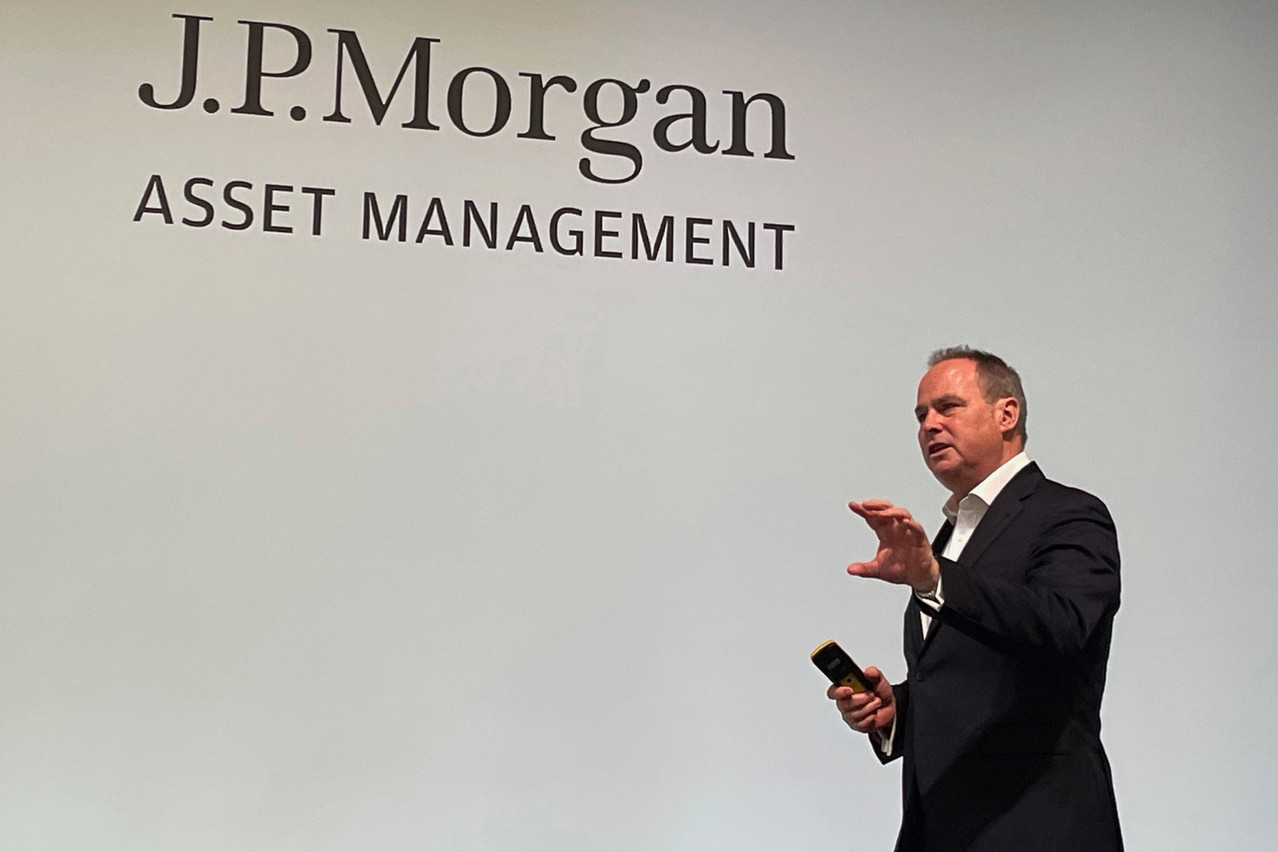
“We’ve seen what can only be described as a seismic shift in economic and trade policy around the globe,” said John Bilton, head of global multi-asset strategy at JP Morgan Asset Management during a presentation on 19 May 2025. Whilst acknowledging a forecast for slower global growth, his base case does not include a recession. A key focus is how current changes might affect long-term growth and asset returns.
Examining the US, Bilton questioned whether exceptionalism is coming to an end. “When markets get stressed, everybody wants dollars. This time around, not so much.” As a result of trade wars, tariffs have increased from 2.6% to over 15% since they were launched on 2 April 2025. “It may have implications, at least in the intermediate term… together with the tax bill… resulting in more inflation.”
Inflation volatility to permanently increase in the US
“We've got risks in both directions to inflation.” The upside comes from fiscal spending in the US and tariffs in an economy that is operating near its potential, and the downside comes from debt accumulation and technology improving productivity. Importantly, “inflation sits at the very base of how we price [financial assets],” stressed Bilton. He is concerned that higher inflation will result in higher risk premiums for equities and higher term risk premiums for bonds.
Bilton is worried about the formation of a “circularity policy uncertainty” that is building up in the system with an impact on US exceptionalism. Geopolitical risk index levels are currently choppy but not exceptionally high historically. However, rising policy uncertainty driven by increased political fragmentation and fewer voters in the centre makes consensus harder to achieve. In Europe, 30% of voters are choosing authoritarian extremes, “the highest level… since the end of the Second World War.”
This uncertainty interacts with questions about the dollar, trade and inflation expectations. “And guess what? Inflation expectations go up. Dissatisfaction among voters and policy uncertainty remain high, and so the cycle continues.”
Contrary to Europe, where he thinks that there is “fiscal space,” he believes that US fiscal capacity “is more questionable.”
US dominance in global equity market may persist
Bilton noted that US equity market concentration, currently at around 60% of global market capitalisation has seen lower levels in the past (36% in 1993) but also higher marks (68% in 1973).
According to JMPAM calculations, such a concentration may downshift slightly by the middle of the next decade, remaining over 50%. Bilton expects capital and earnings to get “recycled from research and development and back into retained equity, whereas much of the rest of the world pays a lot more out of dividends.”
The US is regarded as exceptional in innovation, intellectual property and technology, “and that is not changing anytime soon.” Whilst US outperformance against global equities over the last decade and a half is significant, this period is expected to slow, with the rest of the world potentially catching up. This suggests the need for diversification outside the US but not necessarily selling US assets like high-quality tech exposures. “Headlines are saying ‘sell America.’ I would push back on that.”
Dollar to maintain its status despite a lower expected valuation
The US dollar remains dominant as it is featured in 88% of foreign exchange transactions, nearly 60% of official FX reserves, and 40% of world trade invoicing despite the US being involved in only 11% of those transactions.
Whilst JPMAM expects the dollar to lose some value over a 10-year horizon (e.g., euro/dollar potentially trading around 1.29), Bilton dismissed the idea of the end of its global role partly due to the lack of a viable alternative and its role in contract dispute settlement.
Side effects of the trade war
Bilton sees trade wars as adding “sand in the gears” for global trade. Tariffs have increased significantly, and JPMAM--as well as most economists--expects them to settle at around 15%. US consumers will have to absorb the higher import costs, resulting in less buying and lower growth.
Bilton thinks that the decline in demand from the US could lead to a surplus of goods in the rest of the world that will create disinflationary pressures, giving foreign central banks such as the European Central Bank and the People’s Bank of China greater flexibility to adopt more lenient monetary policies to respond to a disinflationary shock and potentially limiting growth.
Core message from JPMAM: stay long
Crucially, despite these uncertainties, the most important action for investors is staying invested. Historical analysis by JPMAM suggests that a balanced portfolio (like a 60/40 split) “outperformed cash three-quarters of the time by an average of 7% held for three years… it always wins by a cumulative average in 20 months,” even when invested immediately before periods of geopolitical tension.
Looking ahead, US equity markets are expected by JPMAM to deliver around 6.7% annualised returns over the next 10-15 years, including a 1.8% drag from valuations being richer than their long-term average.