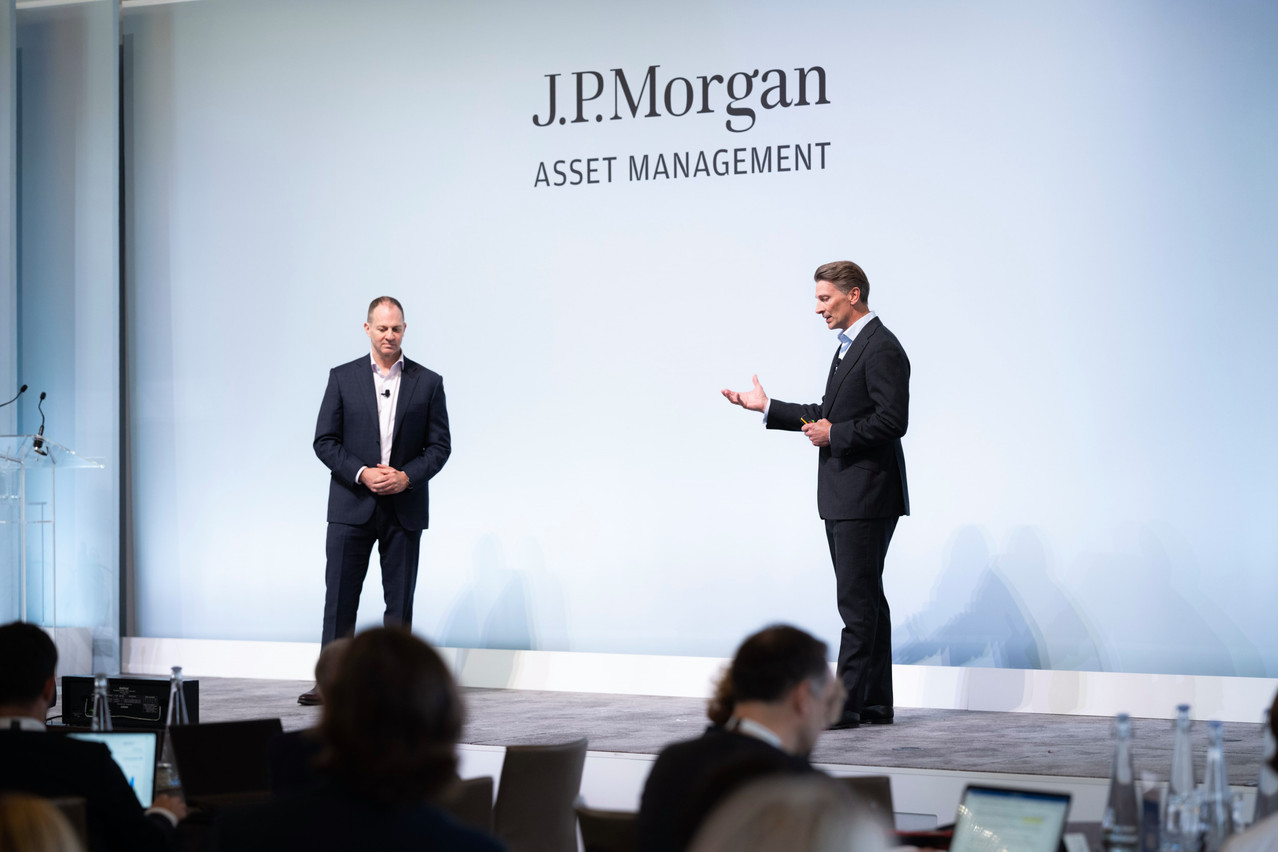
During their presentation entitled “2025: The Year of Active ETFs” on 19 May 2025, Travis Spence, global head of ETFs, and Jon Maier, chief ETF strategist at JP Morgan Asset Management, discussed the significant shift within the investment management industry towards exchange-traded funds (ETFs), particularly active ETFs.
Emphasising that the ETF structure offers advantages like liquidity, transparency and cost-effectiveness, they highlighted the steady flows and the rapid growth of global and Ucits ETFs (+21% and +18% during the 2019-2024 period). Over the same period, the growth of active ETFs has been even faster for Ucits active ETFs (+34%) and global active ETFs (+47%).
Furthermore, the speakers commented on the diversification of active ETFs into core asset classes and expressed their expectation that growth in the product should be further boosted by factors such as evolving investor preferences, increasing launch momentum and the potential in the fixed income space. They also touched upon the growing adoption of ETFs by both professional and retail investors, facilitated by digital platforms and model portfolios.
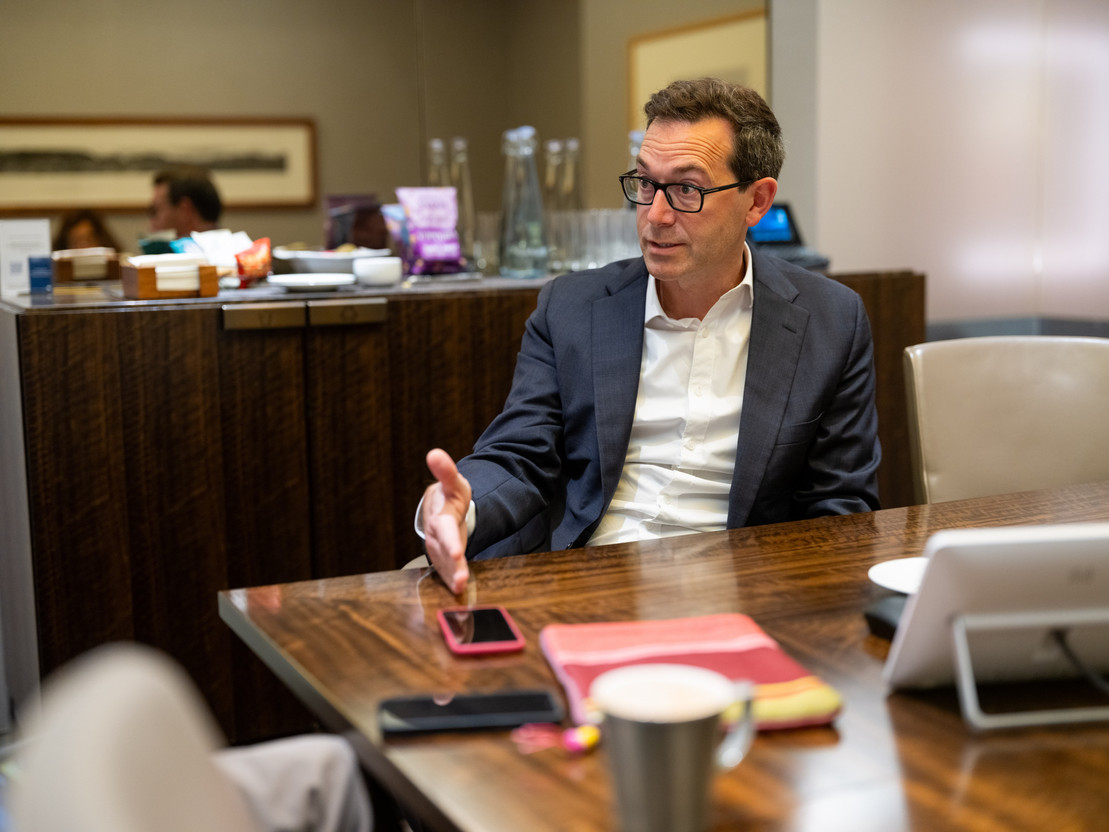
Subsequently, Paperjam interviewed Travis Spence on 20 May 2025 to discuss the criticism of the active ETFs and the appropriateness of SMEs and alternative assets in active ETFs. Spence also commented on the actions that should be taken by the Luxembourg authorities to attract ETFs having exposure to US equities.
Sylvain Barrette: Serge Weyland, CEO of the Association of the Luxembourg Fund Industry, said the following in an interview with Paperjam: “One must dig into what we call ‘active ETFs’ from asset managers such as JPM or Nordea as it is not pure active asset management. They offer something more akin to smart beta or systematic, which is not really active asset management. The correlation of their funds is very close to passive funds.” Any comment?
Travis Spence: It’s been a passive market domination for 25 years. Active [ETFs] started to come in just the last decade in Ucits. Some will operate in a more systematic way in terms of their investment process. We don’t. We are a fundamental manager. I disagree with the notion that our funds are systematically driven.
Our research-enhanced index strategy often gets grouped in with some of the “systematic passive plus” [ETFs], as they are often called in the market. We’re a research-enhanced index (REI) and that’s based on a strategy that we’ve been running for 30 years… it’s something we continue to do for institutional accounts. It was designed to have a low tracking error to the index.
You might look at the result and say: “Well, it has about the same tracking error.” That’s been one of our benefits, because when you think about just rebalancing within a passive index, generally, you’re generating 60-70 basis points of tracking error. The realised tracking error that we have on many of the REI ETFs is around 80 basis points. It looks similar, but we’re actually using a bottom-up stock selection to drive that tracking error and not the rebalancing.
How does it work?
We manage across more than 15 Barra factors, and we make sure that we are more neutral to the benchmark on things that would create wider tracking error, such as sector or country exposure. As part of the risk management process, we neutralise those. But within the sectors, we are choosing companies… and that bottom-up stock picking is fundamental and it’s different from a systematic strategy driven by machines and factors.
As more active ETFs come into the market, investors are going to need to look at these in a different way. They need to understand what’s under the hood… as that’s all being grouped into one.
Sometimes there are brand new strategies that are being brought into an active ETF, and they don’t have the benefit of a long track record.
What we’re generally trying to do is take things that we know have a tested track record… [yet we] may come up with new combinations of things [strategies]… that may not have been implemented in mutual funds.
We’ve seen this cycle of passive-only, then going into factors and custom indices, and now you’re going into full-active. People are at different stages in that journey.
You recently launched the JPM Global Emerging Markets Research Enhanced Index Equity SRI Paris Aligned Active Ucits ETF (JSEM). Coupled with a total expense ratio set at 30 bps, the alpha target of 50 bps for the JSEM appears unambitious given the risk taken by the investor. Could you comment?
We need to provide value in the alpha over the cycle; I think we’ve been producing that. We put up actual numbers based on all the active ETFs that we brought into this space; 94% to 96% [of our active ETFs have performed] above peer median on a net fee basis. Over the last decade, you have had an 80% chance of beating the benchmark with a JP Morgan strategy. We have decades of experience in running a lot of these strategies outside of the ETF wrapper.
I noticed a few months ago that your China ETF had a bid-ask of $2 on a NAV of around $25. Not surprising, given that the asset under management was $5m. An alternative passive ETF with $5bn in AuM offered a bid-ask of one cent. Your presentation made clear that there is a lot of growth in the number of products in active and passive ETFs. Any concern about maintaining decent liquidity for the various products?
What you see on exchange will be impacted by the size of an ETF. As ETFs grow, the bid-offers will come down… as more people are trading them… and you get a more accurate reflection of what the price is on exchanges as well.
In the US, 75% or even higher volumes on ETFs go through exchanges. It’s the opposite here: 75% or even more goes through FQs (requests for quotes), i.e. through APs. You can sometimes get distorted prices when the ETF is smaller.
You might have a $5m China ETF, but the underlying market is billions. When you go to trade the underlyings, even if you’re putting $100m into that $5m ETF, you could still see spreads that are super tight relative to the market.
We spend a lot of time in our capital market function… building that up… and working with multiple market makers. You don’t want just one AP to trade. You need multiple APs and you need to make a market as well. We spend a lot of time educating APs on what we’re doing, making sure they have the full transparency of the portfolio so they know the baskets to create and price.
It’s a core competitive advantage that you can build within your asset management business. Those who don’t [will] have much wider spreads, especially in times of market turmoil.
To achieve outperformance going forward, would it make more sense to promote active ETFs in SMEs given the crowded trades in large Western corporations?
The Mag Seven dominated returns in the US market for a few years, right? In our research-enhanced index, which is fundamental stock picking, most of the alpha was actually coming from the 493 [in the S&P 500] and we had a couple of years where there was 100 basis points, 200 basis point alpha over the US market. But a lot of that return was coming from the rest of the market.
[On SME ETF], you do have capacity constraints. It has to be a consideration when you launch an ETF, right? You need to have liquid markets that operate behind an ETF. You need to make sure that there is enough capacity that you’re not going to run out of capacity in a certain market, because it’s very difficult to close an ETF. That’s part of our product development process.
When we developed the JPM Global Emerging Markets Research Enhanced Index Equity SRI Paris Aligned Active Ucits ETF (JSEM), we worked with MSCI to develop a custom [index] because we actually needed to have more flexibility across a wider range of issuers to run our research-enhanced process in an effective way.
It took us about 18 months to figure that out, and then we launched a US global, eventually Europe--and emerging markets were the last ones. Some of those sectors [SMEs] might be more appropriate in a mutual fund, and that’s okay… we’ll keep them in a mutual fund.
Being also involved in alternatives, are some of them gradually finding their way into ETFs?
ETFs is a strong way for investors to get access to new investment areas. We’re exploring it, but the challenges are there. The challenges are around: who’s pricing it? how is it being priced? how does it operate in the ecosystem? are there enough players in the ecosystem that will trade this and create a level of liquidity?
Does a 100% private credit exposure belong in an ETF? No, that’s a step too far. I think there is somewhere in between, where you can add private investments into a portfolio, perhaps.
What would be the most obvious candidate going into an ETF?
Today you have fewer liquid securities that are traded in ETFs. Parts of the securitised market don’t trade as often. Parts of the high yield market don’t trade as often. But still, there’s… transparency and a price for those. Those are the attributes that we need to see within the private market to make them eligible to put into an ETF and I think that the market has some work to do on that.
What should Luxembourg do to get more domiciliation of active ETFs in the country?
The tax treaties on the US side are an important consideration. I think that’s an important advantage that Ireland has today within the Ucits space. Luxembourg has a disadvantage, you know, relative to that, if you think about any US or global equity exposure. Global is 70% US. Ireland has just been established for a long time. I think that the differences are pretty well known, so it’s a matter of how they can equalise their platform to that.
Could an improvement of the treaty lead you to reconsider your operations and move some activities to Luxembourg?
You know, you should never say never. We’re big players in both now. We’ll see where it goes from here.
Paperjam was invited to attend the J.P. Morgan Asset Management International Media Summit in London. The latter paid for accommodation and transportation.