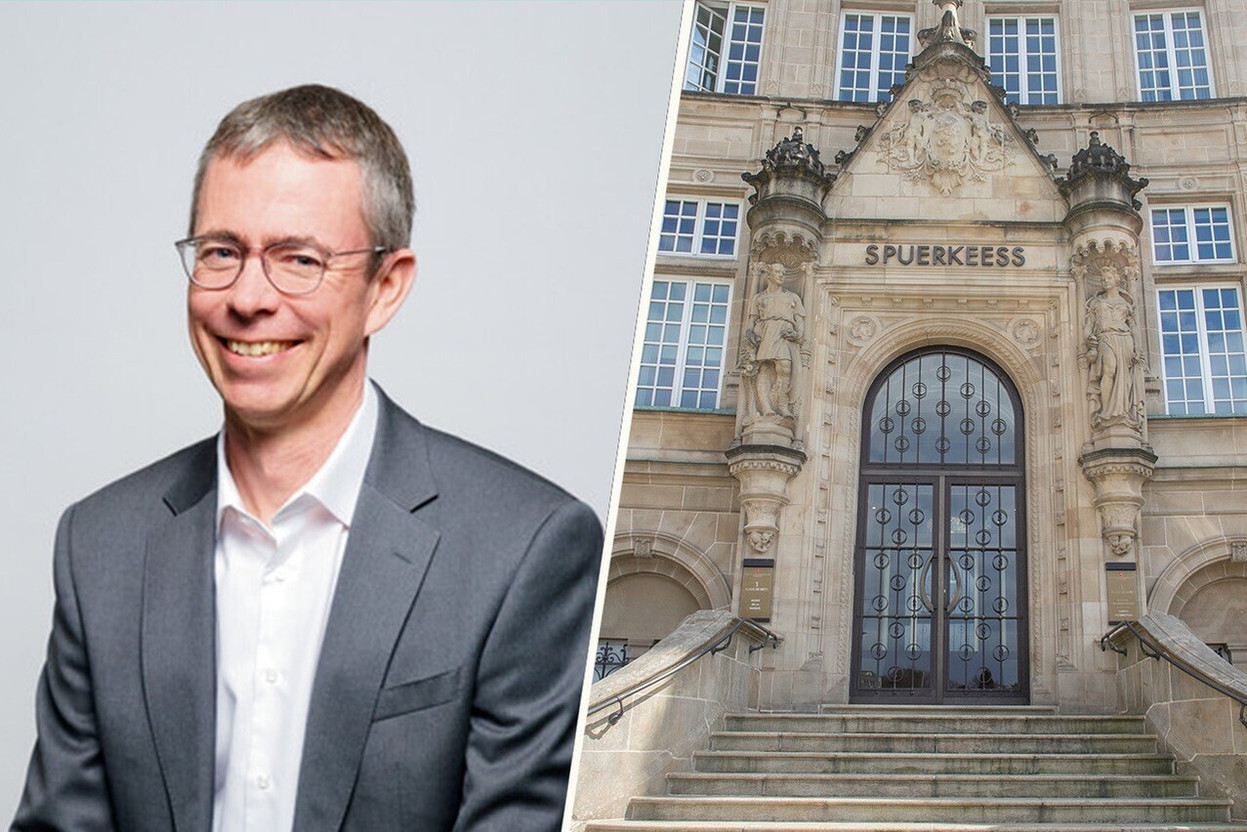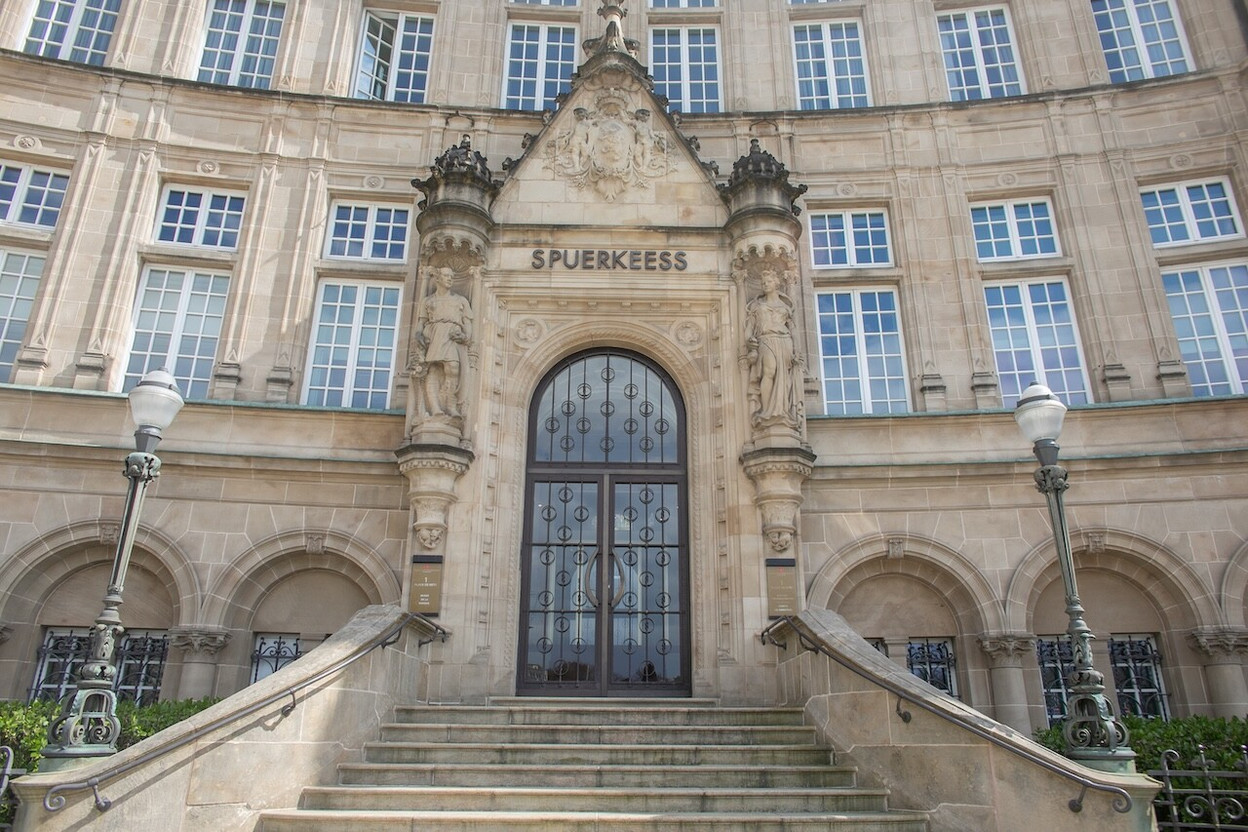
Creating a company alongside the bank to help the bank move faster. The idea may seem almost contradictory for Spuerkeess, a state-owned institution founded in 1856. Yet it encapsulates the bank’s new approach.
The company is called Think Sphere. It was incorporated as a public limited company on 4 May 2026, initially at the same address as its parent company, but it is expected to move into its first offices in Bonnevoie soon. For its raison d’être is to operate independently in order to accelerate financial innovation, whilst maintaining a strong link with the historic bank. This proximity is reflected not only in strategic synergies, but also in their very close geographical location, just four tram stops apart. Spuerkeess has subscribed in cash for all one million of its shares, each with a nominal value of one euro, bringing the fully paid-up capital to €1m.

Marilène Marques, Senior Vice-President and Head of Legal at Spuerkeess, offered one of the first public explanations of the arrangement on Wednesday during the annual fintech conference organised by Elvinger Hoss Prussen at the bank’s premises. “Spuerkeess created Think Sphere. It is an innovation company that allows us to explore emerging technologies with greater agility,” she said. The company will notably enable the bank to work with fintechs and regtechs.
All technology must comply with the law
Think Sphere is not a spin-off in the strict sense of the term. Its deed of incorporation mentions neither the transfer of an existing activity nor the contribution of technology or intellectual property from Spuerkeess. Think Sphere has no operational activities and no access to customer data. Instead, the subsidiary creates a separate area for exploration, where a small team can identify technologies, build partnerships and test models before their potential integration into the bank.
This is where the value of the arrangement lies. Spuerkeess retains sensitive data, binding decisions and regulated activities within its banking perimeter. Research, monitoring, prototyping and partnerships sit on the periphery, where they do not have to navigate the multiple approval levels of a large bank.
Think Sphere describes itself as an innovation company focused on digital assets, embedded finance and financial services powered by artificial intelligence. Its recruitment efforts provide a clearer picture of its scope. The company has sought seven profiles covering digital assets, embedded finance, strategic partnerships, regtech, operational efficiency, AI agents, financial analysis and technology platforms. Two positions remained open on Wednesday evening.
Its ambition extends beyond the creation of another application. In embedded finance, Think Sphere is examining how financial services can be integrated into non-banking platforms, as well as the reverse: bringing services supplied by partners into S-Net or other Spuerkeess channels. The company specifically refers to marketplace models, third-party integrations and services that go beyond traditional banking.
A new approach to innovation
For Spuerkeess, this opening represents a change of approach rather than a sudden break with the past. In 2023, innovation remained organised within the bank. The Innovation & Project Management department combined the management of strategic and regulatory projects with the development of S-Net, user experience, knowledge management and new working methods. “This will allow us to avoid asking our innovation team to jump into the bank’s ongoing transformation projects and instead let them work on much more strategic projects,” Marques explained with a smile after her panel discussion.
In 2024, the bank took a further step by creating an internal IT innovation laboratory. At the same time, it began to structure its use of artificial intelligence by training more than 60 employees, deploying a platform dedicated to generative AI and testing a human resources chatbot, a programming assistant and a tool for business analysts.
The approach remained focused on improving the existing bank. The tools aimed to automate repetitive tasks, support decision-making and enhance digital customer journeys. Think Sphere broadens the playing field: the goal is no longer simply to modernise Spuerkeess’s processes, but also to examine models that could change how the bank creates and distributes its services.
Governance is evolving at the top
This move accompanies a strategic shift decided at the highest level. In its 2025 annual report, Spuerkeess states that its board of directors and executive committee approved a new framework incorporating “the strategic objectives proposed by the Bank’s owner” – the state. The framework notably rests on more proactive leadership, continuous innovation, an omnichannel experience and a decisive modernisation of the bank’s technology infrastructure. It should allow Spuerkeess to deploy new technologies and data-driven services while strengthening its controls and resilience.
The same report describes a “North Star” digital architecture designed to guide projects that aim to reduce system complexity and increase flexibility. The bank also wants to manage its data and AI strategy according to value, selecting uses based on their impact, feasibility and strategic alignment. In 2026, it began incorporating this framework into its Spuerkeess 2030 strategy.
The bank’s governance structure is evolving in parallel. Marques revealed that Spuerkeess’s board of directors had created a specialised committee dedicated to strategic technology and innovation. Technology and artificial intelligence initiatives “are no longer IT projects”, she stressed: they now affect processes, responsibilities, management and risk oversight.
Spuerkeess is also attempting to change the role of its control functions. “Legal should not become involved at the end of the process. Compliance should not become involved at the end of the process,” the Head of Legal argued. Her department now includes a specialised unit called Legal Governance, which intervenes from the outset of projects, including those involving technological innovation.
Under the traditional model, a team develops a solution before asking legal and compliance whether it can be used. Under the model described by Spuerkeess, the limits are defined in advance, allowing teams to work within that framework without referring every decision through the entire organisation.
“Agility does not mean removing controls. It simply means changing how they are exercised,” Marques summarised. Think Sphere embodies this principle: separating exploration to give it greater speed, while establishing from the outset the conditions under which a technology can enter the banking perimeter (integration, compliance, legal).
This structure nevertheless retains an inherent tension. Think Sphere is wholly owned by Spuerkeess, depends on its strategy and will have to transfer solutions that can operate in a regulated environment. Its board consists of executives connected to the bank, and the company can only bind itself through the joint signatures of two directors. The autonomy it seeks therefore remains under the supervision of its parent company.
Its effectiveness will depend less on the number of prototypes it produces than on its ability to turn its research into services that Spuerkeess or other financial institutions actually adopt. Its corporate purpose allows it to go that far. It must now demonstrate that the agility promised by the structure can survive the point at which innovations need to enter a regulated bank.
The state has therefore indirectly become the owner of a company dedicated to digital assets, artificial intelligence and new financial distribution models. The idea may seem unusual. It becomes coherent once Spuerkeess no longer regards technology as a simple IT project, but as one of the instruments of its strategy for 2030.